Cycling in the Rain
What changes when the road is wet — braking, cornering, tire pressure and being seen — plus the ten minutes afterwards that prevent most of the damage to the bike.
How this is funded: we earn a commission if you buy through our links, at no extra cost to you. It never changes which bike we recommend, and we will tell you plainly when we would skip one. Full disclosure.
Rain changes three things about riding and leaves everything else alone. Your brakes bite later, your tires grip less in corners, and drivers see you later than they would in the dry. Handle those three and a wet ride is simply a ride where you arrive wet.
The fourth thing rain changes is what happens to the bike afterwards, and that is where most of the actual cost is. Ten minutes when you get home prevents a worn drivetrain and a rusted chain.
What to change about how you ride
Brake earlier, and in two stages
With rim brakes the pads have to wipe water off the rim before they grip, so the first part of every braking effort does nothing. The fix is to brake lightly and early to clear the rim, then brake properly. With disc brakes the delay is much smaller, which is the clearest real-world argument for them. The full comparison is here.
Either way, leave more distance than feels necessary. Wet pads and a wet rim or rotor also wear faster, so a winter of wet riding is also a pad-replacement schedule. How to tell when they are done.
Corner slower, and more upright
Lean angle is grip you are spending. In the wet, slow down before the corner rather than in it, keep the bike closer to vertical, and stay off the brakes mid-corner. Avoid three surfaces specifically: painted road markings, metal covers and drain grates, and the shiny strip in the middle of the lane where oil collects. All three are far more slippery than the tarmac next to them.
Drop a few PSI
A slightly lower pressure puts more rubber on the road. Start from the range printed on the tire sidewall and take a few PSI off your usual dry figure — not so much that the tire squirms or you risk a pinch flat. Road tire pressure by rider weight and the same thing for gravel tires.
Be seen, in daylight too
Rain cuts contrast, and the federal rule that new bikes ship with a rear reflector only helps when a driver’s headlights are pointed at you. A rear light in a daytime flash mode is the cheapest meaningful upgrade for wet riding, and a second one means you are never out there with a flat battery. The full light comparison.
What to look for in wet-weather kit
Four decisions, in the order they matter. Note that these are fit and compatibility questions, not brand questions — the wrong fender for your frame is useless regardless of who made it.
- Fenders: eyelets or no eyelets.Full-length fenders bolt to frame and fork eyelets and give the best coverage. If your frame has none, you need the clamp-on type, which covers less but fits anything. SKS publish a tire-width fit range for their sets — check yours against it rather than assuming.
- Clearance.A fender needs room between the tire and the frame. If you run wide tires, check the fender’s published fit range covers your width.
- Lights: be-seen, not see-by. For daytime rain you want a flashing rear light. Many budget lights do not publish output or runtime figures, so treat an unpublished number as unknown rather than as adequate.
- Layers: windproof first, waterproof second. In cool rain, wind chill on wet skin is what ends rides. A windproof jacket keeps you warm while wet; a fully waterproof one keeps you dry for about an hour and then keeps your own sweat in. What each layer actually does.
| Item | What the listing publishes | What it does not | Right for |
|---|---|---|---|
| Rockbros detachable fenders | 700C; clamp-on, no frame eyelets needed; quick release | Maximum tire width not published | A frame with no fender mounts, ridden in the wet occasionally |
| SKS Bluemels B45 fender set | Fits 700 x 29-38mm tires; 45mm blades; full-length coverage | Weight not published | A frame with eyelets, ridden through a real winter |
| BLITZU tail light 2-pack | USB-C charging; silicone strap mount; two lights | Output and runtime not published | Being seen from behind, in rain and spray |
| Finish Line wet lubricant | 4 oz; wet-style, for rain, mud and winter roads | Reapplication interval not published | The chain, after every wet ride |
What a wet ride needs
One fender set for a frame with eyelets and one for a frame without, a rear light pair so one is always charged, and the lube that survives a wet chain. Prices are live.
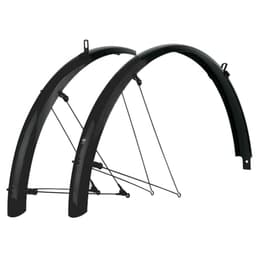
SKS Germany Bluemels B45 Fender Set, 700C
Full-length coverage for a frame with fender eyelets, with a published fit range of 700 x 29-38mm tires.
$71.49 · View on AmazonPrice as of October 21, 2026. #ad How we’re funded
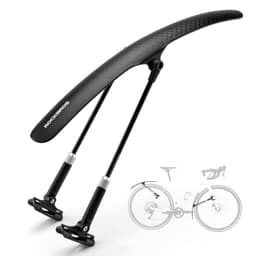
Rockbros Adjustable Detachable Fenders, 700C
The answer when the frame has no eyelets at all: clamp-on, quick-release, and off again in summer.
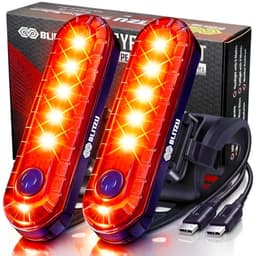
BLITZU Bike Tail Light 2-Pack
Two rear lights, so one is always charged -- the failure mode that actually leaves riders unlit in the rain.
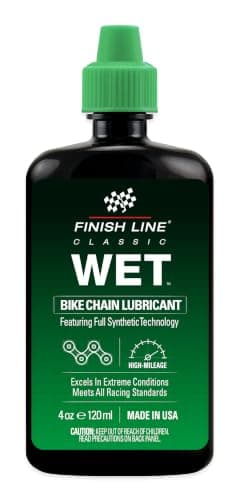
Finish Line Wet Bike Chain Lubricant 4 oz
A wet-style lube stays on the chain through rain and road spray, where a dry lube washes off in one ride.
$11.91 · View on AmazonPrice as of October 21, 2026. #ad How we’re funded
We have not ridden or tested these — every specification comes from the manufacturer or the retailer listing, dated. Here is exactly what we do instead.
The ten minutes when you get home
- Rinse the grit off. Low pressure. Wet road grime is an abrasive paste and leaving it on the drivetrain is what actually wears the parts.
- Dry the chain with a rag, then re-lube it. A chain left wet can show surface rust within hours.
- Towel the frame and let air at the bike. A closed shed holds moisture against the metal.
- Check the pads if you have been riding wet for weeks. Wet grit takes pad material off quickly, discs and rims both.
The full wash routine, including the two mistakes that cause real damage, and where to keep the bike so the drying is not undone.
When to simply not go
Three conditions where the honest advice is to stay in. Standing water deep enough to hide what is under it, because a pothole you cannot see is how wheels get destroyed. Ice or near-freezing rain, where a drop-bar bike on narrow tires has no answer. And heavy rain in traffic at dusk, where the visibility problem belongs to drivers and you cannot fix it from a bike.
For the shopping half of this page — fenders with a published tire-width range, a light that publishes a water rating, a puncture belt and the pad compound that helps on a wet rim — wet-weather gear is the list, with live prices and an honest note about why there is no rain jacket on it.
If winter is your reason for asking, there is a third option worth knowing about: riding the same bike indoors on a trainer, which is how a lot of riders keep fitness through a wet season.
The opposite weather has its own version of this page. Heat is the condition where the risk is to you rather than to your grip, and the thresholds that matter are published by the National Weather Service and OSHA rather than by anyone in cycling — riding in hot weather works through both.
Questions people actually ask
Is it safe to cycle in the rain?
Yes, with three adjustments: brake earlier, take corners slower and more upright, and make yourself visible. Most wet-weather incidents come from braking distance and from drivers seeing you late, not from the rain itself.
Should I lower my tire pressure in the rain?
Slightly. Dropping a few PSI below your usual figure increases the contact patch and improves grip on wet tarmac. Do not go so low that the tire squirms in corners or risks a pinch flat, and work from the pressure range printed on your tire's sidewall.
Do rim brakes work in the rain?
They work, but they bite later: the pads have to wipe water off the rim before they grip. Allow noticeably more distance, and brake lightly and early to clear the rim before you need to slow down properly. Disc brakes are far less affected, which is the single strongest argument for them.
Do I need fenders?
If you ride in the wet more than occasionally, yes -- most of the water that soaks you comes off your own front wheel, not out of the sky. Which type depends on your frame: full-length fenders need eyelets, and clamp-on ones do not.
What should I wear cycling in the rain?
A windproof outer layer, something on your feet, and something on your hands. In cool rain, wind chill on wet skin is the thing that ends rides, not the water. Avoid cotton, which holds water and cools you as it evaporates.
Do I need to clean my bike after every wet ride?
Not a full wash, but you do need to rinse the grit off, dry the chain and re-lube it. Road grime in the rain is an abrasive paste, and a chain left wet can show rust within hours.
Are lights necessary in daytime rain?
Yes. Rain cuts contrast and visibility for drivers while your own reflectors only work when headlights hit them directly. A rear light in a daytime flash mode is the single cheapest safety improvement for wet riding.
Sources
Specifications come from the manufacturer or the retailer listing, dated. Where a figure is not published, we say so rather than estimating it.
- SKS Germany — Take care when buying mudguards — Manufacturer fitment guidance: roughly 1.5cm tire-to-mudguard clearance, mudguard about 1cm wider than the tire, and clamps as a substitute for missing frame eyelets (accessed August 13, 2026)
- SKS Germany — Mudguard range and fitment data — Published per-model tire-width and wheel-size fit ranges, and which models need frame eyelets versus quick-release stays (accessed August 13, 2026)
- Park Tool — Brake pad replacement, rim brakes — The three rim brake pad systems (road, threaded stud, smooth stud), the rule that a holder's closed side always faces forward, the guidance that the caliper arm should be close to vertical as the pad strikes the rim, and the point that pad material hardens with age as well as wearing thin (accessed September 5, 2026)
- Park Tool — Disc brake pad removal and installation — The published replacement threshold - pad material should measure at least 1 mm thick - plus the compound comparison: organic gives the best initial bite and the best rotor longevity but the poorest wet durability, semi-metallic sits in the middle, and metallic lasts longest in the dry while generating more noise. Also the contamination test: a darkness on the rotor and pads that smears when rubbed with a finger (accessed September 5, 2026)
- 16 CFR § 1512.16 — Requirements for reflectors — The federal reflector requirement every new bicycle ships with, and what it does not cover (an active light) (accessed August 11, 2026)
- League of American Bicyclists — Ride Better Tips — Published riding guidance: ride with the flow of traffic, stay out of the door zone even where that means leaving the bike lane, ride in a straight line past parked cars, cross railroad tracks perpendicular (accessed August 18, 2026)
Read next
How to Wash a Bike
The full version of the after-ride routine, including what never to let near the brakes.
Read the guideBest Bike Fenders and Mudguards
Clamp-on and full-length sets compared, with the tire-width fit notes on each.
See the fender picksDisc Brakes vs Rim Brakes
Why the wet is where this comparison stops being theoretical.
Read the comparisonBest Cold Weather Cycling Gear
Jackets, tights, shoe covers and caps, for when the rain is cold as well as wet.
See the cold-weather picks