Zwift Setup for Beginners
What a first indoor setup actually needs, in the order it matters: the trainer, the thing that reads your speed, the screen, and the two cheap items everybody forgets.
How this is funded: we earn a commission if you buy through our links, at no extra cost to you. It never changes which bike we recommend, and we will tell you plainly when we would skip one. Full disclosure.
The cheapest honest setup is a classic trainer, a speed sensor, a trainer tire and the phone you already own. That gets you into the game, and the thing you give up is resistance control — a hill will look like a hill on screen without feeling like one in the pedals. If you already know you will ride indoors every winter, start at an app-controlled trainer instead and skip the intermediate purchase.
This page is the shopping list, in order, with the two items everybody forgets at the bottom: a mat and a fan. The second one is not optional in the way it sounds.
1. The trainer, and the only spec that can stop you
Pick the type first — our smart-versus-classic comparison is the decision in full — then check one thing before you buy anything: your rear axle. A bike with a thru-axle will not go into a trainer that only accepts a quick-release skewer, and no other number on the spec sheet matters if the bike does not physically fit.
What the manufacturers publish for the three trainers on this page: Wahoo include 130/135 mm quick-release plus 12x142 and 12x148 thru-axle adapters in the box; Elite list quick release 5x130-135 plus four thru-axle standards; Saris include a steel quick-release skewer and sell 142x12 and 148x12 adapters separately. If you do not know which you have, look at the rear wheel: a lever you flip open is quick release, a bolt you undo with a hex key through the hub is a thru-axle.
2. Something that reports your speed
This is the step that confuses every beginner, because it depends entirely on the trainer you bought:
- Smart trainer: nothing to buy. It reports its own power and speed, and takes resistance instructions back.
- Broadcasting trainer: nothing to buy either, if the sensor is in the box. The Saris Fluid2 Smart Equipped ships with a dual-band speed and cadence sensor and Saris list Zwift and Rouvy as supported.
- Plain classic trainer:you need a speed sensor on the rear wheel. A speed-and-cadence bundle costs little more than a speed sensor alone, and cadence is the number most worth watching as a beginner — most new riders turn a gear that is too big, too slowly.
3. A screen, and what it does not need to be
Any device that can see the trainer and run the app. A phone propped on the bars is how most people start; a tablet is easier to read; a laptop or a TV is the nicest and needs a surface. What you do not need is a bike computer — a computer records a ride, it does not run a virtual world, and buying one for indoor riding is the most common beginner mis-purchase on this page.
You will also need the subscription, which is a monthly cost and the reason the cheap route above is less cheap than it looks over a winter. If the appeal is simply turning the pedals rather than racing anyone, a classic trainer and a podcast remain a completely legitimate setup with no recurring bill.
The four routes in, and what each one costs you
| Route | Trainer | Who controls resistance | Also needed | The trade-off |
|---|---|---|---|---|
| Cheapest route | Classic trainer + speed sensor | You shift gear; the app reads speed | Trainer tire, mat, fan, a phone or tablet | A climb is a number on the screen, not resistance in the pedals |
| Middle route | Broadcasting trainer with sensor included | You shift gear; the trainer reports speed and cadence | Trainer tire, mat, fan | Same shifting, but nothing extra to buy or pair |
| Smart, wheel-on | App-controlled wheel-on trainer | The app sets resistance automatically | Trainer tire, mat, fan | Tire wear and roller noise remain; cheapest way into app control |
| Smart, direct drive | Rear wheel off, chain on the trainer | The app sets resistance automatically | Mat, fan, and a cassette unless the trainer ships a cog | Most expensive; quietest, and no tire to ruin |
4. The two things everybody forgets
A fan.Riding indoors produces the same heat as riding outdoors with none of the airflow that normally carries it away, which is why a first indoor session feels disproportionately hard. Any household fan pointed at your chest changes that more than any trainer feature. This is also the reason indoor riding is a heat exposure of its own — the same warning signs apply as on a hot day outside.
A mat. It catches the sweat that would otherwise sit on your top tube and your floor, stops the trainer walking, and takes the low-frequency hum out of the room below. Sweat is the under-appreciated part: it is salty, it corrodes bolt heads and cable ends, and it does it quietly over a winter. Wipe the bike down after every session.
What a first setup needs
The app-controlled trainer that costs least, the sensor bundle for a classic trainer, and the two protective items that are easy to skip and annoying to skip. Live prices.
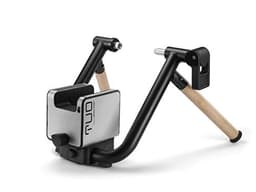
Elite Tuo Interactive Wheel-On Trainer
The cheapest trainer here that the app actually controls: 10% gradient, ±5% published accuracy, and quick-release plus four thru-axle adapters in the box.
$149.99 · View on AmazonPrice as of October 21, 2026. #ad How we’re funded
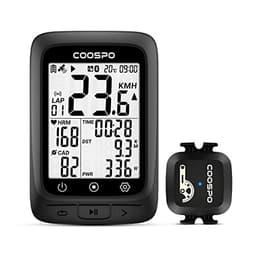
COOSPO BC107 GPS Computer + BK467 Cadence/Speed Sensor
The cadence and speed sensor route, for a classic trainer that reports nothing on its own — and the cadence number is the one worth watching as a beginner.
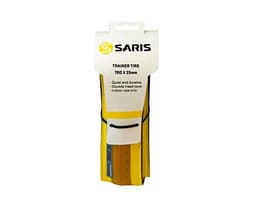
Saris Indoor Trainer Tire 700x25c
A rear tire built to be destroyed by a roller instead of your road tire. Yellow on purpose, because Saris state it is for indoor use only.
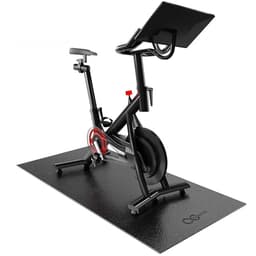
Cycleclub 6mm Exercise Bike Mat
30 x 60 in of 6 mm rubber: catches the sweat, stops the trainer walking, and takes the hum out of the room below.
$28.98 · View on AmazonPrice as of October 21, 2026. #ad How we’re funded
We have not ridden or tested these — every specification comes from the manufacturer or the retailer listing, dated. Here is exactly what we do instead.
What this setup will not fix
Indoor riding solves darkness, ice and traffic. It does not solve boredom, and it does not make the bike maintenance-free — the chain wears on the same schedule as it would outside, so the wear check still applies, and a dry, clean chain is quieter on a trainer than anywhere else because you are sitting next to it in a quiet room.
It also will not fit a bike you have not checked. If you are shopping for a first bike and already know indoor riding is part of the plan, note that a quick-release rear axle is the easier one to put on a trainer — the budget bikes on our under-$1,000 road bike page are mostly quick release, and the carbon bikes further up the range are mostly thru-axle.
Questions people actually ask
What do I need to start riding Zwift?
Four things: a trainer your bike fits, something that reports your speed to the app, a screen to run it on, and a subscription. Everything else on this page — mat, fan, trainer tire — is comfort and protection rather than a requirement, though the fan gets close to one.
Can I use Zwift without a smart trainer?
Yes. A classic trainer works as long as the app can see how fast the rear wheel is turning, which means a speed sensor. What you lose is automatic resistance: a climb will not make the pedals heavier, so you shift gear instead. Zwift's own 'Zwift Ready' badge describes smart trainers shipped with their Cog fitted — it is a convenience tier, not a requirement.
Do I need a trainer tire for Zwift?
On a wheel-on trainer, buy one. The roller wears a flat strip into whatever tire sits on it, and Saris list a trainer tire or low-tread tire as one of the things a wheel-on setup needs. Their own indoor tire is yellow specifically so nobody rides it outside. Direct-drive trainers take the wheel off, so the question disappears.
Will my bike fit a trainer?
Check the rear axle before anything else. Wahoo include 130/135 mm quick-release plus 12x142 and 12x148 thru-axle adapters; Elite include quick-release and four thru-axle standards; Saris include a quick-release skewer and sell thru-axle adapters separately. If your bike has a thru-axle and the trainer only takes quick release, nothing else on the spec sheet matters.
What screen do I need for Zwift?
Whatever you already own that can see the trainer. A phone or tablet on the bars is how most people start; a laptop or TV is nicer and needs somewhere to sit. A bike computer is not a substitute — it records your ride, it does not run the app.
How do I stop sweating all over my bike?
A fan pointed at you and a mat under the bike. Indoors you generate the same heat as outdoors with none of the airflow, and sweat is salty: it corrodes bolts, cable ends and anything unpainted. Wipe the bike down afterwards, which takes thirty seconds and is the single most skipped step in indoor riding.
Is indoor riding bad for my bike?
Not the riding itself, but two things are worth knowing. Sweat is corrosive, so wipe the frame and bolts down after each session. And indoor miles are still miles — the chain wears on the same schedule it would outdoors, even though the bike never leaves the room.
Sources
Specifications come from the manufacturer or the retailer listing, dated. Where a figure is not published, we say so rather than estimating it.
- Zwift — Zwift Ready smart trainers — Zwift's own definition of Zwift Ready: a smart trainer shipped with the Zwift Cog and Click already fitted, compatible with almost any 8 to 13 speed bike, giving 24 silent virtual gears where the resistance changes and the chain does not move (accessed August 26, 2026)
- Saris — Bike Trainers 101 — The manufacturer's own explainer for the three resistance types and the two mounting types: magnetic is stepped, fluid gets harder the faster you pedal, and smart trainers report power - Saris put their direct-drive H3 Plus within plus or minus 2 percent and the wheel-on M2 and Fluid2 within plus or minus 5 percent. It also lists a trainer tire or low-tread tire as one of the four things a wheel-on setup needs (accessed August 26, 2026)
- Saris — Trainer Tire — 700c x 25c, double-layer tread, and the explicit statement 'For use with an indoor trainer only' - plus the reason it exists, which is that frequent trainer riders wear the tread off their rear road tire (accessed August 26, 2026)
- Elite — Tuo interactive wheel-on trainer — Manufacturer specifications: electronically controlled magnetic resistance, plus or minus 5 percent power accuracy, 10 percent maximum simulated slope, 550 W at 20 km/h and 1,300 W at 40 km/h, ANT+ and Bluetooth, 10.3 kg, and the full list of included axle adapters from quick release through Boost 12x148 (accessed August 26, 2026)
- Wahoo — KICKR CORE 2 with Zwift Cog and Click — Manufacturer specifications for the Zwift Cog version: plus or minus 2 percent power accuracy, 1,800 W maximum, 16 percent maximum incline and -10 percent decline, WiFi plus Bluetooth plus ANT+ FE-C, 8 to 12 speed compatibility, 130/135 mm quick release and 12x142 / 12x148 thru-axle adapters in the box, 30 lb product weight and a 250 lb maximum rider weight (accessed August 26, 2026)
Read next
Smart Trainer vs Dumb Trainer
The one decision that sets the price of everything else, with the published accuracy figures side by side.
Read the comparisonBest Bike Trainers and Indoor Riding Gear
Seven trainers plus the mat and the trainer tire, with live prices and every figure each one publishes.
See the trainer picksBest Cycling Computers
What records your outdoor rides, and which units bring a cadence sensor in the box.
See the computer picksBest Cold Weather Cycling Gear
The outdoor answer to winter, which is cheaper than any trainer on this page.
See the winter kit