How Long Do Bike Tires Last?
The only published mileage ranges we could find from a tire manufacturer, the wear limit that ends the argument, and the four signs it is time regardless of distance.
How this is funded: we earn a commission if you buy through our links, at no extra cost to you. It never changes which bike we recommend, and we will tell you plainly when we would skip one. Full disclosure.
Most bicycle tires last between about 1,200 and 3,100 miles, and the honest answer is that nobody can give you a number for your tires. That range is Schwalbe’s own published figure for their standard tires (2,000 to 5,000 km), and they are one of the few manufacturers who publish anything at all. Their touring tires go much further — 6,000 to 12,000 km for the Marathon family — and for mountain bike tires they state plainly that “no useful mileage data is possible”.
So the useful skill is not mileage arithmetic. It is knowing what a finished tire looks like, because the wear limit is a thing you can see: when the puncture protection belt or the carcass threads show through the tread, the tire is done. That is Schwalbe’s wording and it is the only threshold on this page that does not depend on how or where you ride.
The only published mileage figures we could find
Mile conversions below are ours, from the kilometer figures Schwalbe publish — shown rather than rounded into a single confident number.
| Tire category | Published (km) | Our conversion | Note |
|---|---|---|---|
| Standard tires | 2,000-5,000 km | about 1,200-3,100 miles | Schwalbe's figure for their standard range — the band most road and gravel tires sit in |
| Marathon Racer / Supreme | 5,000-9,000 km | about 3,100-5,600 miles | Lighter touring tires, still built for distance |
| Marathon family | 6,000-12,000 km | about 3,700-7,500 miles | Heavy commuting and touring tires, with a thick protection belt |
| Marathon Plus | often more than 10,000 km | more than about 6,200 miles | Schwalbe's own wording. The puncture belt is the reason, and the weight is the price |
| MTB tires | no figure published | no figure published | Schwalbe state plainly that 'no useful mileage data is possible' — terrain decides it |
The four signs it is time, whatever the mileage says
- Threads or belt visible through the tread.The wear limit. Not a judgement call, not negotiable — the tire is a puncture waiting for a schedule.
- A flat, squared-off profile. A new road tire is round in cross section. A worn one develops a flat strip down the center where it has been pressed against the road, and the shoulders still look new. That tire has thousands of miles on it and very little rubber left in the middle.
- Cuts that reach the casing, or a bulge. Small nicks in the rubber are normal. A cut deep enough to show the fabric underneath, or a bulge where the casing has let go, means the tire can fail suddenly rather than slowly.
- Punctures that have become frequent. Three flats in a month on a tire that used to go a season is not bad luck; it is a worn tread no longer keeping glass out of the tube. This is the most common real-world signal, and the one riders most often blame on the tubes.
The rear wears out first, and what to do about it
Your weight sits mostly over the rear wheel and all the drive goes through it, so the rear tire wears roughly twice as fast as the front on the same bike. Two consequences worth acting on:
If you are buying one tire, buy it because the rear is finished.The common approach when it is: fit the new tire to the front, move the part-worn front tire to the rear, and scrap the dead one. A front blow-out is far harder to control than a rear, so the better rubber belongs on the wheel that steers — and the rear will wear through the part-worn tire soon enough anyway.
Buy in pairs when the bike is new to you. The tires fitted to budget drop-bar bikes are the component built to a price, and replacing both is the single most noticeable upgrade available for under $60. Where tires sit in the upgrade order covers why.
What to replace them with
Three replacement tires covering road, commuting and gravel, plus the tube worth having in the saddle bag when you do the job. Live prices.
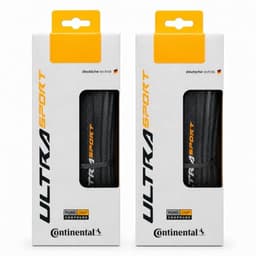
Continental Ultra Sport III 700x28 (pair)
The like-for-like road replacement in a pair, and a real step up from the unnamed tires most budget bikes ship with.
$57.00 · View on AmazonPrice as of October 20, 2026. #ad How we’re funded
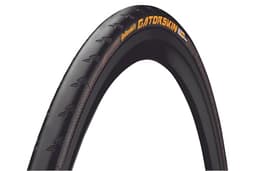
Continental Gatorskin 700x28
The choice when frequent punctures are the reason you are here: more protection, more weight, longer between replacements.
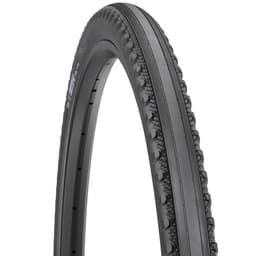
WTB Byway 700 x 44
The gravel answer for a bike that sees more pavement than dirt, where a worn slick has stopped coping with loose surfaces.
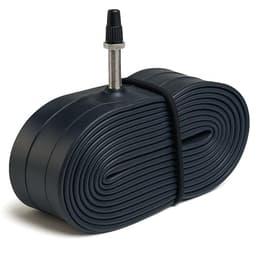
WTB Inner Tube 700 x 28-38
The tube to fit while the tire is already off — and the one that then lives in the saddle bag as the spare.
$8.95 · View on AmazonPrice as of October 20, 2026. #ad How we’re funded
We have not ridden or tested these — every specification comes from the manufacturer or the retailer listing, dated. Here is exactly what we do instead.
Age, sunlight and the bike that sat in the shed
Rubber degrades without being ridden. The figure we can cite is Schwalbe’s storage statement — their tires “can be stored for up to 5 years without issue” in cool, dry, dark conditions — and the conditions in that sentence are the point. A tire stored in a box behaves very differently from a tire that has spent three summers on a bike outside, where UV and ozone crack the sidewalls.
So if you are reviving a bike that has stood for years, inspect the sidewalls before the tread. Fine cracking along the sidewall, or rubber that feels hard and shiny rather than slightly tacky, is a replacement whatever the tread looks like. Our used-bike guide treats tires as a negotiating point for exactly this reason, and where a bike lives does more damage or more good than anything else on this page.
What makes tires last longer
- Correct pressure. Too soft risks pinch flats and sidewall damage; too hard on rough surfaces wears the center strip and rides worse. Road pressure and gravel pressure both work from your weight and tire width rather than the sidewall maximum.
- Getting the glass out. Fragments embed in the tread and work inward over weeks. Running a gloved thumb over the tread after a wet ride, and picking out what you find, prevents the flat that happens three rides later.
- Not braking the back wheel to a stop. Rear-only braking wears the one tire that was already wearing fastest, and stops the bike less well.
- Keeping the trainer off your good tire.A wheel-on indoor trainer puts a flat strip into a road tire in a handful of sessions, which is what a trainer tire exists for — covered in the indoor setup guide.
Tires are one line in a longer list: how long a bike lasts collects the published wear limit for every part that wears, from the chain thresholds to the 1mm disc-pad figure. And if a worn tire is why you are here, the two extremes of the replacement decision are set out in Gatorskin versus GP5000.
Questions people actually ask
How many miles do bike tires last?
Schwalbe are one of the few manufacturers to publish ranges at all: 2,000 to 5,000 km (roughly 1,200 to 3,100 miles) for standard tires, 6,000 to 12,000 km for their Marathon touring family, and more than 10,000 km for Marathon Plus. For mountain bike tires they state that no useful mileage figure is possible. Treat any single number you see quoted elsewhere with suspicion.
When should I replace a bike tire?
Schwalbe's wear limit is unambiguous: when the puncture protection belt or the carcass threads can be seen through the tread, the tire must be replaced. Before that point, replace it if the tread has a flat squared-off profile, if cuts reach the casing, if the sidewall is cracked or bulging, or if punctures have become frequent.
Does the front or rear tire wear out first?
The rear, every time — it carries more of your weight and transmits all of the drive. The common approach when it wears out is to fit the new tire to the front and move the part-worn front tire to the rear, so the better rubber is always on the wheel that steers.
Do bike tires expire if I do not ride?
They age, and the figure we can cite is a storage one: Schwalbe state their tires can be stored for up to 5 years without issue in cool, dry, dark conditions. A tire that has sat on a bike in sunlight is a different case — UV and ozone crack rubber, and a cracked sidewall is a replacement regardless of tread depth.
What is a tire wear indicator?
A small molded indentation in the tread that shows how far the tread can wear before replacement. Schwalbe publish them on their Pro One road tires, marked T.W.I. on the sidewall, and Continental use a similar indentation in the center of the tread. Most budget tires have none, which is why the carcass-visible rule matters more.
Should I replace tubes when I replace tires?
Not necessarily, but it is a sensible moment to. A tube that has been patched twice, or one that is the same age as a worn-out tire, is cheap to replace while the tire is already off — and the spare tube in your saddle bag should be a new one, not the old one you just removed.
Does tire pressure affect how long a tire lasts?
Yes, in two directions. Running too soft increases the risk of pinch flats and sidewall damage, and running at the sidewall maximum on rough surfaces makes the tire skip rather than grip. Set pressure from your own weight and tire width rather than from the number printed on the casing.
Sources
Specifications come from the manufacturer or the retailer listing, dated. Where a figure is not published, we say so rather than estimating it.
- Schwalbe — Technology FAQ: tire wear — The only published mileage figures we could find from a tire manufacturer, and the wear limit our tire-life page is written around: 'When the puncture protection belt or the carcass threads can be seen through the tread the tire has reached its wear limit and must be replaced.' Schwalbe's own published ranges are 2,000-5,000 km for standard tires, 5,000-9,000 km for Marathon Racer and Supreme, 6,000-12,000 km for the Marathon family and 'often much more than 10,000 km' for Marathon Plus, while for MTB tires they state 'No useful mileage data is possible'. They also publish the wear indicator ('small indentations in the tread', marked T.W.I. on the sidewall of the Pro One) and a storage figure: Schwalbe tires 'can be stored for up to 5 years without issue' in cool, dry, dark conditions (accessed October 11, 2026)
- Park Tool — Tire and tube removal and installation — The naming and the mechanics of the three valve stems, in Park Tool's own words: 'There are three common types of valve stems on bicycles: Schrader ('American' type), Presta ('French' type) and Woods (also known as 'Dunlop')', and on the Presta, 'At the top of the stem is a small locknut, which must be unthreaded before air can enter the tube'. Also the two fitment facts the valve comparison turns on - 'The rim valve hole should match the valve of the tube', with an adapter sleeve available to fit a narrower Presta valve into a Schrader-sized hole, and 'Presta valve tubes are available with different length valves. Longer valve stems are needed for deeper aerodynamic rims' - plus the bead-seating check, 'Inflate to low pressure and inspect bead again on both sides. Look for small molding line above bead' (accessed October 10, 2026)
- Continental — Ultra Sport road tire — Continental's own page for the tire line fitted to two of the bikes on this page, registered as much for what it does not publish as for what it does. It states the positioning ('modern tire for those new to road cycling') and the PureGrip compound, 'derived from an activated Silica compound'. It publishes no size list, no weight, no pressure range and no puncture-protection layer name, so none of those figures appears on our page for these bikes (accessed October 3, 2026)
- Schwalbe — Tire sizes and the ETRTO designation — How the 40-622 style ETRTO number maps to '700 x 40c' (accessed July 23, 2026)
Read next
Best Road Bike Tires
Six road tires with live prices, including the puncture-resistant option worth the weight.
See the tire picksBest Gravel Bike Tires
Tread patterns, widths and what each listing publishes — and what it does not.
See the gravel tiresBike Tire Sizes Explained
How to read the numbers already on your tire, so the replacement fits the first time.
Read the explainerHow to Fix a Flat Tire
Including the inspection step that finds the thorn still in the tire.
Read the how-to