Why Your Bike Tire Keeps Going Flat
Five causes, and the symptom that tells you which one you have. A repeat flat is almost never bad luck, and a new tire fixes only one of the five.
How this is funded: we earn a commission if you buy through our links, at no extra cost to you. It never changes which bike we recommend, and we will tell you plainly when we would skip one. Full disclosure.
A tire that keeps going flat has a cause, and five candidates cover almost all of them: something still stuck in the tire, pressure too low, rim tape off the spoke holes, a leaking valve, or a tire worn through. Only one of those is fixed by buying a better tire, which is why this page is a diagnosis before it is a shopping list.
The quickest triage is the clock. Flat overnight with nothing to find points at the valve or the rim tape. Flat during rides, repeatedly, points at debris, pressure or a worn tire. Work from the symptom down, not from the product page up.
The symptom table
Find your symptom in the left column. The fix in the right column is the one that actually ends the cycle — everything else is replacing tubes until you run out of patience.
| What you see | What it is | What ends it |
|---|---|---|
| Flat overnight, no hole you can find | The valve, or a slow leak through the valve seat | Soapy water around the valve with the tube inflated; tighten a Presta core, or replace the tube |
| Two small holes side by side | Pinch flat — the tube was crushed between rim and obstacle | More pressure, a wider tire, or both. This is a pressure problem, not a puncture |
| Hole on the inner face of the tube, toward the spokes | Rim tape has moved, split, or never covered the spoke holes | Replace the rim tape. New tubes will keep failing until you do |
| New flat in the same spot as the last one | Something is still embedded in the tire casing | Run a finger slowly around the inside of the tire and pick it out |
| Flats getting more frequent over months | The tire is worn out, or cut through to the casing | Replace the tire. A belt you can see through is finished |
| Flat right after fitting a new tube | Tube pinched by a tire lever during installation | Refit by hand for the last section, and check the bead is seated all the way round |
1. Something is still in the tire
This is the most common reason a flat repeats within a week. A thorn or a sliver of glass works through the tread, punctures the tube, and stays exactly where it is. You fit a new tube, it punctures in the same place, and the tire looks fine from outside because the object is now flush with the rubber.
The fix is a slow finger around the inside of the casing — carefully, because glass cuts fingers as well as tubes. Match the hole in the tube to its position in the tire first; that tells you which part of the casing to inspect rather than making you search the whole circumference.
2. The pressure was too low
Two holes side by side, often described as a snake bite, mean the tube was crushed between the rim and a kerb, pothole or rock. That is not debris and no puncture belt prevents it. Either the tire was soft, or it is too narrow for the surface and the rider on it.
Pressure is also where wet-weather flats come from: a soft tire deforms more, picks up more of what the water lifts onto the road, and gives glass more time against the rubber. Schwalbe and Silca both publish pressure guidance that varies with rider weight and tire width rather than a single number, and our pressure guideturns that into a starting point. Gravel riders start lower still — gravel pressure is its own page.
3. The rim tape has moved
Inside your rim there is a strip of tape covering the spoke holes. If it slides, splits or was never wide enough, the tube bulges into a spoke hole under pressure and the edge of the hole cuts it. The giveaway is unmistakable once you know it: the hole is on the inner face of the tube, the side facing the spokes, not the side facing the road.
People replace three or four tubes before checking this, because the tube looks like a normal puncture. Any time the tire is off, look at the tape. Replacing it costs a few dollars and ends the problem permanently.
4. The valve is leaking
A valve is a mechanical part and it can seep. On a Presta valve the core can work loose — the knurled nut at the top unscrews to let air in, and the core itself can unscrew with it when you remove a tight pump head. Park Tool’s own tube guidance is the reference for the three valve types and how they differ; our Presta versus Schrader page covers which you have and which pump fits it.
Test it by inflating the tube outside the tire and brushing soapy water around the valve base. Bubbles mean a new tube; there is no reliable repair for a leaking valve seat on a standard tube.
5. The tire itself is finished
Tires wear thin in the center, where all the pavement contact happens, and a thin tire punctures easily. Schwalbe publish the only wear limit we have found stated plainly by a manufacturer, and it works on any brand: when the puncture protection belt or the carcass threads can be seen through the tread, the tire has reached its wear limit and must be replaced. A cut deep enough to show threads is the same verdict.
Squared-off tread, cuts you can open with a fingernail and casing visible anywhere all mean the same thing. How long bike tires last has the published mileage ranges, with the honest caveat that only one manufacturer publishes any.
What to buy once you know the cause
Two of these fixes are free, one is a few dollars of rim tape, and only the debris case is a tire purchase. The picks below are in that order of likelihood, which is the opposite of the order most shopping pages put them in.
What fixes it
A spare tube and levers end the roadside part of the problem; a belted tire ends the debris part. Nothing here fixes rim tape or a leaking valve, because those are not purchases worth a product page. Live prices.
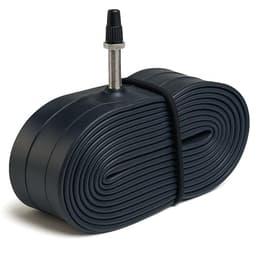
WTB Inner Tube 700 x 28-38
Carry one, keep one at home. The difference between a puncture being a ten-minute stop and a two-hour walk — and a spare lets you ride home and diagnose properly on a bench.
$8.95 · View on AmazonPrice as of October 21, 2026. #ad How we’re funded
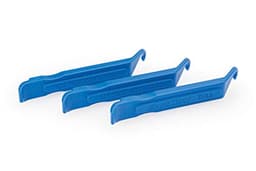
Park Tool TL-1.2 Tire Lever Set
Levers that do not snap halfway through a stubborn bead, which is how tubes get pinched during installation and how flat number two happens.
$6.95 · View on AmazonPrice as of October 21, 2026. #ad How we’re funded
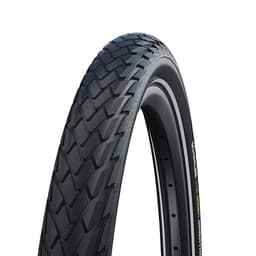
Schwalbe Marathon GG RLX 700x28
The answer when the diagnosis really is debris on a commute: a published 3 mm GreenGuard belt. You pay for it in weight and rolling speed, and the listing is honest about both.
$45.54 · View on AmazonPrice as of October 21, 2026. #ad How we’re funded
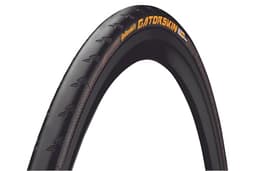
Continental Gatorskin 700x28
Protection in two places — tread belt and DuraSkin sidewalls — and sold singly, so you can armor the rear wheel where most punctures land and leave the front alone.
We have not ridden or tested these — every specification comes from the manufacturer or the retailer listing, dated. Here is exactly what we do instead.
The four anti-flat options, and what each costs you
Published specifications on the left, the trade on the right. There is no option here that is simply better than the others, which is why we would rather you fixed the cause than bought the thickest tire on the shelf.
| Option | What is published | What it costs you |
|---|---|---|
| Schwalbe Marathon GG RLX | 3 mm GreenGuard puncture layer, anti-aging compound, wire bead | Heavy and slow rolling — this is the price of a 3 mm belt |
| Continental Gatorskin | PolyX Breaker under the tread plus DuraSkin sidewalls; sold singly | Harsher and slower than a supple tire; weight and max pressure not published |
| Tubeless with sealant | Sealant seals small punctures as they happen; needs tubeless-ready rims and tires | A setup job, a consumable that dries out, and valves to maintain |
| A thicker inner tube | Nothing useful — tube wall thickness is rarely published | Weight for a benefit nobody quantifies. We would rather fix the cause |
The order to work through it
- Take the tube out and find the hole. Where it is tells you what caused it.
- Line the tube up against the tire in the position it came out, and inspect that part of the casing inside and out.
- Look at the rim tape while the tire is off. Every time.
- Check the valve with soapy water if you found no hole at all.
- Set the pressure deliberately when you refit, and write your number down somewhere.
- Only then consider a different tire — and only if the evidence pointed at debris or wear.
If step one is the part you are unsure about, our flat-repair guide covers getting the tire off and back on without pinching the new tube, and how to pump a tire covers the valve handling that causes a surprising share of “new tube, still flat” mysteries.
Questions people actually ask
Why does my bike tire keep going flat with no puncture?
Two usual suspects: the valve and the rim tape. Inflate the tube out of the tire and run soapy water around the valve base — bubbles mean the valve seat is leaking. If the hole is on the inner face of the tube facing the spokes, the rim tape has moved or split and every new tube will fail the same way.
Why does my tire go flat overnight but not while riding?
That is the signature of a very small leak, and a leaking valve is the most common cause. A Presta valve core can work loose; a cheap tube can seep at the seat. Replace the tube, keep the old one for patch practice, and check your pump head is not unseating the valve as you remove it.
What are two holes side by side in a tube?
A pinch flat, where the tube was crushed between the rim and something you hit. It is a pressure problem rather than a puncture: the tire was too soft for your weight, the tire is too narrow for the surface, or both. More air or a wider tire fixes it.
Will a puncture-proof tire fix repeat flats?
Only if the cause is debris cutting through the tread. If the cause is rim tape, the valve, low pressure or a cut tire, a thicker belt changes nothing and you have paid a weight and comfort penalty for it. Diagnose first — that is the entire point of this page.
How do I find a tiny hole in an inner tube?
Inflate it and listen; if that fails, pass it slowly past your lips, which are more sensitive than fingers; if that fails, dunk it in water a section at a time and watch for bubbles. Then mark it, and line the tube up with the tire to find what caused it.
How often should I replace rim tape?
There is no published interval, so treat it as a condition check rather than a schedule: whenever the tire is off, look at the tape, and replace it if it has shifted off the spoke holes, split, or gone brittle. It costs almost nothing and it fixes a whole class of repeat flat.
When is a tire too worn to keep?
Schwalbe publish the limit that works on any brand: when the puncture protection belt or the carcass threads can be seen through the tread, the tire has reached its wear limit and must be replaced. Any cut deep enough to show the threads is the same answer, regardless of mileage.
Sources
Specifications come from the manufacturer or the retailer listing, dated. Where a figure is not published, we say so rather than estimating it.
- Park Tool — Tire and tube removal and installation — The naming and the mechanics of the three valve stems, in Park Tool's own words: 'There are three common types of valve stems on bicycles: Schrader ('American' type), Presta ('French' type) and Woods (also known as 'Dunlop')', and on the Presta, 'At the top of the stem is a small locknut, which must be unthreaded before air can enter the tube'. Also the two fitment facts the valve comparison turns on - 'The rim valve hole should match the valve of the tube', with an adapter sleeve available to fit a narrower Presta valve into a Schrader-sized hole, and 'Presta valve tubes are available with different length valves. Longer valve stems are needed for deeper aerodynamic rims' - plus the bead-seating check, 'Inflate to low pressure and inspect bead again on both sides. Look for small molding line above bead' (accessed October 10, 2026)
- Schwalbe — Technology FAQ: tire wear — The only published mileage figures we could find from a tire manufacturer, and the wear limit our tire-life page is written around: 'When the puncture protection belt or the carcass threads can be seen through the tread the tire has reached its wear limit and must be replaced.' Schwalbe's own published ranges are 2,000-5,000 km for standard tires, 5,000-9,000 km for Marathon Racer and Supreme, 6,000-12,000 km for the Marathon family and 'often much more than 10,000 km' for Marathon Plus, while for MTB tires they state 'No useful mileage data is possible'. They also publish the wear indicator ('small indentations in the tread', marked T.W.I. on the sidewall of the Pro One) and a storage figure: Schwalbe tires 'can be stored for up to 5 years without issue' in cool, dry, dark conditions (accessed October 11, 2026)
- Schwalbe — Tire pressure FAQ — Manufacturer guidance that no general pressure can be recommended because it depends on the load on the tire; the permitted range is printed on the sidewall; a loss of about 1 bar a month is normal; the thumb test is unreliable above roughly 2 bar; use a floor pump with a gauge (accessed September 18, 2026)
- Silca — Professional tire pressure calculator — Published pressure model taking rider weight, tire width and surface as inputs (accessed July 23, 2026)
Read next
How to Fix a Flat Tire
The eleven steps at the roadside, and the three mistakes that cause a second flat on the same ride.
Read the procedureRoad Bike Tire Pressure
The setting behind most pinch flats, and how to find your own number rather than the sidewall maximum.
Set your pressureGatorskin vs GP5000
If the diagnosis really is debris, this is the comparison between armor and ride feel.
Compare the tiresTubeless vs Inner Tubes
Sealant turns most small punctures into a hiss. What it costs you in setup and maintenance.
Read the comparisonBest Road Bike Tires
The shortlist with live prices, from puncture-belted commuter tires to fast ones.
See the tire picks