How to Remove Rust From a Bike
Most of what people call rust comes off with a brush and oil. The question worth answering first is whether the rusty part is still worth saving — and on a chain, that is measurable.
How this is funded: we earn a commission if you buy through our links, at no extra cost to you. It never changes which bike we recommend, and we will tell you plainly when we would skip one. Full disclosure.
Before you clean a rusty chain, measure it. If it is past its published wear threshold, the right move is a new chain — and you have saved yourself an hour of scrubbing. That one check is the difference between useful work and wasted work, and it is the reason this page starts with a gauge rather than a brush.
After that, rust on a bike is mostly a material question. Steel rusts: chain, cassette, bolts, spokes, a steel frame. Aluminum does not rust at all — the white powder on an old rim or seatpost is oxidation, not rust, and it is almost always cosmetic. Carbon does not corrode, though the metal parts bonded into it can. Knowing which you are looking at tells you whether to clean it, seal it or leave it alone.
Rust by material: what is worth doing
| Part | Material | What the rust means | What to do |
|---|---|---|---|
| Chain and cassette | Steel | Rusts readily. Clean it, then measure it — a rusted chain that is also worn is scrap | Degrease, dry, brass brush, re-lube; check elongation with a gauge |
| Bolts, spokes, chainring bolts | Steel, sometimes plated | Surface rust is cosmetic until the head rounds off or the thread seizes | Brass brush and a drop of oil; replace anything you cannot turn cleanly |
| Handlebar, stem, seatpost, rims | Usually aluminum | Does not rust. White powder or pitting is aluminum oxidation, not rust | Wipe clean; do not attack it with abrasives on a clamping surface |
| Painted steel frame | Steel under paint | Rust at a chip spreads under the paint. Catch it early | Clean gently, dry completely, seal the chip; abrasives remove paint and make it worse |
| Inside a steel frame | Steel | The rust you cannot see and cannot fix with a brush | Keep water out: seatpost greased, bottle-cage bolts sealed, bike stored dry |
| Carbon fork or frame | Carbon fiber | Does not rust at all; its fittings and inserts can | Clean the metal parts only, and never use a wire brush on carbon |
The rusty chain, in order
- Measure first. A chain-wear gauge takes five seconds. The published thresholds are 0.5% elongation for the narrowest modern drivetrains, 0.75% for most others and 1% for older ones. Past the threshold, stop here and replace it.
- Degrease. Follow the procedure the manufacturers publish: degrease, dry, then re-lubricate. A chain scrubber does this with the chain on the bike; a brush and a rag does it more slowly and just as well.
- Dry completely.This is the step people skip, and on a rusty chain it is the important one — bare steel that is still damp will flash-rust within hours.
- Brush the surface rust. A brass brush cuts rust without scoring the plates. Work along the chain, then flex it sideways to find stiff links.
- Re-lubricate properly. Lube goes between the rollers and the plates, not all over the outside. Apply, let it penetrate, then wipe the surface dry so it does not collect grit.
- Ride it and listen. If it skips under load in a gear it used to hold, the cassette has been worn by the old chain and the job is bigger than rust.
What we will not tell you to do
- Soak the chain in a household acid.No chain manufacturer publishes a procedure for it, and the mechanism works against you: a dip strips the lubricant from inside the rollers — the part you cannot replace from outside — and leaves bare steel to flash-rust as it dries. On a part this cheap, replacing beats experimenting.
- Take a wire wheel to a painted frame. You will remove paint faster than rust, and bare steel rusts faster than painted steel. Clean gently, dry, and seal the chip.
- Abrade a clamping surface. Seatposts, handlebars and steerer tubes are held by friction at a specified torque. Sanding them changes the fit, and on carbon it damages the part. Clean, do not grind.
- Lube over rust. Oil on top of rust and grit makes a grinding paste that accelerates the wear you were trying to stop. Clean first, always.
What this needs
A degreaser and brushes to get the rust off, a wet lube to keep the next winter out, and the gauge that tells you whether the chain was worth saving. Live prices.
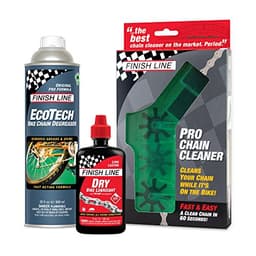
Finish Line Pro Chain Cleaner Kit
Scrubber, degreaser and lube in one box — the whole chain job without assembling it from three purchases.
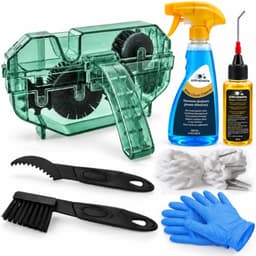
Ultrafashs 7-Piece Bike Cleaning Kit
The budget version with more pieces: the gear floss and sprocket scraper reach between the cassette sprockets where rust and grime sit together.
$19.99 · View on AmazonPrice as of October 21, 2026. #ad How we’re funded
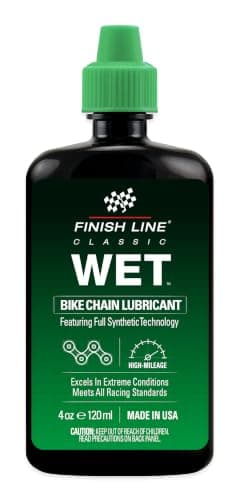
Finish Line Wet Bike Chain Lubricant 4 oz
The prevention half of this page. A wet lube stays on the chain through the rain and salt that put the rust there in the first place.
$11.91 · View on AmazonPrice as of October 21, 2026. #ad How we’re funded
Park Tool CC-3.2 Chain Checker
The five-second check that decides whether the chain is a cleaning job or a replacement. Do this before the scrubbing, not after.
$12.85 · View on AmazonPrice as of October 21, 2026. #ad How we’re funded
We have not ridden or tested these — every specification comes from the manufacturer or the retailer listing, dated. Here is exactly what we do instead.
Bolts, spokes and the ones that actually matter
Surface rust on a bolt head is cosmetic. A bolt you cannot turn cleanly is not: a seized seatpost clamp bolt or a rounded stem bolt turns a five-minute adjustment into a workshop job. Clean the heads with a brass brush, put a drop of oil on the threads where a fastener is not meant to be torqued dry, and replace anything whose hex socket is rounding off — replacement bolts cost pennies.
Rusty spokes are worth a closer look than they get. Rust at the nipple, where the spoke enters the rim, is where water collects, and a spoke that snaps there usually does it under load. Our maintenance basics covers the pre-ride checks that catch this kind of thing before it becomes a wheel rebuild.
Prevention, which is the whole game
Rust is water plus time, and salt is the accelerant. The habits that work are unglamorous:
- Wipe the frame, chain and bolts down after wet or salted rides.
- Run a wet lube through winter and a dry lube in summer.
- Grease the seatpost and any bolt that is not specified to go in dry.
- Store the bike indoors if you can, and under a cover that breathes rather than traps moisture if you cannot.
Rubber ages in the same conditions, for what it is worth: Schwalbe publish that their tires can be stored for up to five years without issue in cool, dry, dark conditions, which is a reasonable statement of what sunlight and weather do to rubber that is not. Bike storage and security has the realistic options for people with no indoor space, and our wet-weather gear page covers the fenders that keep road water off the bike as well as off you.
Questions people actually ask
How do I remove rust from a bike chain?
Degrease it, dry it completely, work the surface rust off the plates and rollers with a stiff brush — brass rather than steel — and then re-lubricate it. Afterwards, check the chain for elongation with a gauge. If it is past its published wear threshold, you have cleaned a part that needed replacing anyway.
Is a rusty bike chain still safe to use?
Light surface rust on the outer plates is cosmetic and cleans up. What is not safe is a chain with stiff links that will not flex, deep pitting, or measured elongation past its threshold — those are the ones that skip under load, and a chain that skips at the wrong moment puts you on the ground.
Should I use vinegar or a household acid to remove rust?
We do not recommend it, and no chain manufacturer publishes a procedure for it. A dip removes the factory lubricant from inside the rollers, which is the part you cannot easily replace, and leaves bare steel that flash-rusts as it dries. On a chain cheap enough to replace, the risk is not worth the saving.
Can you remove rust from a bike frame?
Surface rust at a paint chip on a steel frame: yes, carefully, then dry it and seal the chip. Rust from inside the tubes: no, not with anything you can buy for a bike. That is why keeping water out of a steel frame matters more than any treatment after the fact.
Does an aluminum bike rust?
No. Aluminum oxidizes rather than rusting, which looks like white powder or dull pitting rather than orange flakes. It is mostly cosmetic, and you should not take abrasives to a clamping surface like a seatpost or handlebar to chase it.
Why did my bike rust so quickly?
Water plus time, and salt accelerates it enormously. A bike stored outside or in an unheated shed through a wet winter, ridden on salted roads and not wiped down, can show rust in weeks. Nothing you apply afterwards works as well as thirty seconds with a rag after a wet ride.
Can I prevent rust without storing the bike indoors?
Partly. A wet lube on the chain, greased seatpost and bolts, a cover that breathes rather than traps moisture, and a wipe-down after every wet ride all help. Indoors is still the answer when it is available — it is the single biggest variable in how long a bike's parts last.
Sources
Specifications come from the manufacturer or the retailer listing, dated. Where a figure is not published, we say so rather than estimating it.
- Park Tool — How to clean and lubricate a chain — Manufacturer procedure for degreasing, drying and re-lubricating a bicycle chain (accessed August 11, 2026)
- Park Tool — When to replace a worn chain — The 0.5% / 0.75% / 1.0% chain-wear replacement thresholds and the ruler method for measuring them (accessed August 11, 2026)
- Schwalbe — Technology FAQ: tire wear — The only published mileage figures we could find from a tire manufacturer, and the wear limit our tire-life page is written around: 'When the puncture protection belt or the carcass threads can be seen through the tread the tire has reached its wear limit and must be replaced.' Schwalbe's own published ranges are 2,000-5,000 km for standard tires, 5,000-9,000 km for Marathon Racer and Supreme, 6,000-12,000 km for the Marathon family and 'often much more than 10,000 km' for Marathon Plus, while for MTB tires they state 'No useful mileage data is possible'. They also publish the wear indicator ('small indentations in the tread', marked T.W.I. on the sidewall of the Pro One) and a storage figure: Schwalbe tires 'can be stored for up to 5 years without issue' in cool, dry, dark conditions (accessed October 11, 2026)
Read next
How to Clean a Bike Chain
The routine version of the job on this page, with the published degrease-dry-lubricate procedure.
Read the procedureWhen to Replace a Bike Chain
The measurement that decides whether a rusty chain is worth cleaning at all.
Check your chainHow to Wash a Bike
What to use, what to keep water away from, and the drying step most people skip.
Wash it properlyBike Storage and Security
Where to keep a bike so this page becomes unnecessary, including the realistic outdoor options.
Read the guideBest Bike Chain Lube
Wet or dry, and which one to run through a winter of salted roads.
See the lube picks