Starting Cycling in Your 50s and 60s
Two decisions do most of the work: how upright you sit, and how low your lowest gear is. Everything else on a first bike is adjustable later.
How this is funded: we earn a commission if you buy through our links, at no extra cost to you. It never changes which bike we recommend, and we will tell you plainly when we would skip one. Full disclosure.
Get the riding position and the bottom gear right and almost everything else about a first bike can be changed later. Those two decisions are made at purchase and are expensive to undo: a bike whose reach you cannot hold comfortably stays in the garage, and a bike without a low enough gear turns every hill into a walk.
One honest boundary first. This is an equipment page. We do not publish training plans, mileage targets or anything about exercise and health — those questions belong with your doctor, and a bike site inventing answers to them would be exactly the authority-borrowing this site is written against. What we can do is tell you which published specifications matter when the rider is not a twenty-five-year-old racer.
Three routes in, and what each one costs you
| Route | Position | Gearing | What it suits | The trade-off |
|---|---|---|---|---|
| Flat-bar hybrid | Upright, one hand position | Usually wide-range, low bottom gear | Errands, towpaths, rides up to about 20 miles | A single hand position gets uncomfortable on longer rides |
| Drop-bar road bike | Leaned forward, several hand positions | Narrower range; the bottom gear is the thing to check | Pavement, distance, group rides | Asks more of your back, neck and shoulders at first |
| Gravel bike | Drop bars, more upright than a road bike | Wide range with a genuinely low bottom gear | Mixed surfaces, comfort, wide tires | Heavier and slower than a road bike on pavement |
Position: the thing to be honest with yourself about
An upright position is comfortable for an hour and gives you one place to put your hands. Drop bars are less comfortable for the first few rides and give you three or four, which is why riders going further use them — numb hands come from holding one position, not from leaning forward.
What makes a drop-bar bike unpleasant is not the bars but the reach: too long a stem, too low a bar, and a frame a size too big. All three are either adjustable or avoidable. Trek publish their sizing guidance as depending on height and inseam rather than height alone, and that is the honest version — two riders the same height can need different frames. Our size chart page covers turning your own measurements into a frame size, and bike fit basics covers the adjustments after it arrives.
The bottom gear decides whether hills are rideable
Most first-bike buyers count gears. The number that matters is one ratio: your smallest chainring against your largest sprocket. A bike with 24 gears and a high bottom gear is harder up a hill than a bike with 18 gears and a low one.
Shimano publish their own explanation of one-chainring versus two-chainring setups, and the practical upshot for a new rider is that wide-range modern cassettes have made low gears normal rather than specialist. Bike gearing for hills shows the arithmetic in gear inches with a table you can check your own bike against, and 1x versus 2x explains the two layouts you will see on the spec sheets.
The saddle, and why an upright rider needs a different one
The more upright you sit, the more of your weight lands squarely on your sit bones, which is why upright riders usually want a wider saddle than the narrow one fitted to a road bike. That is a geometry fact rather than a comfort preference.
Before buying anything, use the free adjustments. Park Tool publish the three — height, fore-aft and angle — and note that the correct position is personal rather than one number. A saddle an inch too low or tipped nose-up produces pain that gets blamed on the saddle. NIOSH’s research into perineal pressure on conventional saddles is the published basis for relief channels and noseless designs, and it is why those exist at all. Why your saddle hurts works through the adjustments in order.
Pedals, shoes and not falling over at a stop
There is no rule that says you have to clip in. Flat pedals with a grippy aluminum body and normal shoes work, cost little, and remove the one genuinely intimidating part of learning on a road bike — getting a foot out at a junction. Clipping in is more efficient on climbs, and it is an upgrade available any time.
If you do want to learn, learn somewhere soft and quiet, and practice unclipping before you need to. Our pedals page covers the three kinds, the cleat-pattern trap and the sequence for learning without falling over.
Wider tires at lower pressure are free comfort
The cheapest comfort available on any bike is tire width and pressure. A wider tire run at a lower pressure absorbs the road surface the frame transmits, and on a bike with clearance for it the difference is immediate.
That is one of the strongest arguments for a gravel bike as a first bike later in life: the frames take 38-45mm tires where a road frame takes 25-28mm. Road tire pressure and gravel tire pressure both work through finding your own number by weight and width, which is free and makes more difference than most paid upgrades.
What this needs
An upright bike for riders whose priority is comfort and errands, a wide saddle for that position, flat pedals, and the cheapest honest way into drop bars. Live prices.
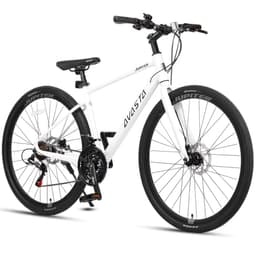
AVASTA 700C Step-Over Hybrid
The honest comparison point for a first bike: a flat-bar step-over hybrid with an upright position, for errands, paths and rides up to about 20 miles.
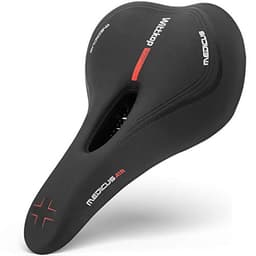
Wittkop Comfort Saddle, 5-Zone Concept
A wide, waterproof comfort saddle built for a more upright position — which is how a lot of first-bike owners actually sit, including on drop bars.
$47.99 · View on AmazonPrice as of October 21, 2026. #ad How we’re funded
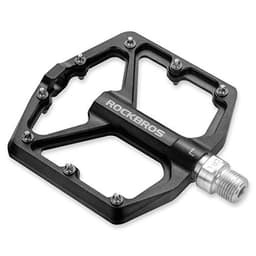
Rockbros Aluminum Flat Pedals
Grippy aluminum flat pedals with sealed bearings, so riding in normal shoes is a real choice rather than a compromise. A genuine upgrade over the plastic pedals in the box.
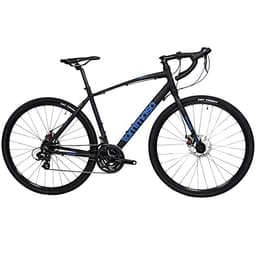
Tommaso Siena
The cheapest way to find out whether you like drop bars at all, from a brand that sells actual bikes. You give up gear quality rather than frame quality.
$649.99 · View on AmazonPrice as of October 21, 2026. #ad How we’re funded
We have not ridden or tested these — every specification comes from the manufacturer or the retailer listing, dated. Here is exactly what we do instead.
Riding in traffic, which is the real worry
For most people coming back to a bike after decades, traffic is the barrier rather than fitness. The League of American Bicyclists publish practical guidance that is worth more than any gear purchase: ride with the flow of traffic, stay out of the door zone even where that means leaving a bike lane, hold a straight line past parked cars, and cross railroad tracks perpendicular.
Add lights you use in daylight as well as at dusk, and pick routes deliberately rather than by shortest distance. Road rules and hand signals covers the legal and signalling side, and bike commuting for beginners covers route choice for anyone thinking about riding to work.
What we would do
Buy the position you will actually hold, the lowest bottom gear you can find in your budget, and the widest tires the frame takes. Spend what is left on shorts, a helmet and a rear light rather than on a lighter frame — the starter kit page has that list in buying order.
Then change the saddle only after a few rides and the free adjustments, not before. Most first-bike discomfort is setup rather than equipment, and setup is free.
Questions people actually ask
What kind of bike should I buy if I am starting cycling at 55?
If your rides will be errands, paths and trips under about 20 miles, a flat-bar hybrid is the honest answer. If you want distance, a drop-bar bike gives you several hand positions, which matters more than it sounds over two hours. A gravel bike sits between the two: drop bars, a more upright position and wider tires.
Are drop handlebars bad for an older rider?
No — but a racing position is. Drop bars are a hand-position system rather than a posture: most riding happens on the hoods, which is not a low position, and the drops are there when you want them. What decides comfort is the reach and the bar height, both of which are adjustable.
What gearing do I need for hills?
A lower bottom gear than most first bikes come with. The number that matters is the biggest sprocket on the cassette paired with the smallest chainring, not the total number of gears. Our gearing guide works through the arithmetic with a table you can check against your own bike.
Do I have to use clipless pedals?
No, and plenty of experienced riders never do. Flat pedals with grippy pins and normal shoes work perfectly well, and they remove the learning curve of clipping out at a stop. Clipping in is a real efficiency gain on climbs, and it is an upgrade you can make later rather than a requirement on day one.
Why does my saddle hurt, and is there a saddle for an upright rider?
Sitting more upright puts your weight on your sit bones rather than spread across the saddle, which is why upright riders usually need a wider saddle than the one the bike came with. NIOSH research on perineal pressure is also the reason relief channels and noseless designs exist. Try the free adjustments first: height, fore-aft and angle.
How far should I ride when I am starting out?
Far enough to enjoy it and not so far that you dread the next one. We will not publish a training plan or a mileage target — we write about equipment, and any question about your own health or exercise capacity belongs with your doctor rather than a bike site.
Is an e-bike a better idea?
It can be, and we do not cover them — this site is about first road and gravel bikes, and recommending something we do not research would be worse than saying so. If hills or distance are the barrier, an e-bike is a legitimate thing to go and look at with a local shop.
Sources
Specifications come from the manufacturer or the retailer listing, dated. Where a figure is not published, we say so rather than estimating it.
- NIOSH (CDC) — Bicycle saddles without protruding noses reduce pressure — The 2002-2004 NIOSH findings linking perineal pressure on conventional saddles to genital numbness, with the measured contact-pressure figures (accessed August 13, 2026)
- Park Tool — How to adjust a bike saddle and seatpost — The three saddle adjustments — height, fore-aft and angle — and the manufacturer's note that correct position is personal rather than a single number (accessed August 13, 2026)
- Trek — Road bike sizing guide — Trek's guidance that fit depends on height and inseam; the numeric table is behind their Size Finder tool rather than published on the page (accessed July 23, 2026)
- League of American Bicyclists — Ride Better Tips — Published riding guidance: ride with the flow of traffic, stay out of the door zone even where that means leaving the bike lane, ride in a straight line past parked cars, cross railroad tracks perpendicular (accessed August 18, 2026)
- Shimano — A guide to 1x and 2x gearing setups for gravel — Manufacturer explanation of one-chainring versus two-chainring drivetrains (accessed July 23, 2026)
Read next
How to Choose Your First Bike
The full decision in order — surface, position, budget — for a first drop-bar or flat-bar bike.
Start hereGravel Bike vs Hybrid
Drop bars or flat bars, which is really a question about how far you want to ride.
Read the comparisonBike Fit Basics
Saddle height, reach and bar height — the free adjustments that decide comfort.
Set the bike upBike Gearing for Hills
Whether your bike has a low enough gear for the hill you keep walking up, worked out with arithmetic.
Check your gearsBest Bike Saddles
Including the wide, upright-position saddles and the relief-channel designs, with live prices.
See the saddle picks