You do not need a triathlon bike for a first race, and the sport's own governing body says so. Five road bikes that get you to the start line, what the rules actually require, and what to skip.
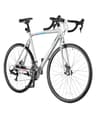
The pick is the Tommaso Monza. It publishes a weight — 21.6 lb — where three of the five listings here publish none, it has Shimano Tiagra — a groupset that shifts crisply under a tired rider — and a carbon fork that takes the sting out of the rough county roads most local triathlons are run on.
Before the list, the thing the sport itself wants you to know. USA Triathlon’s own gear guide says you can start on either a road bike or a triathlon bike, and then adds: “Whichever you already own is the one to start with.” A first sprint or Olympic-distance race is not lost on the bike leg. It is lost in transition, in the swim, or by riding too hard and having no legs for the run. None of that is fixed by a more expensive bicycle.
How this is funded: we earn a commission if you buy through our links, at no extra cost to you. It never changes which bike we recommend, and we will tell you plainly when we would skip one. Full disclosure.
Quick picks
Ranked on published specs, what the listing does and does not tell you, and who each one actually suits. Select a row to jump to the full write-up. We have not ridden these — here is exactly what we do instead.
#
Bike or gear
Best for
Price
1
Tommaso Monza
The Imola's better-dressed sibling: same idea, but Shimano Tiagra instead of Claris and a carbon fork. This is the road bike to buy if you already know road riding is going to stick.
The default answer to 'what is a good first road bike' on Amazon, and it has been for years: aluminum frame, real Shimano Claris gears, sensible price, sizes that actually go up to 60cm.
An aluminum drop-bar bike at roughly half the price of the Tommaso Imola, and unusually for this price the listing tells you the frame sizes in centimeters — which is the one number you cannot guess at.
The most bike we found under $300: an aluminum frame with a Shimano drivetrain, which is the combination that separates a bike worth owning from a bike-shaped object. At this price both together is unusual.
The one budget bike here that names the brand on its drivetrain and its tires, and puts disc brakes on an aluminum frame. The name is L-TWOO rather than Shimano, but a named component brand at this price is still unusual.
The Imola's better-dressed sibling: same idea, but Shimano Tiagra instead of Claris and a carbon fork. This is the road bike to buy if you already know road riding is going to stick.
Who it is for: A first road bike for someone confident they will keep riding.
What is good
+Shimano Tiagra shifts more crisply than Claris and stays that way longer
+Carbon fork takes the buzz out of rough pavement over a long ride
+24 gears, same usable spread as the Imola
What you give up
−Meaningfully more expensive than the Imola for a difference beginners often cannot feel for months
−The listing publishes no tire clearance figure, so you cannot check what width of tire it will take
−Stock in any given size runs thin
Skip this if. Skip this if you are buying your first ever drop-bar bike and are not sure it will stick. The Imola does the same job well enough that the difference is better spent on the shoes, shorts and helmet you will keep through three bikes.
Published specifications for the Tommaso Monza
Frame material
Aluminum frame, carbon fork
Gears (the 'groupset')
Shimano Tiagra, 24 speeds
Brakes
Not published
Wheel size
Not published
Sizes listed
XL 60cm
Weight
21.6 lb, as listed
Widest tire it fits (clearance)
Not published
Specifications read from the retailer listing on August 28, 2026. “Not published” means the listing does not state that figure — we do not estimate it.
#2Best value
Tommaso Imola
The default answer to 'what is a good first road bike' on Amazon, and it has been for years: aluminum frame, real Shimano Claris gears, sensible price, sizes that actually go up to 60cm.
Who it is for: A first road bike for someone who will ride mostly on pavement.
What is good
+Shimano Claris — a serviceable groupset every shop knows, not an unbranded mystery
+24 gears gives you a low enough bottom gear to learn hills without walking
+Sold across a genuine size range including XL 60cm, which most cheap bikes skip
+Aluminum frame is light enough to carry up stairs, which matters more than it sounds
What you give up
−Rim brakes, not disc — fine in the dry, noticeably worse in the rain
−The listing publishes no weight, no tire clearance and no gear-ratio figures
−Ships in a box; a shop build is money well spent if you have never assembled a bike
Skip this if. Skip this if there is any chance you will want to ride dirt or gravel paths. The Imola has room for narrow road tires and nothing more — the Tommaso Sentiero costs a little more and keeps both options open.
Published specifications for the Tommaso Imola
Frame material
Aluminum
Gears (the 'groupset')
Shimano Claris, 24 speeds
Brakes
Not published
Wheel size
Not published
Sizes listed
XL 60cm and other sizes
Weight
Not published
Widest tire it fits (clearance)
Not published
Specifications read from the retailer listing on August 28, 2026. “Not published” means the listing does not state that figure — we do not estimate it.
#3Cheapest aluminum drop-bar bike
HILAND 700C Road Bike
An aluminum drop-bar bike at roughly half the price of the Tommaso Imola, and unusually for this price the listing tells you the frame sizes in centimeters — which is the one number you cannot guess at.
Who it is for: The smallest amount of money that still buys an aluminum drop-bar bike.
What is good
+Aluminum alloy frame at a price where most rivals use heavy steel
+Three frame sizes published in centimeters — S 49cm, M 53cm, L 57cm — so it can be checked against a size chart
+700c wheels, so tires and tubes are the standard sizes every shop carries
+Arrives 90% assembled with tools and pedals included
What you give up
−The listing never names the groupset — '14-speed shifter' tells you the gear count and hides the manufacturer
−Unbranded drivetrain parts are the ones that wear out first and are hardest to get serviced
−Caliper rim brakes rather than discs, which is a real gap in wet weather
−No published weight and no published tire clearance
Skip this if. Skip this if you can stretch to the Tommaso Imola. Once you add the shop build and the first service, the gap narrows a lot — and the Imola names a full Shimano groupset where this names nothing.
Published specifications for the HILAND 700C Road Bike
Frame material
Aluminum alloy, internal cable routing
Gears (the 'groupset')
14-speed; brand not published
Brakes
Caliper rim brakes
Wheel size
700c
Handlebar
Drop bar
Sizes listed
S 49cm, M 53cm, L 57cm
Weight
Not published
Widest tire it fits (clearance)
Not published
Specifications read from the retailer listing on August 15, 2026. “Not published” means the listing does not state that figure — we do not estimate it.
#4Cheapest with a Shimano drivetrain
Pipleo 700C Road Bike
The most bike we found under $300: an aluminum frame with a Shimano drivetrain, which is the combination that separates a bike worth owning from a bike-shaped object. At this price both together is unusual.
Who it is for: The cheapest drop-bar bike we would tell someone to actually buy.
What is good
+Aluminum frame rather than high-tensile steel, so it is not needlessly heavy
+Shimano drivetrain, which means any bike shop can service and source parts
+21 speeds gives enough range for hills without exotic gearing
+700C wheels, the standard size, so tires and tubes are available everywhere
What you give up
−The listing does not publish weight, tire clearance or the specific Shimano tier
−Ships boxed and part-assembled — budget for a shop build if you are not confident
−Stock at this price moves fast and sizes sell out unevenly
Skip this if. Skip this if you can stretch to about $500. The jump from this band to a Tommaso Imola buys a genuinely better frame, wheels and groupset, and it is the single most worthwhile stretch in the whole road-bike price ladder.
Published specifications for the Pipleo 700C Road Bike
Frame material
Aluminum
Gears (the 'groupset')
Shimano, 21 speeds
Wheel size
700C
Brakes
Not published
Weight
Not published
Widest tire it fits (clearance)
Not published
Specifications read from the retailer listing on August 11, 2026. “Not published” means the listing does not state that figure — we do not estimate it.
#5If you want disc brakes
VEVOR 700C Road Bike 14-Speed
The one budget bike here that names the brand on its drivetrain and its tires, and puts disc brakes on an aluminum frame. The name is L-TWOO rather than Shimano, but a named component brand at this price is still unusual.
Who it is for: A budget first road bike where you want a name on the gears.
What is good
+Names its parts: an L-TWOO 2x7 drivetrain and KENDA tires, where rivals just print a speed count
+Aluminum alloy frame with disc brakes and internal cable routing
+Publishes a complete-bike weight of 30.64 lb, which almost nothing else in this band does
+Sold by Amazon directly rather than a third-party seller, so returns are straightforward
What you give up
−14 gears is a narrow spread; steep hills will be harder than on a 24-speed
−No frame size published in the listing at all, which makes fitting it genuinely difficult
−L-TWOO is a real component maker but not one your local shop stocks spares for — Shimano parts are on every shelf
−Carbon steel fork rather than aluminum or carbon, which adds weight at the front
Skip this if. Skip this if you live somewhere hilly, or if you are between sizes. Fourteen gears and an unpublished frame size are the two things that will bother you most, and neither is fixable after the fact.
Published specifications for the VEVOR 700C Road Bike 14-Speed
Frame material
Aluminum alloy frame, carbon steel fork
Gears (the 'groupset')
L-TWOO 2x7, 14 speeds
Brakes
Disc brake
Wheel size
700c
Tires supplied
KENDA 700 x 28c
Handlebar
Drop bar
Sizes listed
Not published
Weight
30.64 lb, as listed
Specifications read from the retailer listing on August 15, 2026. “Not published” means the listing does not state that figure — we do not estimate it.
Road bike or triathlon bike
USA Triathlon describes the difference in one line: the road bike’s frame “differs from that of a triathlon bike in seat tube angle,” and a road bike “will most likely not be equipped with aerobars.” The tri bike exists so that a rider can save their legs for the run by sitting in an aerodynamic position; the road bike exists for people who get out of the saddle, corner, and ride in groups.
For a first race, the road bike wins that trade three ways. It is far cheaper. It is easier to handle — aerobars move your hands away from the brakes, which is a genuinely bad idea until you are comfortable riding at speed. And it is a bike you will still want after the race, whether or not you ever do another one. A triathlon bike is a bike for triathlons; a road bike is a bike.
What the rules actually require of the bike
Less than people fear. USA Triathlon’s own summary of the most commonly violated rules is about behavior, not equipment:
Helmet on and fastened whenever you have the bike. From the moment you take it off the rack at the start of the bike leg until it is racked again at the end. This is the rule that catches most first-timers, because they unclip the strap while walking the bike in. Any CPSC-certified helmet qualifies; the helmet page ranks them.
No drafting. In an ordinary age-group race you may not sit behind another rider. You ride right, pass on the left, and once you enter another rider’s draft zone the only way out is past them.
A phone may be carried but not used. Mounted on the bars or in an arm band is fine; touching it, playing music or taking photos during the race is not.
Nothing in that list says “aerobars” or “carbon.” Read your own race’s rules for anything local, but a road bike in good working order is legal everywhere.
What actually matters in the bike
Fit, above everything. You will ride this bike straight after a swim and then run straight off it. A bike that is the wrong size costs you more than any component upgrade could return. The Monza and Imola publish sizes in centimeters; match them to your height here. The VEVOR publishes no frame size at all, which is why it sits last.
A drivetrain that shifts when you are tired. Shimano Tiagra on the Monza and Claris on the Imola are the difference between a gear change that happens and one you have to negotiate. The HILAND and Pipleo have 14 and 21 speeds respectively, with the maker unnamed on the HILAND and the Shimano tier unspecified on the Pipleo; they work, but the ladder explains what you are giving up.
Tires and pressure. The single cheapest speed you can buy is a pair of decent 28mm road tires at the right pressure. Four of the five bikes here ship on tires the listing does not name (the VEVOR names Kenda); these are the replacements.
Pedals you can get out of. Clip-in pedals are faster and they are also the thing most likely to put a first-timer on the ground at the mount line. If you have never used them, race in flat pedals and ordinary shoes, then learn clipless afterward.
What to skip for a first race
Clip-on aerobars. They are cheap and they do make you faster in a straight line, but they also put your hands nowhere near the brakes on a course shared with nervous riders. Learn the bike first. If you do a second race, revisit.
A carbon frame. At this level the money buys you almost nothing on race day and costs you a frame that is less forgiving of a transition-area tip-over. Aluminum vs carbon covers why.
A groupset upgrade. The classic post-race purchase and almost never the right one on a cheap bike. Here is the arithmetic.
What to bring that USA Triathlon mentions and nobody else does
Their gear guide lists a saddle bag with a spare tube, a pump and a tire lever as “a smart idea” — and it is, because a flat on the bike leg without them ends your race. The what-to-bring guide has the exact kit. Cycling shorts and a jersey are listed as optional, and for a sprint distance they genuinely are; a tri suit or your swim kit under shorts is fine.
What we would spend
The Monza if the budget stretches, because Tiagra and the carbon fork are both things you feel in the last ten minutes of a bike leg. The Imola if it does not, and you give up very little. Then a helmet, a pair of 28mm tires, and a saddle bag with a tube in it. Race on flat pedals. Buy nothing else until you have finished one.
We have not ridden these bikes. Every site in this category says it tested twenty of them. We have not tested any, and we say so. What we did instead: read the manufacturer listings and manuals, compiled the published specs, worked out the real out-the-door cost, and checked live availability and price. Here is exactly how that works.
Questions people actually ask
Can I do a triathlon on a road bike?+
Yes. USA Triathlon's own gear guide says you can start on either a road bike or a triathlon bike, and that whichever you already own is the one to start with. A road bike in good working order is legal in every age-group race; nothing in the rules requires aerobars or a triathlon-specific frame.
What is the difference between a road bike and a triathlon bike?+
Seat tube angle and handlebars, in USA Triathlon's own description. A tri bike has a steeper seat tube that rotates the hips forward, and aerobars that hold the rider in a low, aerodynamic position to save the legs for the run. A road bike is built to be ridden out of the saddle, cornered and ridden in groups, and it is far cheaper.
What bike rules catch first-time triathletes?+
Three, according to USA Triathlon's list of commonly violated rules: the helmet must be on and fastened from the moment you touch the bike in transition until it is racked again; no drafting behind other riders in a standard age-group race; and a phone may be carried but not used during the race.
Do I need aerobars for my first triathlon?+
No, and we would advise against them for a first race. Clip-on aerobars do make you faster in a straight line, but they move your hands away from the brakes on a course full of nervous riders. Learn to handle the bike at speed first, then decide before a second race.
Should I use clipless pedals in my first triathlon?+
Only if you have already used them for weeks. Clip-in pedals are the most common cause of a first-timer falling over at the mount line. Racing on flat pedals in ordinary shoes costs you a little speed and saves you a lot of risk, and you can learn clipless afterward.
How much should I spend on a bike for a first triathlon?+
Enough to get a bike that fits and a drivetrain a shop can service - roughly the Tommaso Imola tier. Spending more on a carbon frame or a groupset upgrade buys almost nothing on race day at this level. Spend the difference on a helmet, decent tires, and a saddle bag with a spare tube.
Sources
Specifications come from the manufacturer or the retailer listing, dated. Where a figure is not published, we say so rather than estimating it.
USA Triathlon — Bike-specific gear — USA Triathlon's own beginner gear guidance: a road bike or a triathlon bike both work and 'whichever you already own is the one to start with'; the difference is seat-tube angle and aerobars; a MIPS helmet; a saddle bag with tube, pump and lever (accessed September 18, 2026)
USA Triathlon — Multisport rules (commonly violated rules) — The governing body's own summary: helmet worn and fastened whenever you are in possession of the bike, from the rack at the start of the bike leg to the rack at the end; no drafting in non-draft-legal events; ride right and pass on the left; a phone may be carried but not used in a distracting way (accessed September 18, 2026)
U.S. CPSC — Bicycle Helmets FAQ — CPSC consumer guidance on the federal bicycle helmet standard and what certification means (accessed July 23, 2026)