Road Bike Tire Pressure for Beginners
The number on the sidewall is a limit, not an instruction. A manufacturer's starting table by rider weight, why 28mm tires changed the answer, and how to find your own pressure in one ride.
How this is funded: we earn a commission if you buy through our links, at no extra cost to you. It never changes which bike we recommend, and we will tell you plainly when we would skip one. Full disclosure.
Every road tire has a number molded into the sidewall, and almost every new rider pumps to it. It is the wrong number. It is the most the tire is rated to hold, printed for safety, and it says nothing about what you should actually run — which depends on how much you weigh and how wide the tire is.
Schwalbe, who make tires, put it plainly: it is not possible to give a general pressure recommendation for a specific bike or tire, because the correct pressure “depends largely on the weight load on the tire,” and the sidewall shows the permissible range, not a target. Get this one thing right and a cheap road bike rides better than a badly inflated expensive one.
Why the old advice was 100 psi and the new advice is not
For decades road bikes came on 23mm tires, and a 23mm tire has to run very hard — often 100 psi or more — just to hold a rider without squashing flat on the rim. Trek’s own road guide now describes traditional road tires as coming “in sizes up to 28mm,” and 28mm is what most entry-level road bikes ship on today.
A wider tire holds more air at a lower pressure, and lower pressure does two things: it lets the tire absorb the road instead of bouncing off it, and it puts more rubber on the ground. Schwalbe’s FAQ makes the same point — wide tires “are generally operated with a lower air pressure” and offer that comfort “without serious disadvantages in terms of rolling resistance.” The very high pressures many riders still use are a habit from narrower tires, not a benefit.
A manufacturer’s starting table
These figures are Canyon’s published starting points for 28mm and 32mm tires on rims with a 23mm internal width, reproduced exactly as they publish them. They are starting points, not verdicts: Canyon’s own note is that if you are on older 23mm or 25mm tires, your pressures “will need to be higher than the figures in the table.”
| Rider weight | 28mm tire | 32mm tire |
|---|---|---|
| Up to 110 lb (50 kg) | 58 psi | 53 psi |
| 112-126 lb (51-57 kg) | 64 psi | 58 psi |
| 128-143 lb (58-65 kg) | 69 psi | 64 psi |
| 145-161 lb (66-73 kg) | 74 psi | 69 psi |
| 163-179 lb (74-81 kg) | 79 psi | 74 psi |
| 181-194 lb (82-88 kg) | 84 psi | 78 psi |
| 196 lb and up (89 kg+) | 89 psi | 84 psi |
| 212 lb and up (96 kg+) | 94 psi | 89 psi |
Source: Canyon, “Right road bike tire pressure,” read September 18, 2026. Canyon also state that hookless rims must never exceed 5 bar (about 72 psi); the wheels on entry-level bikes are not hookless, but check if you have upgraded them.
Read it across, not down. A 165 lb rider on 28mm tires starts at 79 psi. The same rider on 32mm tires starts at 74 psi. If that seems low compared with what you have been running, that is the point of this page.
How to find your own number in one ride
The table gets you within a few psi. The rest is a short experiment, and it is worth doing once.
- Set the table pressure with a gauge and ride a route you know, including a rough section and a couple of corners.
- Drop 3 psi and ride it again. If the bike feels smoother and no slower, keep going down in 3 psi steps.
- Stop when the tire starts to feel vague in corners or you feel the rim through a pothole. Go back up 3 psi. That is your number.
- Run the rear a few psi above the front. More of your weight sits over the back wheel, so it needs slightly more support.
Write the number on a piece of tape on the pump. You will not remember it, and it will be different from your riding partner’s, because it is your weight that sets it.
What changes the number
- Rain. Canyon’s advice is to lower pressure by about 7 psi in the wet. A softer tire has a larger contact patch, and contact patch is grip.
- Rough roads. Lower. Chip-seal, patched tarmac and county roads reward the low end of your range; a fresh smooth surface tolerates the high end.
- A loaded bike. Panniers or a heavy backpack add to the load on the rear tire, so treat yourself as a heavier rider for the rear.
- Time. Schwalbe put normal loss at about 1 bar a month, and faster at higher pressures. A road tire needs topping up weekly, not monthly.
What to look for in the tools
Two things make this possible: a pump with a gauge you can read from standing, and a tire that publishes its own limits. Schwalbe’s advice is that pressing a thumb into the tire tells you nothing above about 2 bar, because every tire feels hard by then. That rules out every mini pump without a gauge as a way to set road pressure; a mini pump is for getting home.
On the tire side, prefer a listing that publishes its maximum pressure. Most do not, which is why the Panaracer Pasela below stands out: it prints 105 psi and a weight, where its neighbors print neither.
What setting road pressure needs
Two pumps with a gauge, and the two tire widths the table is written for. Every one is a registry pick with a live price.
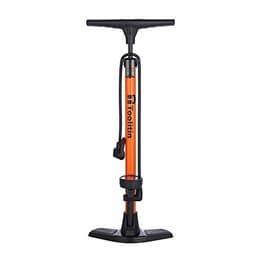
TOOLITIN Floor Pump with Gauge
A gauge, a Presta head and a 160 psi ceiling for the price of a takeout meal. The cheapest way to stop guessing.
$31.99 · View on AmazonPrice as of September 20, 2026. #ad How we’re funded
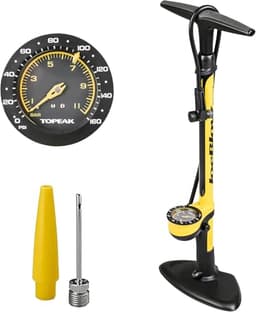
Topeak JoeBlow Sport III
A 3-inch gauge you can read from standing and a steel barrel that will outlast the bike. The pump to buy once.
$69.95 · View on AmazonPrice as of September 20, 2026. #ad How we’re funded
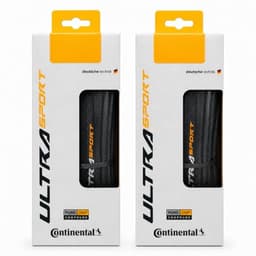
Continental Ultra Sport III 700x28 (pair)
The 28mm training tire the first column of the table is written for, sold as a pair so both wheels match.
$57.40 · View on AmazonPrice as of September 20, 2026. #ad How we’re funded
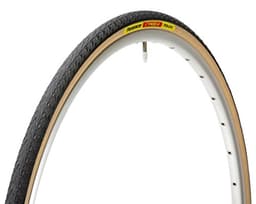
Panaracer Pasela 700x32
The 32mm column, and the only tire here that publishes its own maximum - 105 psi - so the sidewall limit is not a guess either.
$41.38 · View on AmazonPrice as of September 20, 2026. #ad How we’re funded
We have not ridden or tested these — every specification comes from the manufacturer or the retailer listing, dated. Here is exactly what we do instead.
The mistakes that undo all of this
- Trusting the gauge on a mini pump. Small gauges at the end of a hose read the hose, not the tire, and drift badly. Set pressure with the floor pump at home.
- Pumping to the max “to be safe.” The maximum protects the rim and the bead. It does not make you faster on real roads and it makes the bike noticeably harsher.
- Ignoring the tube. A tire that loses air faster than a bar a month has a slow puncture, not a pressure problem. Here is the fix.
- Using gravel numbers. If you have read the gravel guide, forget it here. A 40mm tire at 35 psi is correct; a 28mm tire at 35 psi will pinch-flat on the first pothole.
Questions people actually ask
What pressure should road bike tires be?
It depends on your weight and the tire width, not on the number printed on the sidewall. For a 28mm tire, Canyon's published table runs from 58 psi for a rider under 110 lb to 94 psi for a rider over 212 lb; a 32mm tire runs about 5 psi lower at every weight. Start from the table on this page and adjust from there.
Should I inflate road tires to the maximum on the sidewall?
No. Schwalbe's own guidance is that the sidewall shows the permissible range, and that the correct pressure depends largely on the load on the tire - your weight. The maximum is a ceiling for safety. Most riders on 28mm tires belong well below it, and inflating to the max makes the bike harsher and gives no speed back on real roads.
How often should I pump up road bike tires?
Check before every ride if you can, and at least weekly. Schwalbe state that a loss of about 1 bar (roughly 15 psi) a month is normal for a tube, and that loss is faster at higher pressures - so a road tire at 80 psi drops noticeably within a week. Use a gauge; the thumb test is unreliable once a tire is above roughly 30 psi.
Should front and rear tire pressure be the same?
The rear can run a little higher, because more of your weight sits over it. A few psi difference is enough. If you only remember one number, use the table figure for both and you will be close; the front-rear split is a refinement, not a requirement.
What tire pressure for road bikes in the rain?
Lower. Canyon's guidance is to drop about 7 psi in the wet to put more rubber on the road. The tire grips through contact patch, and a slightly softer tire has a bigger one. Put the pressure back up when the roads dry.
Do I need a pressure gauge for road tires?
Yes, and it should be on the pump. Schwalbe's advice is that all tires feel hard by hand above about 2 bar (29 psi), which means a road tire at 55 psi and one at 85 psi feel identical to your thumb. Every number in this guide assumes a floor pump with a gauge.
Sources
Specifications come from the manufacturer or the retailer listing, dated. Where a figure is not published, we say so rather than estimating it.
- Canyon — Right road bike tire pressure — A bike manufacturer's published starting-pressure table for 28mm and 32mm road tires on 23mm rims, by rider weight; the advice to drop about 7 psi in the wet; the 5 bar (about 72 psi) ceiling on hookless rims; and the note that 23mm and 25mm tires need higher pressures than the table (accessed September 18, 2026)
- Schwalbe — Tire pressure FAQ — Manufacturer guidance that no general pressure can be recommended because it depends on the load on the tire; the permitted range is printed on the sidewall; a loss of about 1 bar a month is normal; the thumb test is unreliable above roughly 2 bar; use a floor pump with a gauge (accessed September 18, 2026)
- Silca — Professional tire pressure calculator — Published pressure model taking rider weight, tire width and surface as inputs (accessed July 23, 2026)
- Trek — Road bike buyer's guide — Manufacturer statement that traditional road tires typically come in sizes up to 28mm on race-geometry bikes, that endurance-geometry road bikes can clear up to 45mm, and that drop bars give hoods, tops and drops positions for comfort, power or aerodynamics (accessed September 18, 2026)
Read next
Best Road Bike Tires
The 28mm and 32mm tires the table is written for, with live prices.
See the tire picksBest Bike Floor Pumps
You cannot set a pressure without a gauge. Six pumps that have one.
See the pump picksGravel Tire Pressure
The same question for 38mm to 45mm tires, where the numbers halve.
Read the guideHow to Pump Bike Tires
Presta valves, the pump head, and why the gauge reads high the moment you pull it off.
Read the guide