Can You Ride a Road Bike on Gravel?
Yes, within limits - and the limit is a measurement you can take in thirty seconds. Which surfaces are fine, which tire to fit, and the point where a second bike stops being a luxury.
How this is funded: we earn a commission if you buy through our links, at no extra cost to you. It never changes which bike we recommend, and we will tell you plainly when we would skip one. Full disclosure.
You can, and people did for a century before the words “gravel bike” were put together. The honest answer has two halves: a road bike is fine on the kind of gravel most people mean, and it is not fine on the kind of gravel the marketing photos show. The difference is the surface, and the thing that decides how far you can push it is a measurement on your own bike.
What kind of gravel are we talking about
“Gravel” covers everything from a smooth rail trail to a fist-sized rock garden. A road bike handles the first end of that scale well and the far end not at all.
- Fine on a road bike: packed dirt roads, crushed-stone rail trails, canal towpaths, hard-packed farm tracks, and the patched, broken pavement that is most of rural America. This is where a 28mm or 32mm tire at the right pressure is comfortable.
- Possible but tiring: loose gravel over a hard base, washboard, and short sandy sections. The narrow tire wanders and you steer more than you would like. Doable at low speed; not something to plan a whole ride around.
- Not on a road bike: deep loose gravel, rutted double-track, mud, and anything with rocks larger than the tire is wide. This is where a gravel bike’s 40mm tire floats and a road bike’s 28mm tire digs in and stops.
The thirty-second measurement that decides it
Everything on this page depends on how wide a tire your bike will take, and no entry-level listing tells you. Trek’s road guide gives the general shape: traditional road tires “typically come in sizes up to 28mm” on race-geometry frames, while endurance-geometry road bikes “can accommodate up to 45mm.” Yours is somewhere in between, and you find out with a ruler.
- Look at the sidewall of your current tire and note its width — 700x25c, 700x28c, or an ETRTO number like 28-622. How to read the size is here.
- Find the tightest point around that tire: under the brake caliper on a rim-brake bike, and between the chainstays just behind the crank on any bike.
- Measure the gap on each side. You want a few millimeters of clearance beyond the tire on each side, because a wheel flexes under load and a tire picks up stones.
- Add roughly twice the smallest gap to your current width, then round down to a tire size that exists. A 28mm tire with 3mm each side has room for about a 32.
A tire also grows wider on a wide rim. Check the rim-width chart from the tire maker — WTB and Continental both publish one, linked in the sources — before assuming a 32 will measure 32.
Which tire to fit
Three things matter on gravel, in this order: width, puncture protection, and a little tread. Speed matters least, because you are not going fast on gravel on a road bike anyway.
Width is comfort and float. Every millimeter you can clear is worth having; go to the largest size your measurement allows. Puncture protection matters because gravel is sharp and a road tube is thin. A tire with a published breaker belt or protective sidewall is worth its weight. Tread is the least important: a lightly textured or file-tread tire helps on loose corners, but a slick 32 at the right pressure beats a knobbly 28 everywhere.
The picks below are the three answers to that brief in the widths a road bike will actually take. If your measurement says you can go wider than 36mm, you have an endurance or all-road frame, and the gravel tire page is where to look instead.
Tires for a road bike that sees gravel
Three widths, three priorities. Every one is a registry pick with a live price, and each fits a road bike that clears the width in its name.
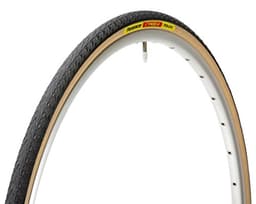
Panaracer Pasela 700x32
The default if 32mm clears: a comfortable, lightly treaded tire that publishes its own weight and maximum pressure, so the setup is not guesswork.
$41.38 · View on AmazonPrice as of September 20, 2026. #ad How we’re funded
- No image
WTB Vulpine 700 x 36 Tan Sidewall
For the road frame that clears 36mm - a genuine gravel tire at 36mm, whose stated job in our registry is exactly this: a road bike with limited clearance that you want to take onto dirt.
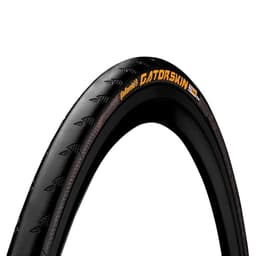
Continental Gatorskin 700x28
For the frame that will not clear anything wider than it came with. A published puncture belt and armored sidewalls make a 28 survive gravel it was never designed for.
We have not ridden or tested these — every specification comes from the manufacturer or the retailer listing, dated. Here is exactly what we do instead.
Pressure: the free part of the upgrade
A road tire on gravel wants less air than on pavement, for the same reason a gravel tire does: a softer tire deforms over stones instead of skipping off them. But a 28mm or 32mm tire cannot go as low as a 40mm one, because there is less air to hold you off the rim, and hitting the rim through the tire is how tubes pinch-flat.
A sensible rule: start from your normal road number in the road pressure guide, take about 7 psi off for the gravel section — the same drop Canyon publish for wet roads — and put it back for the ride home. Carry a mini pump; you will not always get this right the first time.
What gravel does to a road bike
- Rim brakes wear. Grit on the rim is sandpaper between the pad and the wheel. Expect to replace pads sooner, and to eventually see the rim brake track wear. How to tell when the pads are done.
- The drivetrain gets dirty faster. Dust on a lubed chain becomes grinding paste. Clean it more often and use a dry lube in dry conditions.
- Paint chips. Stones thrown by the front wheel hit the down tube. A strip of clear tape on the underside of the down tube is a cheap fix.
- Nothing structural. An aluminum or steel road frame is not harmed by dirt roads. It was designed for far worse pavement than most gravel.
When to stop and buy a gravel bike
When you find yourself planning rides around what the road bike cannot do, or turning back at the sight of a surface you would like to ride. Trek describe the gravel bike as clearing 38mm to 56mm tires with a more upright position and mounts for bags, and none of those three can be retrofitted to a road bike.
The rough threshold is a quarter of your riding. Below that, a wider tire on the road bike is the right amount of money to spend. Above it, you are buying tires, pads and tubes to compensate for a bike that is the wrong shape, and a first gravel bike costs less than most people expect. The full comparison covers what you would give up on the road by switching, which is less than the internet suggests. (The other drop-bar bike built for dirt is the cyclocross bike, and gravel bike vs cyclocross explains why it is usually the wrong one for this job.)
Questions people actually ask
Can you ride a road bike on gravel?
Yes, on packed gravel, dirt roads and rail trails, provided the tires are the widest your frame will clear and the pressure is dropped to suit. What a road bike cannot do is loose, deep or rutted gravel, because the narrow tires sink and the rim-brake calipers limit how wide you can go. Trek's own road guide puts traditional road tires at up to 28mm, which is the source of the limit.
What is the widest tire I can put on a road bike?
Whatever clears the frame, fork and brake calipers with a few millimeters to spare, and only measuring will tell you. Many entry-level road bikes ship on 28mm and will clear 32mm; some rim-brake frames will not. Fit the widest that clears, because on gravel every millimeter of width is comfort and grip you did not have.
Will gravel damage my road bike?
Not the frame. What gravel does is wear rim brake pads and rims faster with grit, chip paint, and expose the tires and tubes to pinch flats if the pressure is too high for the surface. Fit a puncture-protected tire, drop the pressure, and clean the drivetrain afterward, and the bike is fine.
What tire pressure for a road bike on gravel?
Lower than on pavement, but not gravel-bike low - a 28mm or 32mm tire does not hold enough air to run in the thirties without pinch-flatting. Start from the road table on our pressure guide and take about 7 psi off for the gravel section, which is the same drop Canyon publish for wet roads. Put it back for the ride home.
Road bike vs gravel bike for mixed riding?
If more than roughly a quarter of your riding is off pavement, a gravel bike. It clears 38mm to 56mm tires, has disc brakes and sits you a little more upright, all of which a road bike cannot be modified into. If gravel is an occasional detour, wider tires on the road bike are the cheaper answer by a long way.
Do I need disc brakes to ride gravel?
No, but rim brakes are the reason a road bike's gravel ability is limited. The caliper wraps around the tire and caps its width at around 28mm on most frames, and grit on a wet rim wears pads and rims quickly. A disc-brake road bike has neither problem, which is why most are sold as gravel or all-road bikes.
Sources
Specifications come from the manufacturer or the retailer listing, dated. Where a figure is not published, we say so rather than estimating it.
- Trek — Road bike buyer's guide — Manufacturer statement that traditional road tires typically come in sizes up to 28mm on race-geometry bikes, that endurance-geometry road bikes can clear up to 45mm, and that drop bars give hoods, tops and drops positions for comfort, power or aerodynamics (accessed September 18, 2026)
- Trek — Gravel bike buyer's guide — Manufacturer statement that gravel bikes 'find the balance between the off-road capability of a mountain bike and the quick-rolling, lightweight feel of a road bike', typically clear 38mm to 56mm tires, sit the rider more upright than a road bike, and often carry mounts for cages, racks and bags (accessed September 18, 2026)
- Park Tool — Tire, wheel and inner tube fit standards — The ISO/ETRTO bead-seat table: 700c is 622 mm, 650B/27.5in is 584 mm, 650C is 571 mm, and none of them interchange. Also the rule of thumb that ISO tire width should be roughly 1.5 to 2 times the internal rim width (accessed August 18, 2026)
- WTB — Tire and rim fit chart — Manufacturer chart of approved tire width to rim width pairings (accessed July 23, 2026)
- Canyon — Right road bike tire pressure — A bike manufacturer's published starting-pressure table for 28mm and 32mm road tires on 23mm rims, by rider weight; the advice to drop about 7 psi in the wet; the 5 bar (about 72 psi) ceiling on hookless rims; and the note that 23mm and 25mm tires need higher pressures than the table (accessed September 18, 2026)
Read next
Gravel Bike vs Road Bike
The one real difference between the two, and everything that follows from it.
Read the comparisonBest Gravel Tires for Pavement
The same question from the other side: a gravel bike that mostly rides road.
See the tire picksBest Gravel Bikes for Beginners
If the answer turns out to be a second bike, this is where to start.
See all seven picksHow to Fix a Flat Tire
The skill gravel on a road bike will make you practice.
Read the guide