Road Bikes
Narrow tires, drop bars, pavement. Faster than a gravel bike on tarmac and more limited everywhere else — here is when that trade is the right one.
A road bike is built to do one thing extremely well: go fast on smooth pavement. Narrow tires, a low riding position, light frame, and gearing spaced for holding speed rather than crawling up loose climbs.
Everything a road bike gives up, it gives up on purpose. It will not take a wide tire, so dirt roads are uncomfortable and gravel is unpleasant. That is not a flaw — it is the trade that makes it fast. The question for a first-time buyer is simply whether that trade is the right one for you, and for a meaningful minority of people it clearly is.
Everything in Road Bikes
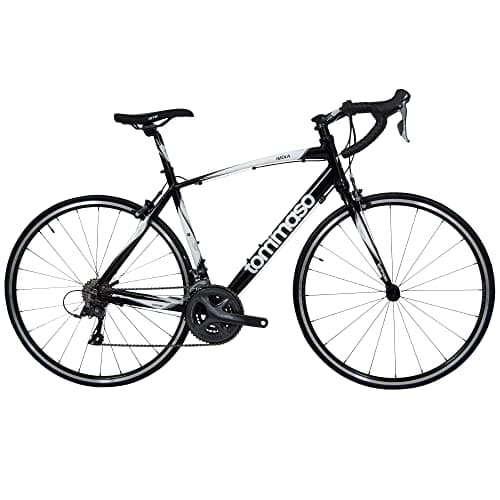
Best Road Bikes for Beginners
Six entry-level road bikes compared on the things that matter first: gears, brakes, frame material and whether the listing tells you anything at all.
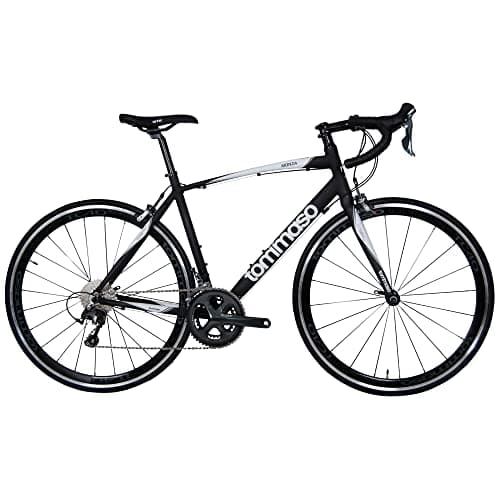
Best Road Bikes Under $1,000
The sweet spot for a first road bike, and the specific things that separate a good one from a cheap one.
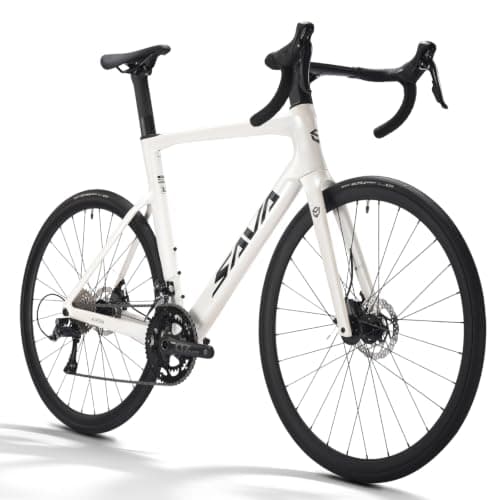
Best Road Bikes Under $1,500
The top of the beginner band: five drop-bar bikes from $800 to $1,500 with live prices, what the extra money actually buys over a sub-$1,000 bike, and the bike-shop alternative at the same price.
Our top pick
SAVADECK Carbon Disc Road Bike (R08-R3000-18S)
$1,269.00 · View on AmazonPrice as of October 21, 2026. #ad How we’re funded
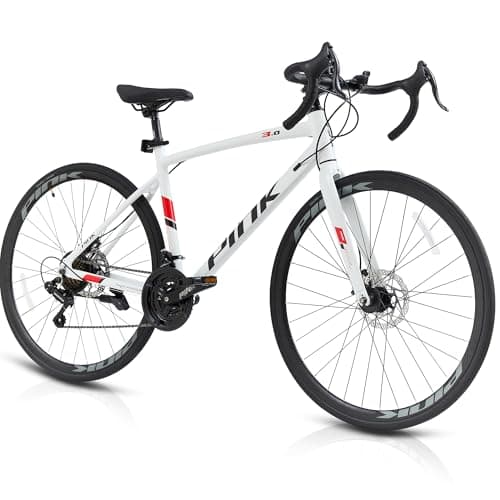
Best Road Bikes Under $300
The bottom of the drop-bar market, with a straight answer on which listings disclose enough to be worth your money and which do not.
Our top pick
Pipleo 700C Road Bike
$289.99 · View on AmazonPrice as of October 21, 2026. #ad How we’re funded
Best Road Bikes Under $500
What you get and what you give up below five hundred dollars — with a straight answer on whether to buy at this price at all.
Our top pick
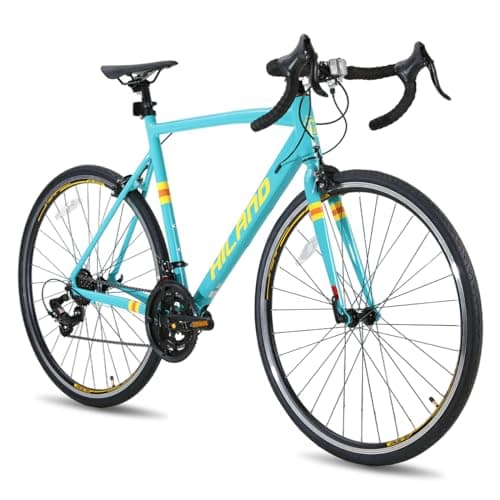
HILAND 700C Road Bike
$299.99 · View on AmazonPrice as of October 21, 2026. #ad How we’re funded
Road Cycling for Beginners
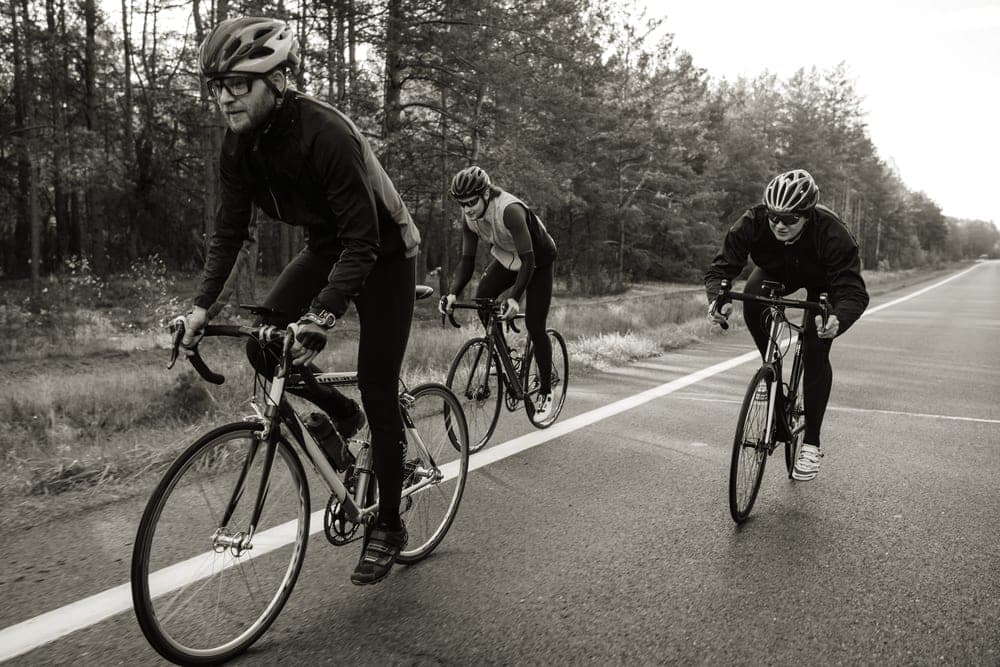
Your first month on a road bike: what to expect, what hurts and why, and the habits that decide whether you keep riding.
How Much Does a Beginner Road Bike Cost?
The real out-the-door number, including the kit you have to buy alongside the bike — worked out, not guessed.
Best Entry-Level Road Bikes with Disc Brakes
Five entry-level drop-bar bikes with disc brakes, ranked honestly - including why the best 'road bike with discs' at this price is usually sold as a gravel bike.
Our top pick
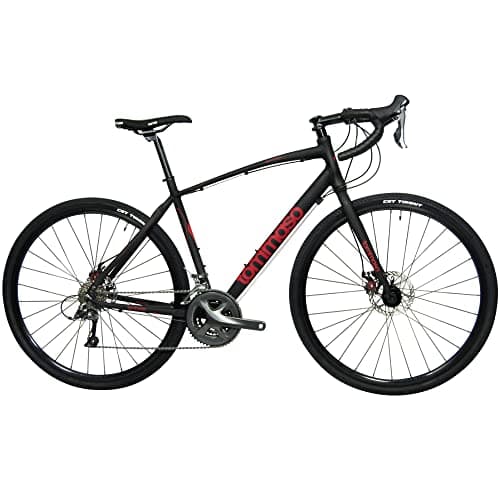
Tommaso Sentiero
$749.99 · View on AmazonPrice as of October 21, 2026. #ad How we’re funded
Best Road Bikes for Your First Triathlon
You do not need a triathlon bike for your first race, and USA Triathlon says so. Five road bikes that get you to the start line, what the rules actually require, and what to skip.
Best Road Bikes for the Money
One bike per rung of the ladder from about $250 to $1,500, judged only on what each extra dollar buys — and the two points where spending more changes nothing you would feel.
When a road bike is the right first bike
We generally point first-time buyers at a gravel bike, because it keeps more options open. But the road bike is the better buy when:
- You already know you will ride pavement. Your roads are good, you are not curious about dirt, and the thing you want from a bike is speed.
- You want to ride with a road club. Group road rides move at a pace where a gravel bike’s wider tires start to cost you real effort to sit in.
- Budget is genuinely tight. At any given price a road bike is usually a slightly better bike than a gravel bike, because the frame is simpler and the tires are cheaper. Our sub-$500 comparison is honest about what that price does and does not buy.
- You are commuting on good roads and want to arrive quickly.
If none of those is clearly true, read the head-to-head before you commit. It is the single most-read comparison on this site and it resolves most of this decision in the first fifty words.
What each price band buys
- Under $350. Usually an aluminum frame with an unnamed drivetrain and often an unpublished frame size. Rideable, and honestly better than not riding. But the parts are where the money was saved and the parts are what will bother you. The sub-$300 page ranks this band on what the listings are willing to disclose, which at this price is the most reliable signal available.
- $350 to $500. Aluminum frames, sometimes a named Shimano drivetrain, sometimes disc brakes. This is the band where a bike stops being a toy, and it is covered on the sub-$500 page.
- $550 to $800 — the sweet spot. A full Shimano Claris groupset, a real size range, an aluminum frame worth keeping. This is where most people should buy, and our beginner picks live here.
- $800 to $1,000. Shimano Tiagra and a carbon fork. Crisper shifting that stays crisp for longer, and noticeably less road buzz through your hands on a long ride. See the sub-$1,000 picks.
- $1,000 to $1,500 — the ceiling. Carbon frames, disc brakes and, at the very top, a Shimano 105 twelve-speed groupset. This is the most a first-time buyer should consider, and almost nobody should spend all of it on the bike itself — the sub-$1,500 page ranks five bikes on what they leave you, and compares the same budget against what a bike shop sells.
Rim brakes are not a dealbreaker
Plenty of entry-level road bikes still use rim brakes — pads that squeeze the wheel rim — rather than disc brakes. The internet is fairly rude about this. In practice: on dry roads a well-adjusted rim brake stops you perfectly well, weighs less, costs less, and is easier to adjust yourself. In the wet it needs a moment to clear water off the rim before it bites, and that moment is the whole argument for discs.
If you will ride in the rain, prioritize discs. If you are a fair-weather rider on good roads, a rim-brake bike with a better groupset is a smarter buy than a disc-brake bike with a worse one. The full comparison is here, including what each type costs to maintain.
What people get wrong about road bikes
That the position will hurt. It might, for the first few rides, and then it usually stops. Drop bars give you three or four hand positions rather than one, which is why long rides are more comfortable on them than on a flat bar, not less. If it still hurts after a few weeks, that is a fit problem — usually the size, sometimes the stem — and it is fixable.
That you need to be fast to justify one. You do not. Nobody is checking. The riding position and the gearing are just as useful at 12 mph as at 20.
That the sticker price is the price. It is not. Work through what a first road bike really costs before you set a budget, because the helmet, shorts, pedals and pump are not optional and they are not free.
Questions people actually ask
Is a road bike a good first bike?
It is a good first bike if you already know you want to ride pavement and want to ride it quickly. If you are unsure what kind of riding you will settle into, a gravel bike is the safer first purchase because it does everything a road bike does at a small speed cost while also handling dirt and rough surfaces.
How much does a decent beginner road bike cost?
Roughly $550 to $800 for the bike. That buys an aluminum frame with a full Shimano Claris groupset and a genuine range of frame sizes. Below about $350 the components are unnamed and are where the savings came from. Add $150 to $250 for the kit you cannot ride without.
Are rim brakes bad on a road bike?
No. On dry roads a well-adjusted rim brake stops you fine, and it is lighter, cheaper and easier to service than a disc. The real difference is in the wet, where a rim brake needs a moment to clear water off the rim before it bites. If you will ride in rain, prioritize disc brakes; if not, put the money into a better groupset instead.
Can I put wider tires on a road bike to ride gravel?
Only up to whatever your frame will physically clear, which on most entry road bikes is around 28mm to 32mm. That is enough for well-surfaced towpaths and rough pavement, not for real gravel. Check your frame clearance before buying tires — the widest tire that fits is a hard physical limit, not a preference.
How many gears does a beginner road bike need?
The range matters far more than the number. A 24-speed Shimano Claris setup has plenty of range with some duplicated ratios, and will get you up almost any hill you meet. A 14-speed bike has a much narrower spread and will feel limiting on steep climbs. Treat gear count as a marketing number and gear range as the real specification.
Sources
Specifications come from the manufacturer or the retailer listing, dated. Where a figure is not published, we say so rather than estimating it.
- Shimano — Component product list — Shimano's own component lineup, from which the road groupset hierarchy is read (accessed July 23, 2026)
- Tommaso — Imola road bike product page and size chart — The manufacturer's own frame size to rider height table, read directly from the listing (accessed July 23, 2026)
- Trek — Road bike sizing guide — Trek's guidance that fit depends on height and inseam; the numeric table is behind their Size Finder tool rather than published on the page (accessed July 23, 2026)
- Schwalbe — Tire sizes and the ETRTO designation — How the 40-622 style ETRTO number maps to '700 x 40c' (accessed July 23, 2026)