Bike Commuting for Beginners
Turning a drop-bar bike into transport: what to add, what to change about the way you ride, and the three problems that stop people after two weeks.
How this is funded: we earn a commission if you buy through our links, at no extra cost to you. It never changes which bike we recommend, and we will tell you plainly when we would skip one. Full disclosure.
Commuting is the thing that turns a bike from a weekend object into something you use. It is also where most first bikes quietly stop being ridden, usually for one of three reasons: arriving sweaty, arriving wet, or a route that was never realistic.
Each of those has a straightforward fix, and none of them requires a different bike.
Work out whether the route is realistic first
Do this before buying anything. Ride the route once on a weekend morning, at a deliberately easy pace, and note three things:
- Time, not distance. Forty-five minutes each way is the point most people stop sustaining a daily commute. Where you land is personal; the number to measure is minutes — and here is the arithmetic that turns your route into minutes, including the stops that make an urban ride longer than the distance suggests.
- The worst junction. Almost every route has one intersection that is genuinely unpleasant. Find it, then look for a way around it — a two-minute detour is worth it every single day.
- What the surface is like. Broken tarmac and drain grates decide what tire width you want, and whether a puncture-resistant tire earns its weight.
The sweat problem
The single biggest cause of arriving soaked is treating a commute as training. The second is a backpack: a pack sits against your back and stops it ventilating, so the one place that most needs airflow gets none.
In order of effectiveness, and all of them cheap:
- Ride slower. Leave five minutes earlier.
- Get the load off your back — a rack and panniers, or a frame or handlebar bag.
- Keep a towel, deodorant and a spare shirt at the other end.
- Wear less than feels right for the first five minutes. You warm up fast, and being slightly cold at the start is the correct amount of clothing.
The rain problem
Most of what makes you wet on a commute is not falling rain — it is spray thrown up off the road by your own wheels. That is what fenders exist for, and it is why a rider with fenders and no jacket often arrives drier than a rider with a jacket and no fenders.
SKS publish buying guidance for choosing fenders by frame and tire clearance, which is the check to do before ordering — many road frames have no mounting eyelets at all. Our fender page covers both the bolt-on and clip-on options.
The other half is drivetrain wear. A wet, gritty commute strips chain lube quickly, so a winter commuter wants a wet-weather lube and a wipe-down habit rather than the same routine as a summer road bike.
The three things that make it work
Lights, a lock and fenders. Everything else can wait until you know you are going to keep doing this.
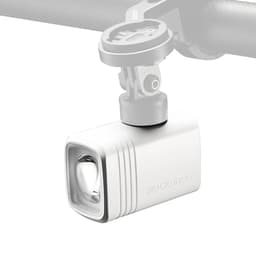
Rockbros 1000 Lumen Headlight
A rechargeable front light bright enough for unlit sections, which is what a commute eventually involves in winter.
$32.99 · View on AmazonPrice as of October 21, 2026. #ad How we’re funded
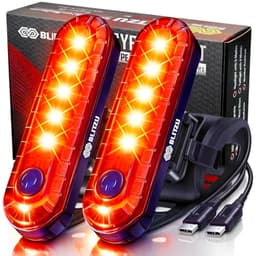
BLITZU Bike Tail Light 2-Pack
Two rear lights so one is always charged. A daytime flash is the cheapest visibility upgrade there is.
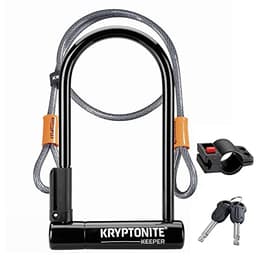
Kryptonite Keeper U-Lock with Cable
A U-lock that resists the tools thieves actually carry, at a price that suits a bike you leave somewhere every day.
$54.95 · View on AmazonPrice as of October 21, 2026. #ad How we’re funded
We have not ridden or tested these — every specification comes from the manufacturer or the retailer listing, dated. Here is exactly what we do instead.
Riding in traffic, briefly
This is the part that worries new commuters most and the part that improves fastest with a few specific habits. The League of American Bicyclists publish the guidance; the headlines:
- Ride with traffic, never against it, and stay off the sidewalk.
- Stay out of the door zone beside parked cars — even where that means riding outside a painted bike lane.
- Ride in a straight line rather than weaving into gaps between parked cars.
- Take the lane where it is too narrow to share rather than inviting a pass that has nowhere to go.
The signals, the specific hazards and what the vehicle codes actually say are in our road rules guide.
Locking up, and the other end of the trip
Where you park decides your lock, not the value of your bike. Kryptonite publish guidance on matching lock rating to risk level, and the practical rules are short: lock through the frame to something immovable, put the lock where a thief cannot get a tool between it and the frame, and take anything quick-release with you. A U-lock is the usual answer for a bike left in public every day; Chain & Charge’s commuting roundup of the best U-locks goes further into shackle sizes and frame-mount brackets than we do here.
For a daily commute the choice usually narrows to two Kryptonites, and Evolution versus Keeper is that decision in full — the independent attack rating one of them publishes, and why a mini shackle resists the attack that actually opens U-locks.
If the bike lives outside all day in a city, the honest answer may be to commute on a cheaper bike. Our storage and security guide covers registering the serial number, which is what actually gets bikes back.
What changes about the bike itself
If you have not bought the bike yet, the commuting-and-fitness roundup ranks six bikes for exactly this double job. If you already own one, this is what changes about it:
- Tires get wider and tougher. Commuting is where puncture protection earns its weight, because a flat on the way to work costs more than a flat on a Sunday.
- Gearing gets easier, not harder. You are riding in normal clothes, possibly with a load, from a standing start at every light.
- Maintenance gets more regular. A bike ridden daily in all weather needs the chain looked after — a monthly ten minutes rather than an annual service.
- Nothing else. The bike you have is almost certainly the bike to start with.
Questions people actually ask
Is a road bike or gravel bike good for commuting?
A gravel bike is close to ideal: it has room for wider tires that shrug off potholes, usually has mounts for fenders and a rack, and is quick enough that the ride does not eat your morning. A road bike works too, with the caveats that narrow tires punish bad tarmac and many road frames have no fender mounts at all. Both beat a heavy hybrid on any commute over about five miles.
How far is too far to bike commute?
Distance is the wrong measure - time is the one that decides whether you keep doing it. Most people sustain a commute up to about 45 minutes each way. That is roughly 8 to 12 miles on a drop-bar bike depending on traffic and hills. Ride the route once on a weekend before committing: the honest test is how you feel about doing it again the next morning.
How do I stop getting sweaty on a bike commute?
Ride slower than feels natural. Most sweat on a commute comes from treating it as training, and the fix is free. After that: leave earlier so you are not chasing a clock, use a rack or a frame bag rather than a backpack because a pack against your back is the single biggest sweat source, and keep a towel and a change of shirt at work.
What do I need to start bike commuting?
Lights front and rear, a lock appropriate to where you park, and a way to carry your things that is not a backpack. Fenders if you ride in a wet climate. Beyond that, use what you already have - the mistake that stalls people is buying a full second wardrobe before finding out whether they enjoy the ride.
What is the best lock for commuting?
One matched to where you leave the bike. Kryptonite publish guidance on choosing by risk level, and the practical version is: a U-lock as the primary lock, a cable or second lock for the wheels, and always locked to something immovable through the frame - not just the front wheel. In a high-theft area, park the cheapest bike you own.
Do I need fenders to commute by bike?
In a wet climate, they change the experience more than any other accessory. Fenders keep road spray off your back, your feet and the bike's drivetrain, which means less cleaning and less wear as well as arriving dry. Check for mounting eyelets first - many road frames have none, and clip-on fenders are the fallback rather than the first choice.
Sources
Specifications come from the manufacturer or the retailer listing, dated. Where a figure is not published, we say so rather than estimating it.
- League of American Bicyclists — Ride Better Tips — Published riding guidance: ride with the flow of traffic, stay out of the door zone even where that means leaving the bike lane, ride in a straight line past parked cars, cross railroad tracks perpendicular (accessed August 18, 2026)
- League of American Bicyclists — Rules of the Road — The national cycling education organization's rules-of-the-road curriculum for new riders (accessed August 18, 2026)
- 16 CFR § 1512.16 — Requirements for reflectors — The federal reflector requirement every new bicycle ships with, and what it does not cover (an active light) (accessed August 11, 2026)
- Kryptonite — Choosing your bike lock — Manufacturer guidance on matching lock rating to where and how long a bike is left (accessed August 11, 2026)
- SKS Germany — Take care when buying mudguards — Manufacturer fitment guidance: roughly 1.5cm tire-to-mudguard clearance, mudguard about 1cm wider than the tire, and clamps as a substitute for missing frame eyelets (accessed August 13, 2026)
Read next
Cycling Road Rules and Hand Signals
Riding in traffic predictably, and the door zone.
Read the guideBest Bike Locks
What actually resists theft, with live prices.
See the lock picksBest Bike Fenders and Mudguards
The wet-weather upgrade that changes commuting most.
See the fender picksBike Storage and Security
Where the bike lives at both ends of the commute.
Read the guide