How Long Does It Take to Bike 10 Miles?
The arithmetic, shown, for every speed between 8 and 18 mph — plus the four things that change it more than fitness does, and why we will not publish an average.
How this is funded: we earn a commission if you buy through our links, at no extra cost to you. It never changes which bike we recommend, and we will tell you plainly when we would skip one. Full disclosure.
At 12 mph, 10 miles takes 50 minutes. At 14 mph it takes 43, and at 8 mph it takes 1 hour 15. That is the whole answer, and the reason this page exists is that the question is usually asked as “how long will it take me”. We cannot know that, and the “average beginner speed” figures quoted all over the internet are not published by anyone we would cite — so instead of inventing one, here is the arithmetic for every speed you might ride, and the four things that change your time more than fitness does.
The table, and the arithmetic behind it
time = distance ÷ speed. Ten miles at 12 mph is 10/12 of an hour, which is 50 minutes. Every row below is that calculation, rounded to the nearest minute — ours, not a figure from any listing or study, and shown so you can check it.
| Riding speed | 5 miles | 10 miles | 20 miles |
|---|---|---|---|
| 8 mph | 38 min | 1 h 15 min | 2 h 30 min |
| 10 mph | 30 min | 1 h 00 min | 2 h 00 min |
| 12 mph | 25 min | 50 min | 1 h 40 min |
| 14 mph | 21 min | 43 min | 1 h 26 min |
| 16 mph | 19 min | 38 min | 1 h 15 min |
| 18 mph | 17 min | 33 min | 1 h 07 min |
Those are moving times. If your ride has traffic lights in it, add the time you spend standing still — which on an urban 10 miles is routinely 10 minutes and is the single biggest reason a ride takes longer than the table says.
Why we will not publish an “average beginner speed”
You will find confident numbers for this everywhere, usually between 10 and 14 mph. None of them trace to a source that measured anything, and the figure does real harm: it is the number a new rider compares themselves against on their second ride, on a windy day, on a bike with soft tires.
What we are willing to say is which variables matter, because those are observable. On the same bike with the same rider, the four things below will move a 10-mile time by more than a winter of training would.
The four things that actually change your time
- Stops. Covered above and consistently underestimated. A route choice that avoids four junctions is worth more minutes than any component.
- Wind. The variable nobody logs. An out-and-back into a headwind on the way home is a slower ride than the same loop on a calm day, and it is why a single ride tells you very little about your speed.
- Surface and tire pressure.A soft tire on rough tarmac is slow in a way you can feel. Silca’s published work on pressure is clear that there is an optimum and that going above it stops helping on real road surfaces — and soft-and-slow is far more common on a new bike than over-inflated. Finding your number is free and takes one ride.
- Hills. Ten flat miles and ten hilly miles are different rides, and climbing costs more time than descending gives back. If your loop has a hill you dread, your gearing may be the problem rather than your legs.
What usually stops a beginner at 10 miles
Not fitness. On a first proper ride the limiting factors are almost always the three contact points — hands, backside and feet — and all three have cheap fixes:
- Backside: padded shorts, and the right saddle for your sit-bone width. A saddle that hurts at 10 miles will end rides long before your legs do. What to change first.
- Hands: numbness is a duration problem. Half-finger gloves and a slightly softer bar tape are the usual answer, and so is moving your hands between positions on a drop bar rather than gripping one spot for an hour.
- Feet: stiff soles spread the pedal pressure. This is the entire argument for cycling shoes, and at 10 miles it is a comfort improvement rather than a performance one.
What makes the number measurable
You cannot work with a time you have not recorded. Two ways to see your own distance and speed, and the bottle that makes an hour on the bike pleasant. Live prices.
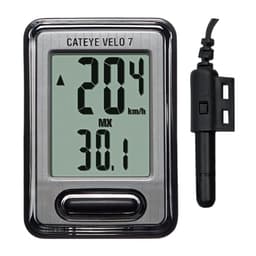
Cateye Velo 7
A wired computer that shows distance, speed and elapsed time with no app, no subscription and a battery that lasts years.
$24.95 · View on AmazonPrice as of October 21, 2026. #ad How we’re funded
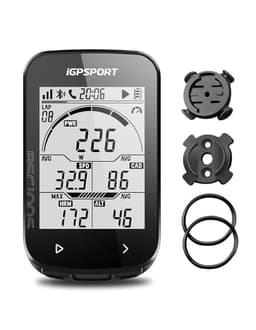
iGPSPORT BSC100S GPS Bike Computer
The GPS route: it records the ride and the moving-versus-elapsed gap, and syncs out so you can compare this week to last week.
$34.99 · View on AmazonPrice as of October 21, 2026. #ad How we’re funded
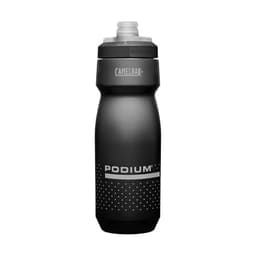
CamelBak Podium 24oz
One bottle covers a 10-mile ride comfortably. The self-sealing cap is the reason you can drink while moving rather than stopping to.
$13.40 · View on AmazonPrice as of October 21, 2026. #ad How we’re funded
We have not ridden or tested these — every specification comes from the manufacturer or the retailer listing, dated. Here is exactly what we do instead.
Going further than 10
The table above doubles cleanly, and so does the experience up to a point: 20 miles at 12 mph is 1 hour 40 of moving time, which is where food, a second bottle and a saddle bag with a spare tube start to matter rather than being optional. What to bring on a bike ride is the checklist, and somewhere to put it is the other half.
Beyond about two hours the limiting factor shifts from comfort to fuelling and pacing, which is genuinely individual and not something we are going to prescribe. What we will say is that riders who go from 10 to 30 miles usually do it by riding more often rather than by riding harder — and that the bike that makes that pleasant is a bike that fits, which is a measurement you can check today.
Questions people actually ask
How long does it take to bike 10 miles?
Between about 33 minutes and 1 hour 15 minutes, depending entirely on speed: 10 miles takes 50 minutes at 12 mph, 43 minutes at 14 mph and 1 hour 15 at 8 mph. The arithmetic is distance divided by speed. What we will not do is tell you which row is 'yours' — we have no way to know, and the numbers you see quoted as beginner averages are not published by anyone we would cite.
Is 10 miles a long bike ride for a beginner?
It is a normal first proper ride on a road or gravel bike and a reasonable target for a first week. What usually limits a new rider at that distance is not fitness but contact points — hands, backside and feet — which is why padded shorts matter more than training for a ride of this length.
What is a good average speed for a beginner cyclist?
We deliberately do not publish a figure. There is no authoritative source for it, the numbers circulated online are unsourced, and they are used mainly to make new riders feel slow. Use the table on this page to convert whatever speed you actually ride into a time, and compare yourself to your own last ride.
Why is my average speed lower than the time I was moving suggests?
Stops. Traffic lights, junctions, photos and refills all count against elapsed time but not against moving time, and on an urban 10 miles they can easily add 10 minutes. Most bike computers report both figures, and the gap between them is usually the real answer to 'why was I slow'.
Does a better bike make 10 miles faster?
Less than people expect, and less than tires and pressure do. The biggest free gains on a budget bike are correct tire pressure, a clean and lubricated chain, and brakes that are not rubbing. A lighter frame changes very little on flat ground at these speeds.
How long does 10 miles take on a hybrid versus a road bike?
Usually a few minutes longer on a hybrid over 10 miles, from a more upright position and wider, slower-rolling tires — not from the frame. The difference grows with distance and with wind. Our road-versus-hybrid comparison covers which one suits which riding.
How do I get faster over 10 miles?
In order of effort: set your tire pressure properly, clean and lube the chain, make sure a brake is not rubbing, then fit faster tires. After that it is riding more often rather than any purchase, and a cadence readout is the cheapest thing that changes how you pedal.
Sources
Specifications come from the manufacturer or the retailer listing, dated. Where a figure is not published, we say so rather than estimating it.
- Silca — Professional tire pressure calculator — Published pressure model taking rider weight, tire width and surface as inputs (accessed July 23, 2026)
- Continental — Ultra Sport road tire — Continental's own page for the tire line fitted to two of the bikes on this page, registered as much for what it does not publish as for what it does. It states the positioning ('modern tire for those new to road cycling') and the PureGrip compound, 'derived from an activated Silica compound'. It publishes no size list, no weight, no pressure range and no puncture-protection layer name, so none of those figures appears on our page for these bikes (accessed October 3, 2026)
- League of American Bicyclists — Ride Better Tips — Published riding guidance: ride with the flow of traffic, stay out of the door zone even where that means leaving the bike lane, ride in a straight line past parked cars, cross railroad tracks perpendicular (accessed August 18, 2026)
- Park Tool — When to replace a worn chain — The 0.5% / 0.75% / 1.0% chain-wear replacement thresholds and the ruler method for measuring them (accessed August 11, 2026)
Read next
Road Cycling for Beginners
What the first month actually looks like, and the things that make riding stick.
Read the guideBest Cycling Computers
What records distance, speed and the gap between moving and elapsed time.
See the computer picksRoad Bike Tire Pressure
The free change that does more for your speed over 10 miles than any component.
Find your pressureRoad Bike vs Hybrid
Where the few minutes' difference over 10 miles actually comes from.
Read the comparison