Why Is My Bike Creaking?
A creak is information. What it correlates with — pedaling hard, sitting down, braking, bumps — narrows it to one or two parts before you touch a tool.
How this is funded: we earn a commission if you buy through our links, at no extra cost to you. It never changes which bike we recommend, and we will tell you plainly when we would skip one. Full disclosure.
Start with the pedals, then the seatpost, then the cleats. Those three account for most creaks on most bikes, and all three are free to check. A creak is two surfaces moving against each other under load, so the useful question is never “what is broken” — it is “what is loose, dry, or dirty at an interface”.
The second useful question is when it happens. A noise that appears only under pedaling load is a different list from one that appears only when seated, and a noise over bumps while coasting is a third list entirely. Diagnose by correlation first and you will usually find it in ten minutes; start dismantling and you can lose an afternoon.
The symptom table
Find what your noise correlates with. The right-hand column is where to start, not the whole job.
| When it happens | Where it usually is | What to do first |
|---|---|---|
| Only when you pedal hard, both legs | Crank bolts, pedal threads, bottom bracket area | Check pedals are tight and greased in the threads, then crank bolts to a published torque |
| Once per pedal revolution, same point every time | A pedal, a cleat, or a chainring bolt | Swap to flat shoes and ride: if the noise goes, it was the cleat or the shoe interface |
| Only when seated; gone when you stand up | Seatpost, seatpost clamp, saddle rails | Remove the post, wipe it clean, re-grease or re-paste it, and tighten to the clamp's stated torque |
| When you pull a brake lever | Pad, caliper, rotor or rim | Look for glazing or contamination, and check the caliper bolts rather than the pads first |
| Over bumps, while coasting | Headset, bottle cage bolts, rack, cable housing, saddle bag | Lift the bike and drop it an inch onto the tires — a loose accessory rattles at once |
| Only in certain gears | Derailleur indexing, chain wear, or chain rub on the front derailleur cage | Index the gears before suspecting anything structural |
Isolate it before you touch a tool
Four tests, each of which rules out a third of the bike:
- Coast. If the noise stops when you stop pedaling, it is in the drivetrain or the pedals, not the frame or the wheels.
- Stand up. If it stops when your weight leaves the saddle, it is the seatpost or the saddle.
- Pedal one-footed.If it only happens with one leg, you have halved the problem — that pedal, that cleat, that crank arm.
- Ride in flat shoes. Cleats and shoe soles creak convincingly like bottom brackets. Borrowing flat pedals for one ride is the single most useful diagnostic on this page.
Noises also travel. A frame is a set of tubes, and a creak at the bottom bracket can be heard at the handlebar. That is why correlation beats listening: your ears will lie to you about location, and the load pattern will not.
The pedals, which are first for a reason
Pedal threads carry your entire pedaling load through a small amount of steel, they are rarely greased by whoever built the bike, and a boxed bike is often assembled in a hurry. Take both pedals out, wipe the threads, put a smear of grease on them, and thread them back in properly. Remember the left pedal is reverse-threaded: it tightens counter-clockwise.
If you ride clipped in, the cleat is the next suspect. Park Tool’s own cleat guidance is worth reading for the fit side of this — cleat systems do not interchange between brands, off-road cleats are recessed into a softer sole, and float lets the foot rotate. A dry cleat-to-pedal interface creaks, and so do loose cleat bolts. Our pedals page covers the three kinds and the cleat-pattern trap.
The seatpost, which is second for a reason
A seatpost sits in a tube, and the joint between them collects grit and water. Pull the post out (mark your height first with a piece of tape), clean both surfaces, and reset it: grease on a metal post in a metal frame, carbon assembly paste where carbon is involved, and the clamp tightened to its stated figure.
Then check the saddle itself. The rail clamp bolts under the saddle creak when they are dry or loose, and they are easy to miss because nobody looks under the saddle. Park Tool publish the three saddle adjustments — height, fore-aft and angle — and note that correct position is personal rather than one number, which is also the argument for marking your height before you pull the post. If the saddle hurts as well as creaks, that is a separate page.
The free fix most people skip
Clean and lube the chain before you suspect anything expensive. A dry chain is noisy, a dirty chain is noisier, and both make it harder to hear what you are actually chasing. The manufacturers publish the procedure: degrease, dry, re-lubricate — not oil on top of grit, which makes a grinding paste.
While you are there, check chain wear. The published thresholds are 0.5%, 0.75% and 1% elongation depending on the drivetrain, and a worn chain adds noises in specific gears as it stops matching the cassette. When to replace a chain has the measurement methods.
What this needs
Three of the four fixes on this page are free. These are the tools that make the remaining ones correct rather than approximate. Live prices.
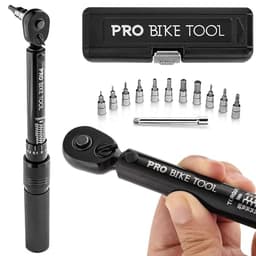
PRO BIKE TOOL Torque Wrench Set
The tool that turns tightening into a number. Stem, seatpost clamp and crank bolts all publish torque figures, and guessing them is how a seatpost clamp splits.
$59.99 · View on AmazonPrice as of October 21, 2026. #ad How we’re funded
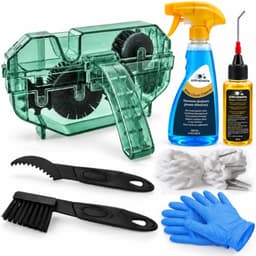
Ultrafashs 7-Piece Bike Cleaning Kit
Degreaser, brushes and the gear floss for between the sprockets — so the free fix gets done properly instead of becoming oil over grit.
$19.99 · View on AmazonPrice as of October 21, 2026. #ad How we’re funded
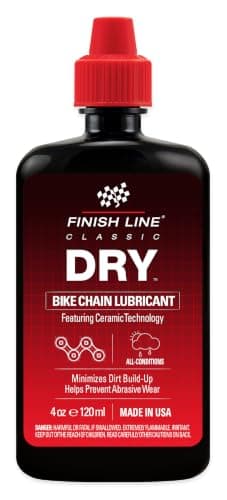
Finish Line Dry Ceramic Chain Lubricant
A waxy film that does not attract grit, for re-lubing a chain once it is actually clean. The right lube for dry conditions and for quieting a chain down.
$11.99 · View on AmazonPrice as of October 21, 2026. #ad How we’re funded
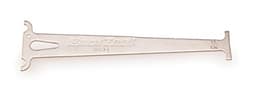
Park Tool CC-3.2 Chain Checker
A go/no-go gauge that tells you whether the chain is worn out, so you stop chasing a noise that is really a drivetrain at the end of its life.
$12.85 · View on AmazonPrice as of October 21, 2026. #ad How we’re funded
We have not ridden or tested these — every specification comes from the manufacturer or the retailer listing, dated. Here is exactly what we do instead.
What to leave to a shop
If the noise survives the pedals, the cleats, the seatpost and the chain, you are probably into the bottom bracket or the headset. Both need specific tools, and a press-fit bottom bracket needs a press rather than optimism. There is no shame in buying that job: it is twenty minutes for someone with the tools and an afternoon of damage for someone without them.
One honest note: a brand-new boxed bike that creaks often just needs the assembly it never got. Our boxed-bike guide and what a shop build costs cover that case, which is far more common than a defective frame.
Questions people actually ask
Why does my bike creak when I pedal hard?
Because load makes two dry or loose surfaces move against each other. Under pedaling load the candidates are the pedal threads, the crank bolts, the chainring bolts and the bottom bracket interface. Start with the pedals — they are the cheapest to check and one of the most common causes.
Why does my bike creak only when I sit down?
That points at the seatpost or the saddle. Take the post out, wipe both the post and the inside of the frame clean, re-grease a metal post or use assembly paste on a carbon one, and tighten the clamp to the torque stamped on it. Then check the saddle rail bolts.
Is a creaking bike dangerous?
Usually it is a nuisance rather than a risk, but there are exceptions worth respecting: a creak from the handlebar, stem, steerer or seatpost clamp area deserves checking before your next ride, because those are the parts whose failure puts you on the ground.
Can a dry chain cause creaking?
A dry chain usually squeaks or rustles rather than creaking under load, and it is the first thing to rule out because it is free to fix. Clean and lube the chain, ride, and see what is left. A worn chain adds its own noises in specific gears.
Should I just tighten everything?
No — that is how bolts strip and seatposts split. Bicycle fasteners are small and most have a published torque figure printed on or near them. Park Tool's own guidance is blunt that over-tightening is the usual failure mode, which is the argument for a torque wrench rather than a longer hex key.
Why does my bike click once every pedal stroke?
Something in the rotating system is loading once per revolution: a pedal, a cleat and shoe, a chainring bolt, or a crank. The fastest test is riding in flat shoes on flat pedals — if the click disappears, the problem was at the shoe-and-cleat interface, not inside the bike.
When should I take a creak to a bike shop?
When it survives the pedals, the seatpost, the cleats and the chain — then you are probably into the bottom bracket or the headset, both of which need specific tools and, on a press-fit bottom bracket, a press. That is money well spent rather than a job to improvise.
Sources
Specifications come from the manufacturer or the retailer listing, dated. Where a figure is not published, we say so rather than estimating it.
- Park Tool — Torque specifications and concepts — Published torque figures for common bicycle fasteners and why over-tightening is the usual failure (accessed August 11, 2026)
- Park Tool — How to clean and lubricate a chain — Manufacturer procedure for degreasing, drying and re-lubricating a bicycle chain (accessed August 11, 2026)
- Park Tool — Pedal retention systems and cleats — Cleat systems do not interchange between brands; off-road cleats are recessed into a softer walkable sole; float lets the foot rotate rather than locking the leg joints (accessed August 18, 2026)
- Park Tool — How to adjust a bike saddle and seatpost — The three saddle adjustments — height, fore-aft and angle — and the manufacturer's note that correct position is personal rather than a single number (accessed August 13, 2026)
- Park Tool — When to replace a worn chain — The 0.5% / 0.75% / 1.0% chain-wear replacement thresholds and the ruler method for measuring them (accessed August 11, 2026)
Read next
Bike Maintenance for Beginners
The four jobs that keep a bike quiet and working, and the 60-second check before you ride.
Read the basicsHow to Clean a Bike Chain
The free fix to rule out first, with the procedure the manufacturers actually publish.
Clean the chainHow to Index Bike Gears
If the noise only happens in certain gears, this is the page — with a symptom-to-fix table.
Fix the shiftingBest Bike Tool Kit
The tools behind every fix on this page, including the torque wrench, with live prices.
See the tool picksWhen to Replace a Bike Chain
The published wear thresholds, and why leaving it late costs a cassette as well as a chain.
Check your chain