Buy the Crankbrothers M19 multi-tool first. It is the one tool that goes with you on every ride, and roadside is where not having the right hex key stops being an inconvenience and becomes a walk.
The seven picks below are in buying order, not preference order. The first four cost about $70 together and cover everything a first-year rider actually needs. The last three are for people who have decided they want to do their own gear and brake work — a decision worth deferring until you know.
How this is funded: we earn a commission if you buy through our links, at no extra cost to you. It never changes which bike we recommend, and we will tell you plainly when we would skip one. Full disclosure.
Quick picks
Ranked on published specs, what the listing does and does not tell you, and who each one actually suits. Select a row to jump to the full write-up. We have not ridden these — here is exactly what we do instead.
#
Bike or gear
Best for
Price
1
Crankbrothers Multi-Tool M19
The multi-tool that lives in a jersey pocket and gets you home. Nineteen tools covers every bolt on a modern bike, including the chain tool you will be extremely glad of exactly once.
Park Tool's blue levers are the ones in every bike shop in the country. They cost almost nothing and they do not snap halfway through levering a stubborn tire off, which the free ones do.
Sixteen tools plus tire levers and a spoke wrench, for less than the price of a coffee and a sandwich. It is not built to last a decade, but it will do every roadside job you need this year.
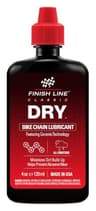
A dry lube leaves a waxy film that does not attract grit, which is exactly what you want on a gravel bike. A clean, lubed chain shifts better and lasts three times as long as a dry one.
A thirteen-dollar go/no-go gauge that tells you when the chain is worn out. Replacing a chain on time costs $25; leaving it too long wears the cassette and chainrings with it and costs several times that.
The tool that stops you cracking something expensive. Bicycle fasteners are small, and the failure mode of guessing is not a loose bolt — it is a stripped thread or a split seatpost clamp.
Holding the bike at working height with the wheels free is the difference between adjusting gears properly and doing it upside down on the kitchen floor. This is the cheapest stand we would call genuinely stable.
The multi-tool that lives in a jersey pocket and gets you home. Nineteen tools covers every bolt on a modern bike, including the chain tool you will be extremely glad of exactly once.
Who it is for: The tool you carry on every ride.
What is good
+Covers every common bolt size on a drop-bar bike
+Includes a chain tool, which is the one repair you cannot improvise
+Small enough to live permanently in a jersey pocket or saddle bag
+Crankbrothers tools have a long reputation for not rounding off bolt heads
What you give up
−Several times the price of a generic multi-tool
−The chain tool is fiddly to use in the field the first time — practice at home
−No published weight
Skip this if. Skip this if you only ride close to home. If you are never more than a short walk from your front door, the cheap WOTOW kit covers the same jobs for a fraction of the money.
Published specifications for the Crankbrothers Multi-Tool M19
Tools
19
Chain tool
Yes
Finish
Matte black
Weight
Not published
Specifications read from the retailer listing on July 23, 2026. “Not published” means the listing does not state that figure — we do not estimate it.
#2Buy second: tire levers
Park Tool TL-1.2 Tire Lever Set
Park Tool's blue levers are the ones in every bike shop in the country. They cost almost nothing and they do not snap halfway through levering a stubborn tire off, which the free ones do.
Who it is for: Getting a tire off the rim without swearing.
What is good
+The shop standard — these are what mechanics reach for
+Strong enough not to snap on a tight tubeless-ready tire
+Cheap enough to keep a set in every bag
What you give up
−No published material or number of levers in the set title
−Plastic levers will eventually wear at the tip with heavy use
−You still need to learn the technique; the tool is not the hard part
Skip this if. Skip this if your multi-tool already includes tire levers, as the WOTOW kit does. There is no need to carry two sets.
Published specifications for the Park Tool TL-1.2 Tire Lever Set
Type
Tire lever set
Material
Not published
Count
Not published
Specifications read from the retailer listing on July 23, 2026. “Not published” means the listing does not state that figure — we do not estimate it.
#3Best all-in-one starter kit
WOTOW 16-in-1 Bike Repair Tool Kit
Sixteen tools plus tire levers and a spoke wrench, for less than the price of a coffee and a sandwich. It is not built to last a decade, but it will do every roadside job you need this year.
Who it is for: The cheapest complete toolkit for a first bike.
What is good
+Includes tire levers and a spoke wrench, which most multi-tools leave out
+The cheapest way to be able to fix anything at all by the roadside
+Cheap enough to keep one in each bag rather than moving one around
What you give up
−Soft steel will round off a tight bolt head where a better tool would not
−No published weight or steel grade
−The tool that damages a bolt costs you far more than the tool saved
Skip this if. Skip this if you are going to be working on the bike regularly. Soft tools round off bolts, and a rounded-off bolt is a shop visit — the Crankbrothers M19 is the cheaper option over any real length of time.
Published specifications for the WOTOW 16-in-1 Bike Repair Tool Kit
Tools
16
Tire levers included
Yes
Spoke wrench
Yes
Steel grade
Not published
Weight
Not published
Specifications read from the retailer listing on July 23, 2026. “Not published” means the listing does not state that figure — we do not estimate it.
#4Buy third: chain lube
Finish Line Dry Ceramic Chain Lubricant
A dry lube leaves a waxy film that does not attract grit, which is exactly what you want on a gravel bike. A clean, lubed chain shifts better and lasts three times as long as a dry one.
Who it is for: Dry and dusty conditions, which is most gravel riding.
What is good
+Dry-film formula resists picking up dirt, unlike wet lubes
+A lubed chain is the single cheapest way to make a cheap drivetrain shift well
+4oz bottle lasts a very long time — you use a drop per link
What you give up
−Washes off in sustained rain and needs reapplying more often than a wet lube
−Needs a clean chain to work; applying it over grit makes a grinding paste
−No published reapplication interval
Skip this if. Skip this if you ride mostly in the wet. Dry lube washes straight off in sustained rain — a wet-weather lube stays put, at the cost of collecting more grit.
Published specifications for the Finish Line Dry Ceramic Chain Lubricant
Type
Dry ceramic, dirt-resistant film
Size
4 oz
Best conditions
Dry and dusty
Reapplication interval
Not published
Specifications read from the retailer listing on July 23, 2026. “Not published” means the listing does not state that figure — we do not estimate it.
#5Buy fourth: chain checker
Park Tool CC-3.2 Chain Checker
A thirteen-dollar go/no-go gauge that tells you when the chain is worn out. Replacing a chain on time costs $25; leaving it too long wears the cassette and chainrings with it and costs several times that.
Who it is for: Anyone who intends to keep the bike more than a year.
What is good
+Go/no-go design shows 0.5% and 0.75% wear with no interpretation needed
+Park Tool is the reference brand for bicycle tools, and this is their standard gauge
+Takes ten seconds to use and needs no other tools
+Pays for itself the first time it saves a cassette
What you give up
−Does it one thing and nothing else
−Does not measure past 0.75%, so a very worn chain reads simply 'replace'
−Easy to lose in a toolbox — it is small and flat
Skip this if. Skip this if a shop services your bike. They check chain wear at every service as a matter of course, and you are buying a tool to duplicate something already being done.
Published specifications for the Park Tool CC-3.2 Chain Checker
Type
Chain wear gauge
Wear thresholds
0.5% and 0.75%
Compatibility
5-12 speed
Material
Not published
Specifications read from the retailer listing on August 11, 2026. “Not published” means the listing does not state that figure — we do not estimate it.
#6For carbon parts
PRO BIKE TOOL Torque Wrench Set
The tool that stops you cracking something expensive. Bicycle fasteners are small, and the failure mode of guessing is not a loose bolt — it is a stripped thread or a split seatpost clamp.
Who it is for: Anyone adjusting their own stem, seatpost or handlebar.
What is good
+2.2-16.9 Nm range covers essentially every fastener on a road or gravel bike
+Click mechanism, so you feel the target rather than reading a dial mid-turn
+Bit set included, so it is complete out of the box
+Manufacturer torque figures are printed on most components — this is how you use them
What you give up
−Overkill if you never touch anything beyond seat height
−Click wrenches should be stored at their lowest setting or they drift out of calibration
−The listing does not publish a calibration accuracy figure
Skip this if. Skip this if your bike is entirely aluminum and steel and you are careful. Torque limits matter most on carbon parts, where over-tightening crushes the tube — on an all-metal budget bike, a sensible hand is usually enough.
Published specifications for the PRO BIKE TOOL Torque Wrench Set
Torque range
2.2-16.9 Nm
Drive
1/4 inch
Type
Click
Bits included
Yes
Calibration accuracy
Not published
Specifications read from the retailer listing on August 11, 2026. “Not published” means the listing does not state that figure — we do not estimate it.
#7Buy last: repair stand
CXWXC Bike Repair Stand
Holding the bike at working height with the wheels free is the difference between adjusting gears properly and doing it upside down on the kitchen floor. This is the cheapest stand we would call genuinely stable.
Who it is for: Anyone who has tried to index gears with the bike leaning on a wall.
What is good
+Height-adjustable, so you are not bending over the job
+Clamp rotates, which is what makes drivetrain work possible at all
+Folds for storage, which matters in a flat or a shared garage
+Turns gear adjustment from a two-person job into a ten-minute one
What you give up
−Tripod stands flex more than a bolted-down shop stand
−Clamping a carbon seatpost or frame tube directly risks crushing it
−60 lb is the lowest published rating of the stands we have checked, and it is a seller figure with no spec sheet behind it
−Welded iron, so it is the heaviest stand of its price class to carry at a listed 15.9 lb
−The clamp tops out at 45 mm, which rules out a fat aero seatpost
Skip this if. Skip this if your maintenance is limited to pumping tires and lubing the chain. Both jobs are fine with the bike on the floor, and a stand is a purchase for people who have decided to do their own gear and brake work.
Published specifications for the CXWXC Bike Repair Stand
Type
Folding tripod repair stand
Published load rating
60 lb / 27.2 kg (seller-published)
Height range
31.5 to 57.5 in (80 to 146.1 cm)
Clamp range
25 to 45 mm tubes, ABS-plated jaws
Clamp rotation
360 degrees
Material
Welded iron
Published stand weight
15.9 lb
Tool tray
Yes, magnetic
Specifications read from the retailer listing on October 10, 2026. “Not published” means the listing does not state that figure — we do not estimate it.
The four tools that cover the first year
1. A multi-tool, which lives in your bag permanently
Bicycles are almost entirely held together with hex bolts in four sizes: 2.5, 3, 4 and 5mm, plus a 6mm for cranks and some seatposts. A multi-tool carries all of them plus screwdrivers and usually a chain breaker. Buy one, put it in the saddle bag, and forget about it until the day a rack bolt rattles loose fifteen miles out.
2. Tire levers, which cost $7 and cannot be improvised
People try screwdrivers. Screwdrivers puncture the new tube you just fitted and gouge the rim. Plastic levers are shaped so they cannot do either. Buy three, because two is the minimum for a tight tire and you will lose one.
3. Chain lube, which is maintenance rather than repair
A dry chain wears itself, the cassette and the chainrings simultaneously, and it is audible — that is what the crunching noise is. Park Tool’s own procedure is degrease, dry thoroughly, then apply lube to each roller and wipe the excess off the outside. The wiping is not optional. Lube on the outside of the chain does nothing except collect grit, which is abrasive paste.
4. A chain checker, which is the one that saves you money
This is the tool nobody thinks to buy and the one with the clearest financial argument. Chains wear as the internal parts erode, and the wear is measured as a percentage of elongation. Park Tool’s published guidance is that manufacturers generally specify replacement at 0.5%, 0.75% or 1.0% wear.
Why it matters:
Replace the chain on time: about $25.
Leave it too long: the worn chain reshapes the cassette sprockets and eventually the chainrings, and now you are replacing all three.
A $13 gauge that takes ten seconds to use prevents that. If you buy one “proper” workshop tool in your first year, buy this one.
The three tools for people who go further
A torque wrench, if there is carbon on the bike
Bicycle fasteners are small and the failure mode of guessing is not a loose bolt — it is a stripped thread or a crushed carbon seatpost. Park Tool publishes torque figures for common fasteners, and most components have the number printed on them; a torque wrench is how you actually use that information.
On an all-aluminum budget bike, careful hands are usually enough. On anything with a carbon post, bar or steerer, this stops being optional.
A repair stand, if you do your own gear work
Indexing gears requires the cranks turning and the wheel spinning while you make quarter-turn adjustments at the barrel adjuster. Doing that with the bike upside down on the floor is where DIY maintenance goes to die. A stand turns a two-person job into a ten-minute one.
One caution: clamp the seatpost, not the frame, and never clamp a carbon post or a thin-walled frame tube directly.
If you have got as far as wanting one, our repair stand roundup compares five of them on published load rating and clamp range, including the bench-mount option that costs less than a tripod and takes no floor space at all.
An all-in-one kit, if you would rather buy once
The WOTOW kit bundles a multi-tool, tire levers and a patch kit for about nine dollars. The individual tools are not as good as the standalone picks, and for someone who wants one purchase that covers roadside repairs, that is a reasonable trade.
What to leave to a shop, without embarrassment
Doing your own maintenance is satisfying and it saves money. It is also entirely reasonable to draw a line, and here is where we would draw it for a first year:
Wheel truing. Needs a jig, a spoke tension meter and practice. A shop does it in twenty minutes.
Bottom bracket and headset bearings. Press-fit standards are a mess and the tools are specific to each one.
Hydraulic brake bleeding. Needs a kit per brand and the failure mode is brakes that do not work.
Anything that came loose in an unexplained way. A bolt that worked itself out has a reason, and finding it is worth more than the labor charge.
What we would spend
About $60 for the first four: multi-tool, tire levers, lube and chain checker. That covers roadside repairs and the maintenance that determines how long the drivetrain lasts.
We have not ridden these bikes. Every site in this category says it tested twenty of them. We have not tested any, and we say so. What we did instead: read the manufacturer listings and manuals, compiled the published specs, worked out the real out-the-door cost, and checked live availability and price. Here is exactly how that works.
Questions people actually ask
What tools does a beginner cyclist need?+
Four: a multi-tool that lives in your bag, tire levers, chain lube, and a chain wear checker. That is about $60 together and it covers roadside repairs and the maintenance that decides how long your drivetrain lasts. Everything beyond that is for people who have decided to do their own gear and brake work.
Is a chain checker worth buying?+
It has the clearest financial case of any tool here. Manufacturers generally specify chain replacement at 0.5%, 0.75% or 1.0% elongation. Replacing a chain on time costs about $25; leaving it too long wears the cassette and chainrings too, and now you are replacing all three. A $13 gauge prevents that.
Do I need a torque wrench for my bike?+
Only if the bike has carbon parts — a seatpost, handlebar or steerer. Bicycle fasteners are small and over-tightening crushes carbon rather than merely stripping a thread. On an all-aluminum budget bike, careful hands and the manufacturer's printed torque figure are usually enough.
Do I need a bike repair stand?+
Not for pumping tires or lubing a chain — both are fine with the bike on the floor. A stand becomes worth it when you start adjusting gears, because indexing requires the cranks turning and the wheel spinning while you make quarter-turn adjustments. Clamp the seatpost rather than the frame, and never clamp carbon directly.
What bike repairs should I leave to a shop?+
Wheel truing, bottom bracket and headset bearings, and hydraulic brake bleeding — each needs specific tools and the failure modes are bad. Also anything that came loose without explanation: a bolt that worked itself out has a cause, and finding it is worth more than the labor charge.
Dry lube or wet lube for a bike chain?+
Dry lube for most riders. It is thinner, sheds dust rather than collecting it, and suits dry and dusty conditions. Wet lube stays put in sustained rain but attracts far more grit. Whichever you use, wipe the outside of the chain afterwards — lube on the outside does nothing except hold abrasive dust against the drivetrain.
Sources
Specifications come from the manufacturer or the retailer listing, dated. Where a figure is not published, we say so rather than estimating it.
Park Tool — When to replace a worn chain — The 0.5% / 0.75% / 1.0% chain-wear replacement thresholds and the ruler method for measuring them (accessed August 11, 2026)