How Long Does a Bike Last?
Nobody publishes a lifespan for a bicycle. What manufacturers do publish is a wear limit per part — so the honest answer is a parts list, not a number of years.
How this is funded: we earn a commission if you buy through our links, at no extra cost to you. It never changes which bike we recommend, and we will tell you plainly when we would skip one. Full disclosure.
A bike lasts as long as you keep replacing the parts that wear, and the frame is almost never the part that ends it. That is not a dodge: it is what the published data actually supports. No manufacturer publishes a service life for a bicycle, and we are not going to invent one. What manufacturers do publish is a wear limit for each part that wears, which turns a vague question into a checklist you can run on your own bike this afternoon.
The practical answer most people want: a sound frame with the chain, tires, pads, cables and tape replaced on time will outlast your interest in it. A bike that dies young almost always died of a drivetrain nobody maintained, not of a frame that failed.
What is actually published, part by part
Every figure in the middle column comes from a manufacturer or a published repair procedure, cited at the foot of this page. Where the column says no published figure, that is the finding — it means judgement and symptoms rather than a number.
| Part | Published limit | How you check it | Worth knowing |
|---|---|---|---|
| Chain | 0.5%, 0.75% or 1% elongation, depending on the drivetrain | A chain-wear gauge or a steel ruler | The one part where replacing on time saves you the cassette as well |
| Tires | Belt or carcass threads visible through the tread | Look at the center of the tread; check for cuts you can open | Schwalbe publish 2,000-5,000 km for standard tires and 6,000-12,000 km for the Marathon family |
| Disc brake pads | At least 1 mm of pad material remaining | Look through the caliper, or take the pads out | Park Tool publish the 1 mm figure; below it you are braking on the backing plate |
| Rim brake pads | Down to the wear line or the slots gone | Look at the pad face; check the rim's own wear indicator too | Rim brakes wear the rim as well as the pad, which is the part people forget |
| Cassette and chainrings | No published figure | Symptom-based: a new chain skipping under load is the classic sign | They last several chains if the chains are replaced on time |
| Cables, housing, bar tape | No published interval | Shifting that will not stay indexed; frayed cable ends; tape gone slick | Cheap, and replacing them makes an old bike feel new |
| Frame | No published service life | Inspection: cracks, dents at tube junctions, corrosion from inside | Tommaso publish a lifetime frame warranty on the Forcella, which tells you where the industry thinks the risk is not |
The chain is the part that decides the cost
A chain is a consumable, and it is the one consumable whose neglect spreads. As a chain elongates it stops matching the cassette sprockets, and a worn chain wears those sprockets into its own shape. Replace it inside the published threshold and you buy a chain; leave it until it skips and you buy a chain, a cassette and sometimes chainrings.
The published thresholds are 0.5% elongation for the narrowest modern drivetrains, 0.75% for most others and 1% for older ones. A go/no-go gauge takes five seconds and removes the guesswork entirely. When to replace a chain covers both measuring methods, including the steel-ruler version for people who would rather not buy a tool.
Brakes wear in two places, and one of them is the wheel
Disc pads have a published limit: Park Tool state the pad material should measure at least 1 mm. Below that you risk braking on the backing plate, which damages the rotor as well as your stopping distance. Rotors wear too, slowly, and they have minimum thickness figures etched on them.
Rim brakes are the ones that catch people out, because the pad is only half the story: every braking surface is slowly being sanded off your rim. Modern rims carry a wear indicator for exactly this reason, and a rim that has worn thin can fail. If your bike has rim brakes and many thousands of wet miles, that is a real inspection rather than a theoretical one. Disc versus rim brakes covers the difference, and our brake pad page has the replacements with live prices.
The parts with no published interval at all
Cables, housing, bar tape, bearings and bottom brackets have no published replacement schedule we could find, and anyone who gives you one is estimating. They are symptom-driven parts: shifting that will not stay indexed after a proper indexing session usually means stretched cables or contaminated housing; a grinding or rough feeling in the bearings means water got in.
The good news is that this is the cheap end of the bike. A cable set, housing and bar tape together cost less than a tire, and replacing all three makes a five-year-old bike feel close to new — far more than a lighter component would.
What makes a bike last
Not upgrades: consumables and the gauge that tells you when to use them. These are the parts of the answer you can actually buy. Live prices.
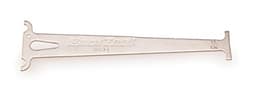
Park Tool CC-3.2 Chain Checker
The go/no-go gauge behind the published chain thresholds. Replacing a chain on time is the single cheapest way to avoid replacing a cassette.
$12.85 · View on AmazonPrice as of October 21, 2026. #ad How we’re funded
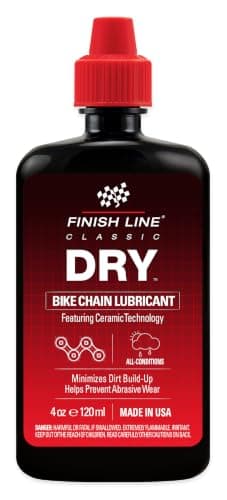
Finish Line Dry Ceramic Chain Lubricant
A clean, lubed chain lasts dramatically longer than a dry one, and a waxy dry film does not collect the grit that turns lube into grinding paste.
$11.99 · View on AmazonPrice as of October 21, 2026. #ad How we’re funded
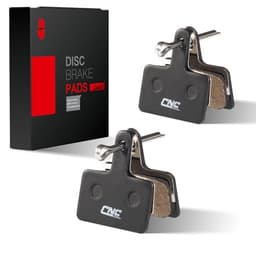
Eastern Power B01S/B03S/B05S Resin Disc Brake Pads
Cheap resin disc pads for when yours reach the published 1 mm limit — the replacement that protects the rotor behind them.
$9.88 · View on AmazonPrice as of October 21, 2026. #ad How we’re funded
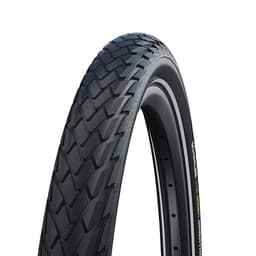
Schwalbe Marathon GG RLX 700x28
The tire family Schwalbe publish their longest mileage ranges for, with a 3 mm GreenGuard belt. The trade is weight, and the listing is honest about it.
$45.54 · View on AmazonPrice as of October 21, 2026. #ad How we’re funded
We have not ridden or tested these — every specification comes from the manufacturer or the retailer listing, dated. Here is exactly what we do instead.
When a bike is finished
Not when a part wears out — when the repair bill stops making sense. A useful test in three questions:
- Is the frame sound? No cracks, no dents at tube junctions, no rust bubbling from inside the tubes. If the frame is good, almost nothing else is terminal.
- How many consumables are at their limit at once? A chain is routine. Chain plus cassette plus both tires plus pads plus cables, on a bike that cost a few hundred dollars new, is a different conversation.
- Are the parts still available? This is what actually retires old bikes. Odd freehub standards, discontinued brake fittings and worn-out proprietary parts end more bikes than metal fatigue does.
If the answers say replace rather than repair, the value shortlist is where we would start, and the used-bike checklist is the cheaper route for someone who now knows exactly which parts to inspect.
The five habits that do most of the work
- Clean and lube the chain on a schedule rather than when it squeaks.
- Replace the chain inside its published threshold.
- Keep tires at a deliberate pressure, not at the sidewall maximum.
- Wipe the bike down after wet or salted rides.
- Store it indoors if you possibly can.
None of those is an upgrade and all of them are free or nearly free. Bike maintenance for beginners is the same list as a routine, with the jobs in the order they matter.
Questions people actually ask
How long does a bike last?
No manufacturer publishes a service life for a bicycle, so any single number you read is someone's estimate. What is published is per-part wear limits: a chain at 0.5-1% elongation, disc pads at 1mm of material, tires when the belt or carcass shows through. Keep replacing those and the frame outlives all of them.
How many years does a bike frame last?
There is no published figure, and the industry's own behavior is the best available signal: Tommaso publish a lifetime warranty on the Forcella frame. Frames are usually retired by crashes, corrosion and changing standards rather than by wearing out.
How long does a bike chain last?
Measured, not guessed. Park Tool publish replacement at 0.5% elongation for 11-speed and above, 0.75% for most other modern drivetrains and 1% for older ones. A gauge costs about the same as a restaurant meal and saves a cassette.
How many miles do bike tires last?
Schwalbe are the only tire manufacturer we have found publishing ranges: 2,000-5,000 km for standard tires, 6,000-12,000 km for the Marathon family, and often more than 10,000 km for Marathon Plus. In miles that is roughly 1,250-3,100 and 3,700-7,500. Those are Schwalbe's own tires, so treat them as a guide rather than a law.
Is it worth repairing an old cheap bike?
Up to a point. Cables, tape, tires, chain and pads on a sound frame are all worth doing and make an old bike feel new. The line is a worn drivetrain plus seized parts on a bike that cost a few hundred dollars — at that point the repair bill approaches a better bike.
Does leaving a bike outside shorten its life?
Yes, and mostly through parts rather than the frame: cables corrode, chains rust, bearings take in water and rubber ages. Schwalbe publish that their tires can be stored up to five years in cool, dry, dark conditions — which tells you what sunlight and weather do to rubber that is not.
How do I make a bike last longer?
Keep the chain clean and lubed, replace it before it wears the cassette, keep tires at a sensible pressure, wipe the bike down after wet or salted rides, and store it indoors. Those five habits cost almost nothing and they are most of the difference between a three-year bike and a fifteen-year bike.
Sources
Specifications come from the manufacturer or the retailer listing, dated. Where a figure is not published, we say so rather than estimating it.
- Park Tool — When to replace a worn chain — The 0.5% / 0.75% / 1.0% chain-wear replacement thresholds and the ruler method for measuring them (accessed August 11, 2026)
- Schwalbe — Technology FAQ: tire wear — The only published mileage figures we could find from a tire manufacturer, and the wear limit our tire-life page is written around: 'When the puncture protection belt or the carcass threads can be seen through the tread the tire has reached its wear limit and must be replaced.' Schwalbe's own published ranges are 2,000-5,000 km for standard tires, 5,000-9,000 km for Marathon Racer and Supreme, 6,000-12,000 km for the Marathon family and 'often much more than 10,000 km' for Marathon Plus, while for MTB tires they state 'No useful mileage data is possible'. They also publish the wear indicator ('small indentations in the tread', marked T.W.I. on the sidewall of the Pro One) and a storage figure: Schwalbe tires 'can be stored for up to 5 years without issue' in cool, dry, dark conditions (accessed October 11, 2026)
- Park Tool — Disc brake pad removal and installation — The published replacement threshold - pad material should measure at least 1 mm thick - plus the compound comparison: organic gives the best initial bite and the best rotor longevity but the poorest wet durability, semi-metallic sits in the middle, and metallic lasts longest in the dry while generating more noise. Also the contamination test: a darkness on the rotor and pads that smears when rubbed with a finger (accessed September 5, 2026)
- Park Tool — Brake pad replacement, rim brakes — The three rim brake pad systems (road, threaded stud, smooth stud), the rule that a holder's closed side always faces forward, the guidance that the caliper arm should be close to vertical as the pad strikes the rim, and the point that pad material hardens with age as well as wearing thin (accessed September 5, 2026)
- Park Tool — How to clean and lubricate a chain — Manufacturer procedure for degreasing, drying and re-lubricating a bicycle chain (accessed August 11, 2026)
Read next
When to Replace a Bike Chain
The published elongation thresholds and the two ways to measure them, including the ruler method.
Check your chainHow Long Do Bike Tires Last?
Schwalbe's published ranges in full, the wear indicator, and the four signs that end the argument.
Read the guideWhen to Replace Brake Pads
The 1mm disc threshold, the rim-brake wear line, and the contamination test.
Check your padsBuying a Used Bike
The other side of this page: how to tell which parts of a second-hand bike have already been used up.
Read the checklistBest Budget Bike Upgrades
What to spend on an older bike that is sound, in the order that returns the most per dollar.
See the upgrades