Rain gear for a bike is not a coat. It is fenders, a light that survives water, tires that survive what the water lifts off the road, and pads that still stop you.
Buy fenders first, and start with the RBRL quick-release set. Almost all the water that soaks a cyclist in the rain comes off their own wheels, not out of the sky, and a fender is the only item on this page that fixes that. The RBRL set is here for one reason: it publishes the number that decides whether a fender fits — a 28 to 45mm tire-width range — which almost no fender listing gives you.
After that, a light that survives water rather than one that merely claims lumens. The CECO-USA F Series 2.0 publishes an IP67 rating and the FL-1 impact standard, and in this category that transparency is itself the recommendation. Then the two things rain quietly changes: punctures go up, because water floats grit onto the road and softens the rubber, and rim brakes get worse. This page is the companion to our guide to riding in the rain, which covers the riding rather than the shopping.
How this is funded: we earn a commission if you buy through our links, at no extra cost to you. It never changes which bike we recommend, and we will tell you plainly when we would skip one. Full disclosure.
Quick picks
Ranked on published specs, what the listing does and does not tell you, and who each one actually suits. Select a row to jump to the full write-up. We have not ridden these — here is exactly what we do instead.
#
Bike or gear
Best for
Price
1
RBRL Quick Release Gravel and Road Fender Set
The one fender set here that publishes the number that decides whether it fits: 28-45mm tire width. On a gravel bike running 40mm tires that specification is the difference between a purchase and a return, and almost no listing gives it to you.
What a fender is supposed to be, if your frame will take it. Full-length blades bolted to the frame's own eyelets cover the whole arc of the wheel, keep your feet dry, and stay silent — none of which a clip-on can do. The catch is in the name of the requirement: eyelets.
The one light on this page that publishes the specifications that decide whether a light survives a winter: IP67 waterproofing and FL-1 impact resistance. Most listings in this category quietly say nothing about either.
Three millimeters of rubber between the road and your tube, published as GreenGuard. This is the commuter tire that turns a daily ride through broken glass into a non-event.
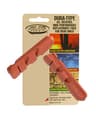
Kool Stop Salmon Brake Pad Inserts (Dura-Ace/Ultegra)
The cheapest upgrade on this entire site. Kool Stop describe their salmon compound as their aggressive all-weather option, especially in the wet — and wet rim braking is the single worst thing about a rim-brake bike.
Cycling shoes are full of ventilation holes, which is exactly right in July and a design flaw in January. Shoe covers seal them, and they are the highest-impact twenty-five dollars in winter cycling clothing.
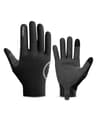
Full-finger without being a winter glove — the version you want for spring and autumn mornings, plus reflective detailing and a touchscreen fingertip so you are not taking them off at every junction.
The one fender set here that publishes the number that decides whether it fits: 28-45mm tire width. On a gravel bike running 40mm tires that specification is the difference between a purchase and a return, and almost no listing gives it to you.
Who it is for: A gravel bike on wide tires, where most road fenders will not clear.
What is good
+Publishes a tire-width range — 28-45mm — so you can check fitment before buying instead of after
+Widened blades, which is what wide gravel tires actually need to be covered
+Quick release, so it comes off for dry rides
+Front and rear in one set rather than a rear-only half-measure
What you give up
−Wider blades need more frame clearance; a tight road frame may not take them at all
−Quick-release hardware is another set of joints to rattle loose
−The listing does not publish a weight
−Sized for 28in wheels — this is not a fender for a small-wheeled bike
Skip this if. Skip this if your tires are narrower than 28mm. You would be buying blade width you cannot use, and a narrower road-specific fender will sit closer to the tire and throw less spray sideways.
Published specifications for the RBRL Quick Release Gravel and Road Fender Set
Tire width range
28-45mm
Wheel size
28" / 700C
Mounting
Quick release, no eyelets required
Coverage
Front and rear, full cover blades
Weight
Not published
Specifications read from the retailer listing on August 13, 2026. “Not published” means the listing does not state that figure — we do not estimate it.
#2Best fender if you have eyelets
SKS Germany Bluemels B45 Fender Set, 700C
What a fender is supposed to be, if your frame will take it. Full-length blades bolted to the frame's own eyelets cover the whole arc of the wheel, keep your feet dry, and stay silent — none of which a clip-on can do. The catch is in the name of the requirement: eyelets.
Who it is for: A frame with fender eyelets, ridden through a real winter.
What is good
+Full-length coverage — the only design here that keeps spray off your feet and off the rider behind you
+Publishes its fit range: 700x29-38mm tires on a 45mm blade
+Bolted to frame eyelets rather than clamped, so it does not creep or rattle
+SKS publishes proper mounting instructions, including the 1.5cm tire-to-fender clearance they specify
What you give up
−Requires frame and fork eyelets, which most sub-$1,000 drop-bar bikes do not have
−Most expensive fender here, and a proper fit takes an hour with hex keys the first time
−Not a fender you take off for a dry ride — fitting is semi-permanent by design
−38mm maximum tire width rules out a gravel bike on 40s or 42s
Skip this if. Skip this if your frame has no eyelets, or if your tires are wider than 38mm. Both are hard limits rather than preferences — with no mounting points there is nothing to bolt it to, and a 45mm blade over a 42mm tire leaves no clearance for the grit that gets in there.
Published specifications for the SKS Germany Bluemels B45 Fender Set, 700C
Tire fit range
700 x 29-38mm
Blade width
45mm
Mounting
Frame and fork eyelets required
Coverage
Full length
Weight
Not published
Specifications read from the retailer listing on August 13, 2026. “Not published” means the listing does not state that figure — we do not estimate it.
#3Best light for the wet
CECO-USA F Series 2.0
The one light on this page that publishes the specifications that decide whether a light survives a winter: IP67 waterproofing and FL-1 impact resistance. Most listings in this category quietly say nothing about either.
Who it is for: Year-round commuting in weather, where lights die of water rather than age.
What is good
+IP67 rating published — full immersion protection, not just splash resistance
+FL-1 impact resistance standard published, which almost no bike light states
+1000 lumens with USB rechargeable operation
+The specification transparency is itself a signal about the rest of the build
What you give up
−Roughly double the price of the budget sets
−Front light only
−Runtime by mode is not published on the listing
Skip this if. Skip this if your bike lives indoors and you ride in dry weather. IP67 is protection against a problem you do not have, and the money is better spent on a rear light and a lock.
Published specifications for the CECO-USA F Series 2.0
Output (claimed)
1000 lumens
Waterproof rating
IP67
Impact standard
FL-1
Charging
USB rechargeable
Runtime
Not published
Specifications read from the retailer listing on August 11, 2026. “Not published” means the listing does not state that figure — we do not estimate it.
#4Best tire for wet roads
Schwalbe Marathon GG RLX 700x28
Three millimeters of rubber between the road and your tube, published as GreenGuard. This is the commuter tire that turns a daily ride through broken glass into a non-event.
Who it is for: Daily commuting on rough, debris-strewn roads.
What is good
+3 mm GreenGuard puncture layer published in the listing
+Anti-aging compound published — relevant on a bike that sits outside
+Wire bead holds its shape on cheap rims and is easy to get seated
+Marathon casings are the ones tourers fit precisely because they last
What you give up
−Heavy. This is the price of a 3 mm belt and it is not subtle
−Slow rolling compared with a training tire
−Weight, maximum pressure and reflective strip are not published on this listing
Skip this if. Skip this if your riding is fitness rather than transport. On a bike you ride for enjoyment the weight is a real drag; a Gatorskin gets you most of the protection with less of the penalty.
Published specifications for the Schwalbe Marathon GG RLX 700x28
Size
700 x 28c
Puncture protection
GreenGuard, 3 mm (published)
Bead
Wire
Anti-aging compound
Yes (published)
Weight
Not published
Max pressure
Not published
Specifications read from the retailer listing on August 18, 2026. “Not published” means the listing does not state that figure — we do not estimate it.
#5Best pads for wet rims
Kool Stop Salmon Brake Pad Inserts (Dura-Ace/Ultegra)
The cheapest upgrade on this entire site. Kool Stop describe their salmon compound as their aggressive all-weather option, especially in the wet — and wet rim braking is the single worst thing about a rim-brake bike.
Who it is for: A rim-brake bike that will get ridden in the rain.
What is good
+Kool Stop publish the salmon compound as being for extreme all-weather conditions, especially the wet, and still superb in the dry
+Slides into the same Shimano-pattern cartridge holders already on the bike, so it is an insert swap rather than a new holder
+Costs less than a takeaway coffee run and changes how the bike stops in rain
+A named compound from a brake specialist, rather than an unbranded pad with no stated formulation
What you give up
−Inserts only — no holders and no bolts in this listing, so you are reusing what is on the bike
−Salmon compound leaves a visible colored deposit on the rim, which some people dislike
−The Amazon listing itself publishes nothing beyond size and color; the compound description comes from Kool Stop
−Softer all-weather compounds generally wear faster than a hard dry-weather pad
Skip this if. Skip this if your holders are not the Shimano Dura-Ace/Ultegra pattern, or if you never ride in the wet — the standard black compound is cheaper and lasts longer on dry roads.
Published specifications for the Kool Stop Salmon Brake Pad Inserts (Dura-Ace/Ultegra)
Fits
Rim brakes, Dura-Ace/Ultegra pattern holders
Compound
Salmon (Kool Stop's all-weather compound)
Type
Insert only (no holder)
Size listed
Dura-Ace/Ultegra
Pad thickness
Not published
Specifications read from the retailer listing on September 5, 2026. “Not published” means the listing does not state that figure — we do not estimate it.
#6Best for wet feet
Rockbros Winter Cycling Shoe Covers
Cycling shoes are full of ventilation holes, which is exactly right in July and a design flaw in January. Shoe covers seal them, and they are the highest-impact twenty-five dollars in winter cycling clothing.
Who it is for: Anyone whose feet go numb after twenty minutes in the cold.
What is good
+Blocks the vents that make cycling shoes cold, which socks alone cannot
+Windproof and water resistant, covering the two ways feet get cold
+Fits over clipless shoes with cutouts for cleat and heel
+Cheap relative to how much difference warm feet make
What you give up
−Water resistant, not waterproof — heavy rain eventually wins
−The cleat cutout wears through where it drags on the ground
−Sizing is by shoe size and runs tight over bulkier shoes
Skip this if. Skip this if you ride in trainers on flat pedals. Ordinary shoes are not ventilated the way cycling shoes are, and a thicker sock solves the same problem for a fraction of the price.
Published specifications for the Rockbros Winter Cycling Shoe Covers
Windproof
Yes
Water resistant
Yes
Cleat cutout
Yes
Waterproof
No
Temperature rating
Not published
Specifications read from the retailer listing on August 11, 2026. “Not published” means the listing does not state that figure — we do not estimate it.
#7Best gloves for wet, cool rides
INBIKE Full-Finger Touchscreen Gloves
Full-finger without being a winter glove — the version you want for spring and autumn mornings, plus reflective detailing and a touchscreen fingertip so you are not taking them off at every junction.
Who it is for: Cool mornings, and anyone who navigates from their phone.
What is good
+Touchscreen-compatible fingertips, so the phone stays usable with gloves on
+Reflective detail, which is genuinely useful given hand signals move
+Full-finger coverage without winter-glove bulk on the bars
+Covers the temperature band where half-finger gloves stop working
What you give up
−Not insulated — these stop being enough somewhere around 45F
−Touchscreen panels on budget gloves degrade with washing
−The listing does not publish padding thickness or material
Skip this if. Skip this if you only ride in summer. Full-finger gloves in real heat make your hands sweat more than they help, and half-finger is the right answer for those months.
Published specifications for the INBIKE Full-Finger Touchscreen Gloves
Style
Full-finger
Touchscreen
Yes
Reflective detail
Yes
Insulation
Not published
Pad thickness
Not published
Specifications read from the retailer listing on August 11, 2026. “Not published” means the listing does not state that figure — we do not estimate it.
What rain actually does to a ride
Three things, in this order of how much they matter:
Your own wheels soak you. A rear wheel throws a continuous stripe of road water up your back and onto the rider behind you; the front wheel throws it onto your feet and your drivetrain. This is a mudguard problem, not a clothing problem, and no jacket fixes it.
Drivers see you later.Grey light, spray on windscreens and your dark kit all cut the distance at which you register. The federal rules require every new bicycle to ship with reflectors, and reflectors only work when something is already shining at them — an active light is a separate purchase and the one that matters in rain.
Punctures and braking both get worse. Water lifts grit and glass onto the surface and softens rubber, so a wet winter is when most people get their flats. Rim brakes lose bite on a wet rim, and pad compound is the cheapest lever you have on that.
Why there is no rain jacket on this page
Because we do not have one we can stand behind. The cycling jackets in our registry publish windproof and state plainly that they are not waterproof— the Baleaf winter jacket’s own listing says sustained rain will get through. Calling a windproof jacket a rain jacket is the small lie this site is built against, so the jacket sits on the cold-weather page where it belongs, and this page recommends the things that genuinely work wet.
If you want a waterproof shell, the specifications to look for are a published waterproof rating and taped seams. Neither appears on the cycling jackets we have read, which is the finding rather than the gap.
What these listings publish, and what they do not
Read straight from the listings on the dates in each product’s own entry above. The right-hand column is the honest part.
Item
The wet-weather feature
Published
Not published
RBRL quick-release fender set
Covers the spray your own wheel throws at you
28-45mm tire width range, 700C, quick release, front and rear
Fenders: the fitment check that decides everything
A fender that does not fit rattles, rubs the tire or gets returned. SKS, who have made mudguards for a century, publish the guidance worth working from: leave roughly 1.5cm of clearance between tire and blade, choose a blade about 1cm wider than the tire, and use clamp-on stays where the frame has no eyelets.
So the decision runs: does your frame have eyelets, and how wide are your tires? If you have eyelets and road-width tires up to 38mm, the full-length SKS Bluemels B45is the better fender — it is the only option here that covers the whole arc of the wheel, keeps your feet dry and does not creep. If you have no eyelets, or you run gravel tires up to 45mm, the RBRL quick-release set is the one that fits. Our full fender page covers the clip-on options underneath both.
Brakes in the wet, cheaply
If your bike has rim brakes, the pad compound is a real variable and it costs very little. Kool Stop publish their own compound descriptions, and salmon is described as an aggressive compound for extreme all-weather conditions, especially in the wet, while still being good in the dry — black is the dry-condition standard. The inserts here are the Dura-Ace and Ultegra shape, so check your brake holders take that insert before ordering.
If your bike has disc brakes, the wet-weather news is better: braking is largely unaffected, and you have no rim to wear out. Disc versus rim brakes is the full comparison, and when to replace pads carries the published thresholds for both.
Feet, hands and the rest of the kit list
Cycling shoes are full of ventilation holes, which is right in July and a design flaw in a November downpour. Shoe covers seal them — and ours are honest about it: water resistant, not waterproof, so heavy rain eventually wins. They are still the highest-impact cheap purchase for wet feet, and the same item does double duty in winter.
For hands, full-finger gloves without winter insulation cover the band most rain falls in, and the reflective detail on the back is more useful than it sounds given that hand signals move. Beyond those two: a cycling cap under the helmet keeps rain off your glasses, and a rear light is not optional in grey light. What to wear cycling is the year-round version of the clothing list.
What rain does to the bike, and the thirty seconds that prevent it
Road water carries grit into the chain and, in winter, salt onto every bolt. The two habits worth building are a wet-weather lube instead of a dry one, and a wipe- down after wet rides. Our chain lube page splits the two kinds and when to switch, and washing a bike properly takes less time than most people assume. Skipping both is how a drivetrain wears out in one winter instead of three.
What we would spend
If you commute year-round and own none of this: fenders and the light, in that order. That is the purchase that changes whether you ride in the rain at all.
If you already own lights and ride for fitness: shoe covers and a wet lube, and fit the Marathon tires when your current pair wears out rather than binning good rubber. If you ride rim brakes through a wet winter, add the salmon pads — they cost less than a tube and they are the only thing on this page that changes how long it takes you to stop.
We have not ridden these bikes. Every site in this category says it tested twenty of them. We have not tested any, and we say so. What we did instead: read the manufacturer listings and manuals, compiled the published specs, worked out the real out-the-door cost, and checked live availability and price. Here is exactly how that works.
Questions people actually ask
What should I wear cycling in the rain?+
A windproof layer you do not mind getting wet, full-finger gloves, a cap under the helmet to keep rain off your glasses, and shoe covers. The thing that keeps you driest is not clothing at all — it is a pair of fenders, because most of the water hitting you comes off your own wheels.
Do I need fenders on a road bike?+
If you ride in the wet by choice or by commute, yes — they are the single most effective wet-weather purchase. The catch is fitment: check whether your frame has eyelets and how wide your tires are, then match a fender to both. SKS recommend roughly 1.5cm of tire-to-fender clearance.
Are bike lights waterproof?+
Some are, and most listings do not say. Look for a published IP rating: the second digit is the liquid one, and a 7 means thirty minutes' immersion in up to a meter of water under the IEC standard. The CECO light on this page publishes IP67 and the FL-1 impact standard, which is unusual in this category.
Why do I get more punctures in winter?+
Rain lifts grit and glass onto the road surface and softens rubber, so debris cuts in more easily. A thicker puncture belt — the Schwalbe Marathon publishes a 3mm GreenGuard layer — is the direct answer, at a weight penalty you will feel.
Do rim brakes work in the rain?+
Less well, and that is physics rather than a fault. The usable levers are pad compound and pulling earlier. Kool Stop describe their salmon compound as built for all-weather conditions, especially wet, and it is a cheap swap. Disc brakes are largely unaffected by wet.
Is a windproof jacket good enough for rain?+
For a shower, often yes. For sustained rain, no — and the cycling jackets we have read publish windproof while explicitly stating they are not waterproof. We would rather tell you that than sell you one as a rain jacket.
Should I wash my bike after every wet ride?+
Not a full wash, but a wipe down of the frame, bolts and chain is worth thirty seconds, especially where roads are salted. Then re-lube: a wet lube stays on through rain that would wash a dry lube off in an hour.
Sources
Specifications come from the manufacturer or the retailer listing, dated. Where a figure is not published, we say so rather than estimating it.
SKS Germany — Take care when buying mudguards — Manufacturer fitment guidance: roughly 1.5cm tire-to-mudguard clearance, mudguard about 1cm wider than the tire, and clamps as a substitute for missing frame eyelets (accessed August 13, 2026)
SKS Germany — Mudguard range and fitment data — Published per-model tire-width and wheel-size fit ranges, and which models need frame eyelets versus quick-release stays (accessed August 13, 2026)
IEC — Ingress Protection (IP) ratings — The IEC 60529 standard behind IPX6 and IPX7: the first digit rates solids, the second liquids, and IPX7 is defined as 30 minutes' immersion at up to 1 meter (accessed August 13, 2026)
Kool Stop — Brake pad compound descriptions — The manufacturer's own definitions of every compound they sell. Salmon is described as an aggressive compound for extreme all-weather conditions, especially in the wet, but still superb in the dry; black is the standard compound designed for dry-condition riding; dual is a fusion of black and salmon (accessed September 5, 2026)
16 CFR § 1512.16 — Requirements for reflectors — The federal reflector requirement every new bicycle ships with, and what it does not cover (an active light) (accessed August 11, 2026)