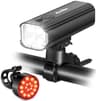
Buy the Ascher 1000-lumen set. Front and rear in one box, USB-C charging, and enough output to ride an unlit lane rather than merely be visible on one — for under twenty dollars.
The thing worth knowing before you shop: the reflectors your bike came with are not lights. Federal regulation (16 CFR § 1512.16) requires new bicycles to ship with front, rear, side and pedal reflectors. Reflectors only work when something is already shining at them, from roughly the right angle. They do nothing for a car turning across you at a junction, and they do nothing to help you see a pothole.
How this is funded: we earn a commission if you buy through our links, at no extra cost to you. It never changes which bike we recommend, and we will tell you plainly when we would skip one. Full disclosure.
Quick picks
Ranked on published specs, what the listing does and does not tell you, and who each one actually suits. Select a row to jump to the full write-up. We have not ridden these — here is exactly what we do instead.
#
Bike or gear
Best for
Price
1
Ascher 1000 Lumen Light Set
A thousand lumens front and a rear light in the same box, USB-C rechargeable, for less than twenty dollars. This is the set that takes you from 'visible' to 'can actually see the road' without a real decision attached.
Front and rear lights that charge from a USB cable, for the price of a takeout meal. Being seen is not optional, and the reason people ride without lights is that they forgot to buy batteries.
A front light bought as a front light rather than as half of a bundle. Rockbros build quality is a step above the no-name sets, and if you already own a rear light this is the sensible half to upgrade.
The one light on this page that publishes the specifications that decide whether a light survives a winter: IP67 waterproofing and FL-1 impact resistance. Most listings in this category quietly say nothing about either.
Two rear lights for the price of one, which is exactly the right way to buy rear lights: one on the bike, one on the bag, and no ride where you discover the only one is flat.
A 350-lumen rear light with daytime modes, which sounds absurd until you understand what it is for: being seen by a driver in bright sun at distance, which a 20-lumen night flasher completely fails to do.
A thousand lumens front and a rear light in the same box, USB-C rechargeable, for less than twenty dollars. This is the set that takes you from 'visible' to 'can actually see the road' without a real decision attached.
Who it is for: Riding home after dark on unlit roads.
What is good
+1000 lumens is genuinely enough to ride unlit lanes rather than just be seen
+Front and rear in one purchase, which is what the law and common sense both want
+USB-C charging, so it takes the same cable as everything else you own
+Four modes, including a flashing mode for daylight visibility
What you give up
−Runtime at full output is not published, and on budget lights it is usually short
−No published waterproofing rating
−Lumen claims at this price are self-reported and rarely independently verified
Skip this if. Skip this if you only ride in daylight and want to be seen. A pair of small daytime flashers is lighter, cheaper and lasts far longer per charge than a 1000-lumen headlight you never run at full.
Published specifications for the Ascher 1000 Lumen Light Set
Front output (claimed)
1000 lumens
Includes rear light
Yes
Charging
USB-C
Modes
4 front, 6 rear
Runtime
Not published
Waterproof rating
Not published
Specifications read from the retailer listing on August 11, 2026. “Not published” means the listing does not state that figure — we do not estimate it.
#2Best budget set
Ascher USB Rechargeable Light Set
Front and rear lights that charge from a USB cable, for the price of a takeout meal. Being seen is not optional, and the reason people ride without lights is that they forgot to buy batteries.
Who it is for: Being seen — the minimum lighting any bike needs.
What is good
+USB rechargeable, so no batteries to buy or run out of
+Front and rear in one purchase, which is what the law generally requires
+Four light modes including flashing, which is more visible in daylight
+Tool-free mounting, so they move between bikes in seconds
What you give up
−Bright enough to be SEEN by, not bright enough to SEE by on an unlit road
−No published lumen figure or runtime
−The rubber mounts perish eventually
Skip this if. Skip this if you ride unlit country roads at night. These will make you visible to traffic; they will not light the road ahead, and on a dark lane at speed that is the light you actually need.
Published specifications for the Ascher USB Rechargeable Light Set
Charging
USB rechargeable
Includes
Front headlight and rear taillight
Modes
4
Mounting
Tool-free
Brightness (lumens)
Not published
Runtime
Not published
Specifications read from the retailer listing on July 23, 2026. “Not published” means the listing does not state that figure — we do not estimate it.
#3Best front-only upgrade
Rockbros 1000 Lumen Headlight
A front light bought as a front light rather than as half of a bundle. Rockbros build quality is a step above the no-name sets, and if you already own a rear light this is the sensible half to upgrade.
Who it is for: Replacing a weak headlight while keeping the rear you have.
What is good
+1000 lumens claimed from a brand with an actual product line to protect
+USB-C rechargeable
+Sold as a single headlight, so you are not paying for a rear you do not need
+Handlebar mount rather than a strap, which holds aim better on rough surfaces
What you give up
−No rear light included — you need one, legally and practically
−Runtime figures are not published on the listing
−Costs nearly twice what a complete budget set does
Skip this if. Skip this if you have no lights at all. Buying a headlight alone leaves you invisible from behind, which is the direction the risk actually comes from — buy a set first, upgrade the front later.
Published specifications for the Rockbros 1000 Lumen Headlight
Output (claimed)
1000 lumens
Includes rear light
No
Charging
USB-C
Runtime
Not published
Waterproof rating
Not published
Specifications read from the retailer listing on September 29, 2026. “Not published” means the listing does not state that figure — we do not estimate it.
#4Best built for weather
CECO-USA F Series 2.0
The one light on this page that publishes the specifications that decide whether a light survives a winter: IP67 waterproofing and FL-1 impact resistance. Most listings in this category quietly say nothing about either.
Who it is for: Year-round commuting in weather, where lights die of water rather than age.
What is good
+IP67 rating published — full immersion protection, not just splash resistance
+FL-1 impact resistance standard published, which almost no bike light states
+1000 lumens with USB rechargeable operation
+The specification transparency is itself a signal about the rest of the build
What you give up
−Roughly double the price of the budget sets
−Front light only
−Runtime by mode is not published on the listing
Skip this if. Skip this if your bike lives indoors and you ride in dry weather. IP67 is protection against a problem you do not have, and the money is better spent on a rear light and a lock.
Published specifications for the CECO-USA F Series 2.0
Output (claimed)
1000 lumens
Waterproof rating
IP67
Impact standard
FL-1
Charging
USB rechargeable
Runtime
Not published
Specifications read from the retailer listing on August 11, 2026. “Not published” means the listing does not state that figure — we do not estimate it.
#5Best rear light value
BLITZU Bike Tail Light 2-Pack
Two rear lights for the price of one, which is exactly the right way to buy rear lights: one on the bike, one on the bag, and no ride where you discover the only one is flat.
Who it is for: Redundancy, which is the actual point of a rear light.
What is good
+Two lights in the box, so a dead battery is not a decision about whether to ride
+USB-C rechargeable
+Silicone strap mount fits seatposts, stays and bag straps without tools
+Cheap enough to leave one permanently attached to a rucksack
What you give up
−Rear only — this does not light the road ahead of you
−Output and runtime figures are not published on the listing
−Silicone strap mounts perish over a couple of years of UV exposure
Skip this if. Skip this if you want a daytime running light. These are visibility lights for dark conditions; a dedicated daytime flasher is far brighter and specifically designed to be noticed in sunlight.
Published specifications for the BLITZU Bike Tail Light 2-Pack
Type
Rear light
Quantity
2
Charging
USB-C
Mount
Silicone strap
Output
Not published
Runtime
Not published
Specifications read from the retailer listing on August 11, 2026. “Not published” means the listing does not state that figure — we do not estimate it.
#6Best daytime running light
Cygolite Hypershot 350
A 350-lumen rear light with daytime modes, which sounds absurd until you understand what it is for: being seen by a driver in bright sun at distance, which a 20-lumen night flasher completely fails to do.
Who it is for: Riding on roads with fast traffic, in daylight as much as dark.
What is good
+350 lumens published, with modes designed specifically for daytime visibility
+User-adjustable flash speeds, so you can tune it rather than accept a preset
+Seven modes covering both night and day use cases
+Cygolite is a long-standing bike-light specialist rather than a generic seller
What you give up
−Three times the price of a competent basic rear light
−Bright rear flashers genuinely irritate riders behind you in a group
−Runtime at the brightest daytime setting is short on any light this bright
Skip this if. Skip this if your riding is on quiet lanes and bike paths. Daytime running lights earn their keep against fast overtaking traffic, and if you do not meet any, a $15 rear light does the same job.
Published specifications for the Cygolite Hypershot 350
Type
Rear light
Output
350 lumens
Modes
7, night and daytime
Adjustable flash speed
Yes
Runtime
Not published
Specifications read from the retailer listing on August 11, 2026. “Not published” means the listing does not state that figure — we do not estimate it.
Being seen versus seeing: two different purchases
Almost every bad light purchase comes from not separating these.
Being seen
A flashing light of modest output, front and rear, so drivers and pedestrians register you. This works under streetlights, in town, and in daylight. Output matters less than flash pattern and side visibility— you get hit from the side at junctions, not from directly behind.
Seeing
A steady beam bright enough to show you the road surface on an unlit lane. This is a genuinely different product: higher output, a shaped beam, and a battery that runs down much faster.
How much do you need? Roughly:
Under 200 lumens— being seen, in town, under streetlights. Perfectly adequate for a lit commute.
400 to 800 lumens— enough to ride an unlit road at sensible speed. This is where most riders should land.
1000 lumens and up— unlit descents, gravel at night, and anywhere you are going fast into total darkness.
The 1000-lumen sets on this page cost about the same as the 200-lumen ones, which is why we recommend them — not because everyone needs 1000 lumens, but because you can always run a bright light on a lower mode and you cannot do the reverse.
The rear light matters more than the front
If you buy one thing, buy a rear light. Overtaking traffic is the direction most of the risk comes from, and being seen from behind is the job a bike cannot do for itself.
Two rear lights is better than one, and not for brightness — for redundancy. A flat battery on your only rear light is a decision about whether to ride home in the dark. A second light, left permanently strapped to a bag, means it never becomes a decision. That is the entire argument for the two-pack on this page.
Daytime running lights, which sound absurd and are not
A 350-lumen rear light in broad daylight seems like overkill until you consider what it is for: being noticed by a driver approaching at 50mph in bright sun, from far enough back that they have time to move over. A 20-lumen night flasher simply disappears in sunlight.
If your riding is on quiet lanes, skip it. If you regularly share fast roads with traffic, it is the most defensible expensive light purchase on this page — and it is the one light we would give somebody else, which is why it heads our gift guide for road cyclists.
What the listings do not tell you
Runtime at full output. Almost never published, and on budget lights it is frequently under two hours. Assume the advertised runtime is for the lowest mode.
Weather sealing. Water is what kills bike lights, not age. Only one light on this page — the CECO — publishes an IP rating, and that transparency is itself a signal.
Mount type. Silicone straps fit anything and perish in a couple of years of UV. Bracket mounts hold aim far better on rough surfaces. For gravel, prefer a bracket.
Beam shape. Essentially never published. A round floody beam wastes light into hedges and into oncoming eyes; a shaped beam puts it on the road.
Aim the front light down
A common and genuinely antisocial mistake: a 1000-lumen light aimed level dazzles everyone coming the other way and lights the trees rather than the road. Aim the hotspot at the road about 10 to 15 meters ahead. You will see more, and nobody will flash you.
What we would spend
About $17 on the Ascher 1000-lumen set. It covers both jobs, charges off the same cable as your phone, and is cheap enough that a second rear light for the bag is an easy addition.
Add a lock if the bike ever gets left outside, and see the starter kit page for where lights sit against everything else you need alongside the bike.
We have not ridden these bikes. Every site in this category says it tested twenty of them. We have not tested any, and we say so. What we did instead: read the manufacturer listings and manuals, compiled the published specs, worked out the real out-the-door cost, and checked live availability and price. Here is exactly how that works.
Questions people actually ask
Do I need bike lights if my bike has reflectors?+
Yes. Federal regulation requires new bicycles to ship with front, rear, side and pedal reflectors, but a reflector only works when something is already shining at it from roughly the right angle. It does nothing for a car turning across you at a junction and nothing to help you see the road surface. Reflectors are a supplement to lights, not a substitute.
How many lumens do I need for a bike light?+
Under 200 lumens is enough to be seen on lit streets. Between 400 and 800 lumens lets you actually see the road on an unlit lane, which is where most riders should land. Above 1000 lumens is for unlit descents and night gravel. Since 1000-lumen sets often cost the same as dimmer ones, buy bright and run it on a lower mode.
Front light or rear light — which matters more?+
The rear, if you can only buy one. Overtaking traffic is the direction most of the risk comes from, and being seen from behind is the one thing the bike cannot do for itself. Better still, buy two rear lights: a flat battery on your only one turns into a decision about whether to ride home in the dark.
Are daytime running lights worth it for cycling?+
On fast roads with traffic, yes. A dedicated daytime rear light is bright enough to be noticed in full sun from far enough back that a driver has time to move over, which a 20-lumen night flasher is not. On quiet lanes and bike paths it is money that would do more elsewhere.
How should I aim my bike headlight?+
Point the brightest part of the beam at the road roughly 10 to 15 meters ahead, not level with the ground. A bright light aimed level dazzles oncoming riders and drivers and lights the hedges instead of the surface you are riding on. You will see more with it aimed down, not less.
How long do bike light batteries last?+
Far less than the listing implies, because advertised runtimes are usually for the lowest mode. Budget lights at full output are frequently under two hours. Charge before every night ride rather than trusting a claimed figure, and carry a second rear light if the ride matters.
Sources
Specifications come from the manufacturer or the retailer listing, dated. Where a figure is not published, we say so rather than estimating it.
16 CFR § 1512.16 — Requirements for reflectors — The federal reflector requirement every new bicycle ships with, and what it does not cover (an active light) (accessed August 11, 2026)