Presta vs Schrader Valves
The thin valve on your new bike is not the fat one on your car, and the difference decides which pump, which tube and which rim you can buy. The whole thing in plain English, with the published numbers.
How this is funded: we earn a commission if you buy through our links, at no extra cost to you. It never changes which bike we recommend, and we will tell you plainly when we would skip one. Full disclosure.
Your new road or gravel bike almost certainly has Presta valves: the thin ones with a little brass nut on top. Your car, your old mountain bike and your kid’s bike have Schrader valves: the fat ones. Neither is better to ride on. The difference decides three purchases — which pump head you need, which spare tubes to buy, and which rims a tube will physically fit — and it is responsible for more roadside confusion than any other piece of bike jargon.
Here is the whole thing in one table, then the three places it actually matters.
The difference, side by side
| Presta (thin) | Schrader (fat) | |
|---|---|---|
| What it looks like | Thin, with a small brass nut on the very top that you unscrew. | Fat, with a spring-loaded pin down inside. Identical to a car valve. |
| Published diameter | 6 mm (Schwalbe). | 8 mm (Schwalbe). |
| Rim hole it needs | 6 mm. | 8 mm. |
| Which bikes have it | Almost every road and gravel bike, and most rims deeper than a basic box section. | Mountain bikes, hybrids, kids' bikes, and some budget drop-bar bikes. |
| Before you can inflate | Unscrew the locknut at the top until it stops. It does not come off. | Nothing. Push the pump on. |
| At a gas station | No, not without an adapter. | Yes — it is the same fitting as a car. |
| Weight penalty | None. Schwalbe publish it as about 4-5 g lighter per tube. | About 4-5 g heavier, which no one on a first bike will ever notice. |
| What goes wrong | The thin top pin bends if you lever a pump sideways on it. | Very little. The pin is protected inside the stem. |
| Buying tubes | Check the valve LENGTH as well as the tire size — deeper rims need longer stems. | Length is rarely an issue on the rims these come on. |
The diameters are the root of everything else. Schwalbe publish the Presta valve as 6 mm instead of 8 mm, needing only a 6 mm hole in the rim, and about 4 to 5 g lighter per tube. The weight is irrelevant on a first bike. The hole is not: a narrow road rim with an 8 mm hole punched through it has lost more material than the same rim with a 6 mm hole, and that is the actual engineering reason road bikes went this way.
1. The locknut, which is why your pump seems broken
A Presta valve is closed by a small knurled nut at the very top. Park Tool state the requirement plainly: “At the top of the stem is a small locknut, which must be unthreaded before air can enter the tube.”
So the sequence is: unscrew the nut with your fingers until it stops — it does not come off, it is captive — push the pump head on straight, pump, pull the head off straight, then screw the nut back down. Skip the first step and no air goes in, the pump feels dead, and a surprising number of new riders conclude the pump is faulty and take the bike to a shop.
A Schrader valve has no such step. The pin is held shut by a spring inside the stem and the pump pushes it open. That is the one genuine ease-of-use advantage Schrader has, and it is the reason it is standard on bikes sold to people who have never owned one. Our pumping guide walks the whole sequence with the gauge behavior that confuses people next.
2. Pumps: it is the head, not the pressure
Every pump we recommend on this site takes both valve types as supplied, so for a new buyer this is a non-issue — as long as you check it before buying. Two things are worth knowing:
- Older and very cheap pumps make you convert the head. You unscrew it, remove a small rubber grommet, turn it around and reassemble. It is a two-minute job at a workbench and a genuinely bad one in the rain at the side of a road. A smart, auto-reversible or dual head avoids it entirely.
- The thin stem is the fragile part. Schwalbe note that the pin at the top of a Presta valve can be bent while attaching or removing a pump. That is why a pump with a hose is worth paying for: the hose takes the sideways force that would otherwise go into 6 mm of brass. Push and pull the head on straight, never at an angle, and hold the tire with your other hand while you do it.
What this needs
Three ways to put air in a Presta valve without fighting it — one for the garage, one for the jersey pocket, one for when it is too cold to care.
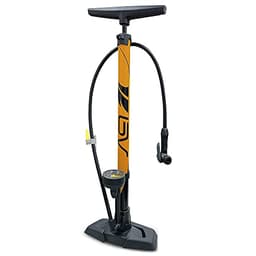
BV Ergonomic Floor Pump
The garage pump. Its head reverses automatically between the two valve types, so the conversion job described above never happens to you, and it has a gauge so you stop guessing at pressure.
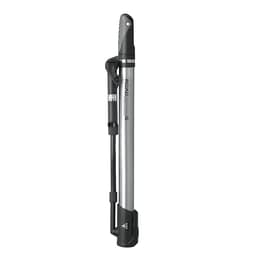
Topeak Road Morph G
The roadside pump with a hose, which is the fix for the one real Presta weakness: nothing levers on the valve stem while you pump, and the in-line gauge tells you when to stop.
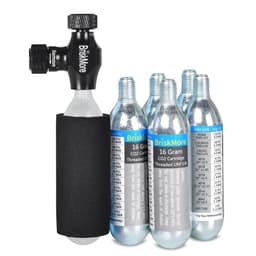
BriskMore CO2 Inflator Kit with 5 x 16g Cartridges
Threaded CO2 head that seals against Presta and Schrader with washers. Seconds instead of minutes, and worth carrying in winter alongside a pump rather than instead of one.
$23.99 · View on AmazonPrice as of October 21, 2026. #ad How we’re funded
We have not ridden or tested these — every specification comes from the manufacturer or the retailer listing, dated. Here is exactly what we do instead.
3. Buying tubes and rims: the direction that works
This is where the 6 mm against 8 mm figure stops being trivia. Park Tool’s rule is that the rim valve hole should match the valve of the tube, and the asymmetry falls out of the numbers:
- Presta tube in a Schrader-drilled rim: fine. A 6 mm valve passes through an 8 mm hole, and a small adapter sleeve — Park Tool describe exactly this part — fills the gap so the valve sits centered instead of rattling and getting levered sideways. Plenty of budget bikes are sold this way.
- Schrader tube in a Presta-drilled rim: no. An 8 mm valve will not go through a 6 mm hole. Drilling the rim out is not a repair — you are removing material from a structural part to save the price of a tube.
- Check the valve length, not just the tire size. Park Tool note that longer valve stems are needed for deeper aerodynamic rims. Schwalbe sell their tubeless valves in 40, 60, 80 and 100 mm shank lengths for exactly that reason. On a shallow alloy rim, a standard 40 mm Presta stem is plenty; if the stem barely pokes through the rim you will not be able to seat a pump head on it properly.
When you buy spares, buy two tubes with the right valve type, the right length and the right width range, and put one on the bike and one in the drawer. Our tire sizes guide decodes the width and diameter numbers on the sidewall, which is the other half of getting that purchase right.
What about tubeless?
Tubeless rims use a separate valve that threads into the rim with a rubber seal rather than living on a tube — and on road and gravel wheels it is a Presta fitting almost without exception, in the same shank lengths. So the pump question does not change: if your pump head takes Presta, it takes a tubeless valve too.
What does change is that you will sometimes remove the valve core to add sealant, and that a deep rim needs the stem length to match. Tubeless versus inner tubes covers whether the switch is worth it on a first bike at all, and the setup guide covers the valve work itself.
The short version
Your bike has Presta. Unscrew the little nut before you pump. Buy a pump whose head takes both types without being taken apart, buy spare tubes with a Presta valve long enough for your rims, and push the pump head on straight so you never find out how easily 6 mm of brass bends. That is the entire practical content of a distinction that sounds far more complicated than it is.
Questions people actually ask
Which valve does my bike have?
Look at the top of the valve. If there is a small brass nut you can unscrew with your fingers, it is Presta — the thin French-type valve almost every road and gravel bike uses. If it is fat and looks exactly like your car's tire valve, it is Schrader. You do not need to take anything apart to tell.
Is Presta better than Schrader?
Neither is better to ride on. Presta exists because a 6 mm valve needs only a 6 mm hole in the rim, which weakens a narrow or deep rim less than an 8 mm hole does, and Schwalbe publish it as 4-5 g lighter. Schrader is tougher and works at a gas station. For a first bike the practical difference is which pump head and which spare tubes you buy.
Why won't air go into my Presta valve?
Because the locknut on top is still closed. Unscrew it with your fingers until it stops — it does not come off — then push the pump on. Park Tool put it plainly: the locknut must be unthreaded before air can enter the tube. This is the single most common reason a new rider thinks their pump is broken.
Can I put a Presta tube in a Schrader rim?
Yes, and it is the direction that works. A 6 mm valve passes through an 8 mm hole, and a small adapter sleeve fills the gap so the valve cannot rattle or get levered sideways. Park Tool describe exactly that sleeve. Going the other way does not work: an 8 mm Schrader valve will not fit a 6 mm Presta hole, and drilling the rim is not a repair.
Do I need a special pump for Presta valves?
No. Every pump we recommend takes both types as supplied. Older or very cheap pumps sometimes need the head dismantled and an internal rubber grommet reversed to change type, which is miserable at the roadside — that is the feature to check before you buy, not the maximum pressure.
What valve length do I need?
Match it to your rim depth. Park Tool note that longer valve stems are needed for deeper aerodynamic rims. On a typical shallow alloy rim a 40 mm Presta stem is plenty; a deep-section rim can need 60 mm or more. The tube packaging states the length, and a stem that only just pokes through is a stem you cannot get a pump head onto properly.
What about a Dunlop valve?
It is the third type, called Woods or Dunlop, and Park Tool list it alongside the other two. It is common on city bikes outside the US and almost unheard-of on road and gravel bikes here. One thing worth knowing: Schwalbe state a standard Dunlop valve cannot be used to measure tire pressure at all, which is a real limitation if you care about pressure.
Sources
Specifications come from the manufacturer or the retailer listing, dated. Where a figure is not published, we say so rather than estimating it.
- Park Tool — Tire and tube removal and installation — The naming and the mechanics of the three valve stems, in Park Tool's own words: 'There are three common types of valve stems on bicycles: Schrader ('American' type), Presta ('French' type) and Woods (also known as 'Dunlop')', and on the Presta, 'At the top of the stem is a small locknut, which must be unthreaded before air can enter the tube'. Also the two fitment facts the valve comparison turns on - 'The rim valve hole should match the valve of the tube', with an adapter sleeve available to fit a narrower Presta valve into a Schrader-sized hole, and 'Presta valve tubes are available with different length valves. Longer valve stems are needed for deeper aerodynamic rims' - plus the bead-seating check, 'Inflate to low pressure and inspect bead again on both sides. Look for small molding line above bead' (accessed October 10, 2026)
- Schwalbe — Technology FAQ: valves — The manufacturer's published geometry behind the Presta-versus-Schrader choice: the Sclaverand (Presta, SV) valve is 6 mm in diameter instead of 8 mm and needs only a 6 mm rim hole, which makes it about 4-5 g lighter than an auto (Schrader, AV) or Dunlop (DV) valve, and its thin top pin can be bent while attaching or removing a pump. Schwalbe also state that a standard Dunlop valve cannot be used to measure tire pressure, while their own version adds a return airflow so an Airmax gauge can read through it. Registered at the French path because the English edition of this FAQ page returns 404 and the French edition returns 200; the figures cited are numeric (accessed October 10, 2026)
- Schwalbe — Tire sizes and the ETRTO designation — How the 40-622 style ETRTO number maps to '700 x 40c' (accessed July 23, 2026)
- Continental — Tire and rim combinations, ETRTO standards — Which tire widths are approved for which internal rim widths (accessed July 23, 2026)
- Park Tool — Tire, wheel and inner tube fit standards — The ISO/ETRTO bead-seat table: 700c is 622 mm, 650B/27.5in is 584 mm, 650C is 571 mm, and none of them interchange. Also the rule of thumb that ISO tire width should be roughly 1.5 to 2 times the internal rim width (accessed August 18, 2026)
Read next
Best Mini Bike Pumps and CO2 Inflators
Six roadside options, judged on the head and the hose rather than the pressure number.
See the pumpsBest Bike Floor Pumps
The garage pump with a gauge, and the auto-reversible head that makes valve type a non-issue.
See the floor pumpsHow to Pump Up Bike Tires
The five-step version, including what the first few dead strokes on the gauge mean.
Read the guideHow to Fix a Flat Tire
Where the valve type matters most: buying the right spare tube before you need it.
Read the guideBike Tire Sizes Explained
The other number on the sidewall, and how to buy a tube that fits without guessing.
Decode the numbers