Smart Trainer vs Dumb Trainer
What the app can and cannot control, what each type publishes about its own accuracy, and the honest answer for a first winter indoors.
How this is funded: we earn a commission if you buy through our links, at no extra cost to you. It never changes which bike we recommend, and we will tell you plainly when we would skip one. Full disclosure.
A smart trainer changes its own resistance; a classic (“dumb”) trainer does not. That is the entire difference, and everything else — price, noise, accuracy, whether you take the rear wheel off — follows from it. For a first winter indoors, a classic trainer is a genuinely reasonable purchase; what it cannot do is make a hill feel like a hill without you shifting gear.
There is also a middle category that confuses the whole decision, and it has the worst name in cycling: a broadcasting or “smart equipped” trainer. It sends your speed and cadence to the app but takes no instructions back. You can ride Zwift on it. The app just cannot touch the pedals.
The three kinds, in plain language
- Classic / dumb. A frame, a roller and a resistance unit. Effort changes when you shift gear or turn a remote dial. Nothing connects to anything. Cheapest by a wide margin.
- Broadcasting / “smart equipped”.A classic trainer plus a speed and cadence sensor, so an app can see how fast you are going and estimate power from the trainer’s known resistance curve. One-way: data out, no control in. The Saris Fluid2 Smart Equipped is this, and it ships with the sensor.
- Smart. The app sets the resistance. Ride a 6 percent gradient in Zwift and the trainer gets harder whether you asked it to or not, and the trainer reports its own power rather than inferring it. Available wheel-on (Elite Tuo) and direct drive (Wahoo KICKR CORE 2, ThinkRider X2Max).
What each of these actually publishes
Four trainers from our registry, read from the manufacturer pages and listings on the dates in each product’s own entry. The accuracy column is the one worth reading twice: it is the difference between a figure the manufacturer stands behind and no figure at all.
| Trainer | Type | Resistance | App controls it? | Published accuracy | Axle fit |
|---|---|---|---|---|---|
| Sportneer magnetic | Classic, wheel-on | Magnetic, 6 levels by bar remote | Not published | No power figure published | QR skewer included; thru-axle needs a different version |
| Saris Fluid2 Smart Equipped | Classic, wheel-on, broadcasting | Fluid, progressive with speed | No — you shift, the app reads | Within ±5% (Saris' own guide) | 120/130/135 mm QR; thru-axle adapters sold separately |
| Elite Tuo | Smart, wheel-on | Electronically controlled magnetic | Yes, automatic | ±5% (manufacturer) | QR and four thru-axle adapters in the box |
| Wahoo KICKR CORE 2 (Zwift Cog) | Smart, direct drive | Electromagnetic, 1,800 W max, 16% gradient | Yes, automatic | ±2% (manufacturer) | 130/135 QR, 12x142, 12x148 adapters in the box |
What you actually gain by paying for smart
- Hills that feel like hills. On a classic trainer a climb in a game is a number on a screen; you create the effort yourself by shifting. On a smart trainer the pedals get heavier. This is the thing people describe as making indoor riding tolerable, and it is genuinely hard to replicate.
- Structured workouts that run themselves. A workout file sets the watts and holds them while you pedal. On a classic trainer you chase a target with the gears, which works and is more annoying than it sounds.
- Power you can compare week to week.A published accuracy figure — ±2 percent for the KICKR CORE 2, ±5 percent for the Tuo — means your numbers mean something over time. An estimated number from a resistance curve drifts with tire pressure and how hard the roller is clamped.
- Quiet, if you go direct drive. Taking the wheel out of the equation removes the loudest part of the system. Saris publish 69 decibels at 20 mph for the wheel-on Fluid2; the direct-drive units here publish no decibel figure at all, which is a gap rather than a claim of silence.
What you give up, and the costs nobody lists
- A subscription. Every benefit above assumes an app, and the apps charge monthly. A classic trainer and a podcast cost nothing after purchase.
- A cassette, on direct drive.The wheel comes off, so the trainer needs its own sprockets. Wahoo’s Zwift Cog version sidesteps this with a single sprocket and an electronic shifter — which is why it is on this page — but a conventional direct-drive trainer may need a cassette matched to your drivetrain.
- Setup time. Wheel-on: clamp the bike in, done. Direct drive: remove the wheel every time you want to ride outside, unless you leave a second bike on the trainer.
- Axle compatibility.The least glamorous and most common problem. Check what is in the box: adapters included (Wahoo, Elite), sold separately (Saris), or a different product version entirely (Sportneer’s thru-axle fit).
Which one for a first winter
Buy classic if you have never ridden indoors, you are not sure you will like it, and the goal is to keep your legs turning through January. The Sportneer costs about a fifth of the KICKR and does that job.
Buy broadcasting if you want to ride in a virtual world without paying smart-trainer money. The Fluid2 Smart Equipped includes the sensor and Saris list Zwift and Rouvy, so it works out of the box — you just do the shifting.
Buy smart if you already know you will ride indoors every winter, or you want structured training to run itself. Wheel-on smart (the Tuo) is the cheaper route in; direct drive is the one you keep.
One of each, with live prices
Four trainers from our registry covering the three categories. Every figure in the table above comes from these products' own entries, and every price here is live.
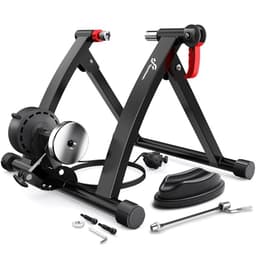
Sportneer Magnetic Bike Trainer Stand
The classic trainer, and the cheapest honest way to find out whether you will ride indoors at all. Six resistance levels on a bar remote, no app, no sensor.
$104.99 · View on AmazonPrice as of October 21, 2026. #ad How we’re funded
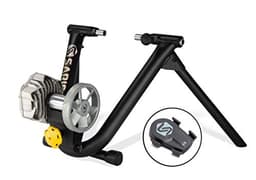
Saris Fluid2 Smart Equipped
The broadcasting middle ground: progressive fluid resistance, a dual-band speed and cadence sensor in the box, and Saris' own ±5% power figure.
$169.99 · View on AmazonPrice as of October 21, 2026. #ad How we’re funded
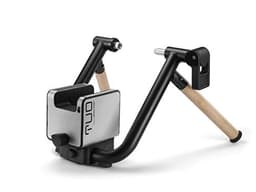
Elite Tuo Interactive Wheel-On Trainer
The cheapest genuinely app-controlled trainer here — resistance set automatically, 10% gradient, quick-release and four thru-axle adapters included.
$149.99 · View on AmazonPrice as of October 21, 2026. #ad How we’re funded
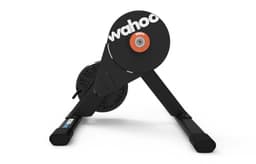
Wahoo KICKR CORE 2 with Zwift Cog and Click
Direct drive with the Zwift Cog pre-fitted, so there is no cassette to match and the chain never moves. ±2% accuracy, 1,800 W, 16% gradient.
$549.99 · View on AmazonPrice as of October 21, 2026. #ad How we’re funded
We have not ridden or tested these — every specification comes from the manufacturer or the retailer listing, dated. Here is exactly what we do instead.
Two things that matter more than the trainer
A mat and a fan. Indoors you produce the same heat as outdoors with none of the airflow, and sweat goes on the floor and into the frame. A 6 mm mat catches it and kills the drumming through a hard floor; a cheap household fan does more for how long you last than any trainer feature. Our trainer page covers both.
A trainer tire, if you go wheel-on. The roller wears a flat strip into whatever is on the wheel, and a road tire is both more expensive and worse at the job. Saris recommend one for the Fluid2 and do not include it. Also worth knowing before you start: indoor miles are still miles on your chain, so the maintenance clock keeps running even though the bike never leaves the room.
And if the real problem is that winter is dark and wet rather than that you want to train, the cheaper answer may be clothing rather than hardware — riding in the rain and a decent light set together cost less than the cheapest trainer here.
Questions people actually ask
Do I need a smart trainer for Zwift?
No. Zwift will run with a classic trainer as long as it can read your speed, which means a speed sensor on the wheel — that is what the Saris Fluid2 Smart Equipped includes. What a smart trainer adds is resistance control: the app makes the pedals harder on a climb instead of you shifting gear.
What is the difference between a smart trainer and a dumb trainer?
Control. A smart trainer accepts instructions from an app and changes its own resistance; a classic trainer has a fixed resistance curve, or a remote with a few levels, and you change effort by shifting gear. Smart trainers also report power directly, which is why they publish an accuracy percentage and classic trainers usually do not.
Is a dumb trainer good enough for a beginner?
For a first winter, often yes. A classic trainer costs a fraction of a direct-drive smart trainer and turns the pedals over just as well. The honest test is whether you will still be riding indoors in a second winter — if you are not sure, finding out cheaply is a reasonable decision.
Is wheel-on or direct drive better?
Direct drive is quieter, more accurate and does not wear a tire, because the rear wheel comes off and the chain runs on the trainer. Wheel-on is cheaper, faster to set up and needs no cassette. The two smart trainers here are one of each, which is the real price gap in the category.
Do I need a trainer tire?
On a wheel-on trainer, yes, if you care about your road tire. The roller wears a flat strip into whatever tire sits on it. Saris list a trainer tire or low-tread tire as one of the things a wheel-on setup needs, and recommend one for the Fluid2 without including it.
Will a smart trainer fit my bike?
Check the axle first. Wahoo publish 130/135 mm quick-release and 12x142 / 12x148 thru-axle adapters in the box; Elite list quick-release plus four thru-axle standards; Saris include a quick-release skewer and sell thru-axle adapters separately. The Sportneer's thru-axle fit needs a different version of the product entirely.
How accurate are trainer power numbers?
Only as accurate as the figure the manufacturer publishes, and only on trainers that publish one. Wahoo state plus or minus 2 percent for the KICKR CORE 2, Elite state plus or minus 5 percent for the Tuo, and Saris put their wheel-on units within plus or minus 5 percent in their own trainers guide. Where no figure is published, we say so rather than estimating one.
Sources
Specifications come from the manufacturer or the retailer listing, dated. Where a figure is not published, we say so rather than estimating it.
- Saris — Bike Trainers 101 — The manufacturer's own explainer for the three resistance types and the two mounting types: magnetic is stepped, fluid gets harder the faster you pedal, and smart trainers report power - Saris put their direct-drive H3 Plus within plus or minus 2 percent and the wheel-on M2 and Fluid2 within plus or minus 5 percent. It also lists a trainer tire or low-tread tire as one of the four things a wheel-on setup needs (accessed August 26, 2026)
- Saris — Fluid 2 Smart Equipped trainer — Published specifications for the trainer on this page: progressive fluid resistance, 69 decibels at 20 mph, a 300 lb combined rider and bike limit, 120/130/135 mm dropout settings with a steel quick-release skewer included, thru-axle adapters for 142x12 and 148x12 sold separately, and a trainer tire recommended but not included (accessed August 26, 2026)
- Elite — Tuo interactive wheel-on trainer — Manufacturer specifications: electronically controlled magnetic resistance, plus or minus 5 percent power accuracy, 10 percent maximum simulated slope, 550 W at 20 km/h and 1,300 W at 40 km/h, ANT+ and Bluetooth, 10.3 kg, and the full list of included axle adapters from quick release through Boost 12x148 (accessed August 26, 2026)
- Wahoo — KICKR CORE 2 with Zwift Cog and Click — Manufacturer specifications for the Zwift Cog version: plus or minus 2 percent power accuracy, 1,800 W maximum, 16 percent maximum incline and -10 percent decline, WiFi plus Bluetooth plus ANT+ FE-C, 8 to 12 speed compatibility, 130/135 mm quick release and 12x142 / 12x148 thru-axle adapters in the box, 30 lb product weight and a 250 lb maximum rider weight (accessed August 26, 2026)
- Zwift — Zwift Ready smart trainers — Zwift's own definition of Zwift Ready: a smart trainer shipped with the Zwift Cog and Click already fitted, compatible with almost any 8 to 13 speed bike, giving 24 silent virtual gears where the resistance changes and the chain does not move (accessed August 26, 2026)
- Saris — Trainer Tire — 700c x 25c, double-layer tread, and the explicit statement 'For use with an indoor trainer only' - plus the reason it exists, which is that frequent trainer riders wear the tread off their rear road tire (accessed August 26, 2026)
Read next
Best Bike Trainers and Indoor Riding Gear
Seven trainers plus the mat and the trainer tire, with live prices and every published figure.
See the trainer picksZwift Setup for Beginners
The full list of what a first indoor setup needs, including the cheap route with a classic trainer.
Read the setup guideBest Cold Weather Cycling Gear
The other answer to winter: dress for it and keep riding outside.
See the winter kitBest Road Bike Tires
Why a wheel-on trainer wears a flat strip into a road tire, and what to put on instead.
See the tire picks