Bike Tire Sizes Explained
What 700x28c, 28-622 and 650b actually mean, how to read the numbers already on your tire, and the two checks that decide whether a tire will fit your bike.
How this is funded: we earn a commission if you buy through our links, at no extra cost to you. It never changes which bike we recommend, and we will tell you plainly when we would skip one. Full disclosure.
Tire sizing is the worst-labelled part of a bicycle, because three incompatible systems are printed on the same sidewall. The good news is that only two numbers matter: the rim diameter, which has to match, and the width, which has to fit your frame. Everything else on the sidewall is history.
Read your own tire first. Somewhere on the sidewall it says something like 700 x 32c and, usually nearby, 32-622. Those are the same size written twice.
The three systems, decoded
The French system: 700 x 32c
700 is a nominal outer diameter in millimetres, from an era when tires of different widths were supposed to end up the same overall size. 32 is the real tire width in millimetres, and it is the number you actually choose. The trailing cis a legacy rim-width code and means nothing useful today — there is no 700a or 700b on the shelf to confuse it with.
The inch system: 28 x 1.25
The same wheel, in inches. This is where it gets dangerous: historically, tires marked in inches and tires marked in millimetres could share a label and have different bead diameters. If a tire is marked only in inches, find the ETRTO number before you buy.
ETRTO: 32-622, and the only one that cannot lie
Two numbers: width in millimetres, then bead seat diameter in millimetres. 32-622 is a 32mm tire for a 622mm rim. Tire makers publish their full size tables in this format, and it is the standard that makes cross-brand comparison possible at all. If the second number matches your rim, the tire fits the wheel.
The size chart, with what each width is for
Every row here is a size you can actually buy for a drop-bar bike. The ETRTO column is the one to match against your rim.
| On the sidewall | ETRTO | Actual width | What it is for |
|---|---|---|---|
| 700 x 25c | 25-622 | 25mm | Road racing and fast road bikes. The narrow end of what entry-level road bikes ship with. |
| 700 x 28c | 28-622 | 28mm | The modern road default. Noticeably more comfortable than 25 with little speed cost. |
| 700 x 32c | 32-622 | 32mm | Road bikes with clearance, commuting, light gravel. The widest many road frames take. |
| 700 x 38c | 38-622 | 38mm | Mixed-surface riding. Around the upper limit for most fender sets. |
| 700 x 40c | 40-622 | 40mm | The gravel default, and what most gravel bikes in our registry ship with. |
| 700 x 44c | 44-622 | 44mm | Loose gravel and comfort. Needs a frame with real clearance. |
| 650b x 47 (27.5 x 1.9) | 47-584 | 47mm | A smaller rim with a fatter tire, same overall diameter. A second wheelset option, not a swap onto 700c rims. |
The two checks that decide whether a tire fits
1. Does the rim want that width?
Rims have an internal width, and tire and rim makers publish which tire widths suit which internal widths. A tire much narrower than the rim is designed for sits badly; much wider and it rolls on the rim in corners. If you are buying tires more than a few millimetres away from the fitted size, check the published fit table rather than guessing. WTB, Schwalbe and Park Tool all publish the standards behind this.
2. Does the frame have the clearance?
This is the check people skip, and it is the one that wastes money. Almost no budget bike listing publishes a maximum tire width — we checked every bike in our own registry and found the figure absent nearly every time, which is why our spec tables say “Not published” in that row. So measure: the gap at the fork crown, and the gap between the chainstays and the seat tube, with the current tire fitted. Leave room for mud, and more room if you want fenders. Fender sets publish their own tire-width ranges.
Inner tubes, which are easier than they look
A tube stretches, so it covers a range of widths rather than a single size. A tube marked 700 x 28-38 fits any tire from 28mm to 38mm on a 622mm rim. Two things to get right:
- Valve type.Presta is the narrow one with a lock nut, found on almost every drop-bar bike. Schrader is the wide car-style valve. The rim hole is drilled for one or the other, so this is not a preference — the two compared, with the published diameters.
- Valve length. Deep rims need a longer valve stem. If the valve barely clears the rim, a pump head cannot seat on it properly.
Which valve you have, and what pressure to run, and how to fit a tube without pinching it.
Tires at three points on that chart
One road width, one mostly-pavement gravel width and one real-gravel width, plus the tube that covers the middle of the range. Every size below is the ETRTO-matched size from the listing.
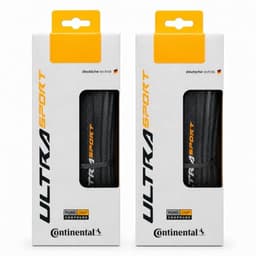
Continental Ultra Sport III 700x28 (pair)
700 x 28c (28-622), sold as a pair: the modern road default, and the usual upgrade from the no-name tires an entry-level road bike ships with.
$57.00 · View on AmazonPrice as of October 21, 2026. #ad How we’re funded
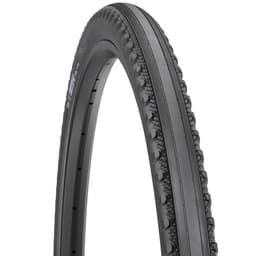
WTB Byway 700 x 44
700 x 44 (44-622) with a smooth centre and side knobs -- the wide end that still rolls acceptably on pavement.
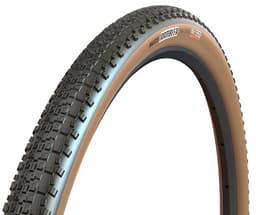
Maxxis Rambler 700 x 40
700 x 40c (40-622), fully knobbed: the gravel default width when grip matters more than pavement speed.
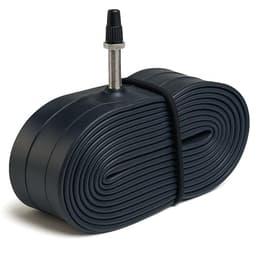
WTB Inner Tube 700 x 28-38
One tube covering 700 x 28-38 with a 33mm Presta valve, which is most drop-bar bikes. Keep one in the saddle bag permanently.
$8.95 · View on AmazonPrice as of October 21, 2026. #ad How we’re funded
We have not ridden or tested these — every specification comes from the manufacturer or the retailer listing, dated. Here is exactly what we do instead.
Three things the numbers do not tell you
- Measured width is not labelled width. A tire marked 40mm can measure a couple of millimetres either side once mounted, because rim width changes it. Build that into your clearance check.
- Tubeless is a separate question. A size that fits does not mean a tire that will seal. What tubeless actually requires.
- Width changes the pressure. A wider tire needs less pressure, not the same pressure. Road pressures and gravel pressures are both set by width and rider weight rather than by the maximum printed on the sidewall.
If the reason you are reading this is that you want a gravel bike to be faster on pavement, the size chart above is only half the answer — the tire swap and which bikes take it well is the other half.
Questions people actually ask
What does 700x28c mean?
700 is the nominal wheel diameter in the old French system, 28 is the tire width in millimetres, and the c is a legacy French rim-width code that carries no useful meaning today. The number that matters for fit is the width.
What is the difference between 700c and 28 inch?
They are the same rim diameter -- 622mm -- labelled in two systems. A tire marked 28 x 1.60 and one marked 700 x 40c both fit a 622mm rim. This is exactly why the ETRTO number exists.
What does 28-622 mean on a tire?
It is the ETRTO size: 28mm wide, for a rim with a 622mm bead seat diameter. The second number must match your rim. If it does, the tire physically fits the wheel; whether it fits the frame is a separate question.
Is 650b the same as 27.5 inch?
Yes -- both describe a 584mm rim. Gravel riders use 650b with a wide tire to get roughly the same overall diameter as a 700c wheel with a narrow one. It requires a different wheelset, not a different tire on the same rim.
What size inner tube do I need?
Match the rim diameter exactly and let the width fall inside the tube's stated range -- a tube marked 700 x 28-38 covers any tire from 28mm to 38mm on a 622mm rim. Then check the valve type and that the valve is long enough for your rim depth.
Can I put wider tires on my bike?
Two checks. The rim has to be designed for that width -- tire and rim makers publish compatibility tables -- and the frame and fork need the clearance. Most budget bike listings do not publish a clearance figure, so measure the gap at the fork crown and chainstays yourself.
How much clearance should I leave around a tire?
Enough that mud and grit cannot bridge the gap, and more if you run fenders. If a wider tire fits but nearly touches the frame, it is too wide in practice even though it mounts.
Sources
Specifications come from the manufacturer or the retailer listing, dated. Where a figure is not published, we say so rather than estimating it.
- Schwalbe — Tire sizes and the ETRTO designation — How the 40-622 style ETRTO number maps to '700 x 40c' (accessed July 23, 2026)
- Continental — Tire and rim combinations, ETRTO standards — Which tire widths are approved for which internal rim widths (accessed July 23, 2026)
- WTB — Tire and rim fit chart — Manufacturer chart of approved tire width to rim width pairings (accessed July 23, 2026)
- Park Tool — Tire, wheel and inner tube fit standards — The ISO/ETRTO bead-seat table: 700c is 622 mm, 650B/27.5in is 584 mm, 650C is 571 mm, and none of them interchange. Also the rule of thumb that ISO tire width should be roughly 1.5 to 2 times the internal rim width (accessed August 18, 2026)
Read next
Gravel Bike Tire Width
Once you can read the numbers, this is how to choose between them.
Read the guide700c vs 650b Wheels
The one size decision that needs a whole second wheelset.
Read the comparisonBest Road Bike Tires
The 25 to 32mm end of the range, with what each pick is for.
See the road tire picksBest Gravel Bike Tires
The 38 to 45mm end, including the smooth-centre tires for mostly-pavement riding.
See the gravel tire picks