Gravel Bike Tire Width
How wide to go, how to find out what your frame will actually take, and why the number on the sidewall is not always the width you get.
How this is funded: we earn a commission if you buy through our links, at no extra cost to you. It never changes which bike we recommend, and we will tell you plainly when we would skip one. Full disclosure.
40mm is the answer for most gravel riding, if your frame takes it. It is wide enough to be comfortable and grippy on loose surfaces and narrow enough that the ride to the gravel is not a slog.
That is the short version. The longer version matters because tire width is the single biggest lever you have over how your bike rides, it costs a fraction of any other upgrade, and the constraint — how much room your frame has — is one you have to measure rather than assume.
What each width is actually for
| Width | Where it suits | What it feels like |
|---|---|---|
| 28-32mm | Pavement, with the occasional smooth dirt road. | A road tire on a gravel bike. Fast, and out of its depth on anything loose. |
| 35mm | Mixed: mostly tarmac, some hardpack and gravel path. | The commuter and all-rounder width. Quick enough to keep up on the road. |
| 38-40mm | Genuine gravel roads, mixed with tarmac to get there. | The default gravel width for a reason - the best compromise most riders find. |
| 42-45mm | Rough, loose, rocky gravel. Long days on unpaved roads. | Comfort and grip go up, speed on tarmac goes down noticeably. |
| 47mm and up | Chunky terrain, singletrack, bikepacking on rough ground. | Close to a mountain bike tire. Check clearance carefully before ordering. |
Reading the numbers on your current tire
Park Tool are blunt about the older systems: the inch and French codes are marketing names, not measurements. So work from the ETRTO number.
Find 40-622 or similar on your sidewall and you know two things: what fits your rim (anything ending 622) and what you are currently running. From there, the only question is how much wider you can go.
How to measure your clearance properly
- Check the published maximum first. Most gravel manufacturers publish it, and it accounts for mud as well as fit. If the maker says 45mm, that is the ceiling.
- Inflate the tire you have and look at the tight points. The chainstays just behind the bottom bracket, the seat stay bridge, the fork crown and the inside of the fork blades. One of those will be the narrowest.
- Measure the gap each side with a ruler or a coin. A US quarter is about 1.75mm thick, which makes a workable gauge if you have nothing else.
- Leave at least 4mm each side. More if you ride mud, more if you run fenders. Tires pick up debris, wheels flex under load, and a tire that just clears when stationary can rub when you are out of the saddle.
- Add for the rim. If your wheels are wider than the ones the tire was measured on, the fitted tire will come out wider than the sidewall says.
The rim width part nobody mentions
The same tire measures differently on different rims, because a wider internal rim pulls the casing wider. Park Tool publish the working rule that ISO tire width should be about one and a half to two times the internal rim width, and WTB publish a fit chart for their own tires.
Practically:
- Modern gravel rims are typically 21–25mm internal, which suits roughly 35–50mm tires.
- Older or budget rims may be 17–19mm internal, which suits narrower tires and leaves a wide tire under-supported in corners.
- A tire that is too wide for its rim can roll or squirm under cornering load. This is the one genuine safety consideration in the width question.
Wider tires only work if you drop the pressure
This is the mistake that makes people conclude wide tires are slow and heavy: fitting 45mm tires and running them at the pressure they used for 32s. All the comfort comes from running less pressure in more air, and a wide tire pumped hard is worse than a narrow one at the correct pressure.
Work out your pressure from your weight and the tire width rather than the sidewall maximum — the arithmetic is in the pressure guide, and it is the single most valuable free adjustment on a gravel bike.
Tires worth the swap
Three widths, three jobs, all from our tire pages. Check your frame clearance against the numbers above before ordering.
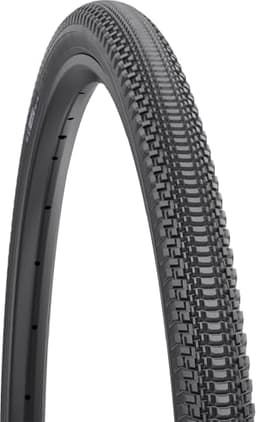
WTB Vulpine 700 x 36
36mm, fast-rolling and the sensible width if most of your miles are paved with gravel at the weekend.
$45.80 · View on AmazonPrice as of October 21, 2026. #ad How we’re funded
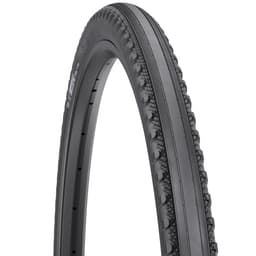
WTB Byway 700 x 44
44mm with a smooth center strip - the wide end of the range for riders whose local gravel is genuinely rough.
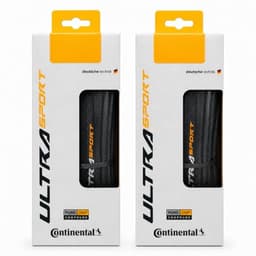
Continental Ultra Sport III 700x28 (pair)
If the answer is that your frame will not take anything wide, a pair of good 28mm road tires is the better spend.
$57.00 · View on AmazonPrice as of October 21, 2026. #ad How we’re funded
We have not ridden or tested these — every specification comes from the manufacturer or the retailer listing, dated. Here is exactly what we do instead.
If you have run out of clearance
There is one more move, and it is a wheel-size one: a smaller 650b wheel frees up room for a much fatter tire at a similar overall diameter. It is a second-wheelset decision rather than a cheap fix, and only some frames support it — but it is the answer when the frame simply will not take more rubber at 700c.
And if the problem is the opposite — a gravel bike that spends most of its life on tarmac and feels slow on the knobbly tires it came with — the pavement-first tire page is the one to read. The same clearance measurement applies; you just use it to go smoother rather than wider.
And if you are running wide tires at low pressures on rough ground, that is exactly the point where going tubeless starts paying for itself, because pinch flats are the failure mode low pressure invites.
If the numbers on your current tire are the confusing part rather than the choice between widths, start with what 700x40c and 40-622 actually mean.
And if the width question is really a choice between two specific tires, the 44mm and 40mm versions of that decision are set out in WTB Byway versus Vulpine, with the tread shapes and everything each listing publishes side by side.
Questions people actually ask
What tire width is best for a gravel bike?
40mm is the default for a reason: it carries enough air to be comfortable and grippy on loose surfaces without being slow on the tarmac you ride to get there. Go narrower, around 35mm, if most of your miles are paved. Go wider, 45mm and up, if your local gravel is rough, rocky or sandy. The frame's maximum clearance sets the ceiling on all of this.
How do I know how wide a tire my bike can take?
Check the manufacturer's published maximum first - most gravel brands state it, and it accounts for mud clearance as well as fit. If it is not published, measure: fit the widest tire you currently have, inflate it, and check the gap to the chainstays, seat stays, fork blades and fork crown at the tightest point. You want at least 4mm of clear space each side, and more if you ride mud.
Does a 40mm tire always measure 40mm?
No, and this catches people out. A tire's stated width is measured on a specific rim, and a wider internal rim spreads the same tire wider. Fitted to a modern wide gravel rim, a 40mm tire can measure a couple of millimeters over - which matters if you were counting on exactly 4mm of clearance. Measure the tire fitted and inflated rather than trusting the sidewall.
Are wider gravel tires slower?
On tarmac, a little - mostly from weight and aerodynamics rather than rolling resistance. On loose or rough ground, wider tires are usually faster, because they deform over obstacles instead of being deflected by them and you can run lower pressures without pinch-flatting. Match the width to where you actually ride, not to where you would like to be quick.
What rim width do I need for a 40mm tire?
Park Tool publish the loose rule that ISO tire width should be roughly one and a half to two times the internal rim width - so a 40mm tire suits an internal rim width of about 20 to 26mm, which covers most gravel wheels sold today. Too wide a tire on a narrow rim is unsupported and can roll in corners; too narrow a tire on a wide rim gives a squared-off profile. Manufacturers like WTB publish fit charts for their own tires.
Can I fit wider tires to a road bike?
Only within the frame's clearance, and rim-brake bikes are the tight ones - the brake bridge and caliper usually run out of room before the frame does. Many older road frames stop at 25 or 28mm. Disc-brake road bikes often take 32mm or more. Measure before ordering: a tire that rubs the frame is unusable and cannot be made to fit.
Sources
Specifications come from the manufacturer or the retailer listing, dated. Where a figure is not published, we say so rather than estimating it.
- Park Tool — Tire, wheel and inner tube fit standards — The ISO/ETRTO bead-seat table: 700c is 622 mm, 650B/27.5in is 584 mm, 650C is 571 mm, and none of them interchange. Also the rule of thumb that ISO tire width should be roughly 1.5 to 2 times the internal rim width (accessed August 18, 2026)
- WTB — Tire and rim fit chart — Manufacturer chart of approved tire width to rim width pairings (accessed July 23, 2026)
- Schwalbe — Tire sizes and the ETRTO designation — How the 40-622 style ETRTO number maps to '700 x 40c' (accessed July 23, 2026)
- Continental — Tire and rim combinations, ETRTO standards — Which tire widths are approved for which internal rim widths (accessed July 23, 2026)
Read next
Best Gravel Bike Tires
The tires themselves, ranked, with live prices.
See the picksGravel Bike Tire Pressure
The other half of the decision, and the free half.
Read the guide700c vs 650b Wheels
When you run out of clearance, this is the other way to get more rubber.
Read the comparisonTubeless vs Inner Tubes
Wide tires and low pressures are where tubeless starts making sense.
Read the comparison