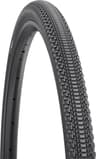
Four tires that publish a named protection layer by name - and the one number only Schwalbe give you, which is why the thickest belt on this page is also the cheapest.
Buy the Continental Gatorskin 700x28. It is the only tire here that publishes protection in both places a road tire actually gets cut — a PolyX Breaker weave under the tread and DuraSkin on the sidewalls — and it is sold singly, so you can armor the rear wheel only and leave a faster tire on the front. The budget pick is the Schwalbe Marathon GG RLX: the cheapest tire on this page that does the job, and the only one whose maker publishes how thick the belt actually is. Three millimeters of GreenGuard, in writing.
Here is the organizing idea, because “puncture-resistant” is a marketing word and the tires below do not deserve to be ranked on it equally. Every tire on this page names its protection layer. Most tires do not. A listing that says “puncture resistant” and names nothing is telling you there is nothing to name; a listing that says “GreenGuard” or “PolyX Breaker” has committed to a specific construction you can look up on the manufacturer’s own site. So the four below are the ones that committed, and the table further down is what each commitment costs you.
And the thing nobody selling tires will tell you: pressure causes more flats than debris does.A pinch flat is an under-inflated tube bitten between rim and pothole, and no belt in the world prevents it. If you are puncturing often, check the pressure before you spend anything — why your tire keeps going flat walks through the six causes in the order they actually occur.
How this is funded: we earn a commission if you buy through our links, at no extra cost to you. It never changes which bike we recommend, and we will tell you plainly when we would skip one. Full disclosure.
Quick picks
Ranked on published specs, what the listing does and does not tell you, and who each one actually suits. Select a row to jump to the full write-up. We have not ridden these — here is exactly what we do instead.
#
Bike or gear
Best for
Price
1
Continental Gatorskin 700x28
The tire people fit when they are sick of fixing punctures. PolyX Breaker under the tread and DuraSkin on the sidewalls — the two places a road tire actually gets cut.
Three millimeters of rubber between the road and your tube, published as GreenGuard. This is the commuter tire that turns a daily ride through broken glass into a non-event.
The tire the rest of the road world benchmarks against, and the single upgrade that changes how a cheap bike feels more than any other part. It also costs more than twice what a competent training tire does.
The tire people fit when they are sick of fixing punctures. PolyX Breaker under the tread and DuraSkin on the sidewalls — the two places a road tire actually gets cut.
Who it is for: Commuting and winter riding on roads with debris.
What is good
+PolyX Breaker puncture layer published as a dense polyester weave under the tread
+DuraSkin sidewall protection, which is where glass cuts usually land
+High-mileage carbon-black tread compound published for durability rather than outright grip
+Sold singly, so you can armor the rear wheel only if you like
What you give up
−Noticeably slower and harsher than a supple tire — puncture protection is stiff by definition
−Grip in cold wet corners is the trade you are making
−Weight and maximum pressure are not published on the listing
Skip this if. Skip this if you rarely puncture. You would be paying a comfort and speed penalty on every ride to fix a problem you do not have — the Ultra Sport III is the better all-round tire.
Published specifications for the Continental Gatorskin 700x28
Size
700 x 28c
Quantity
1
Puncture protection
PolyX Breaker + DuraSkin sidewalls
Tubeless
No
Weight
Not published
Max pressure
Not published
Specifications read from the retailer listing on August 18, 2026. “Not published” means the listing does not state that figure — we do not estimate it.
#2Budget pick, thickest published belt
Schwalbe Marathon GG RLX 700x28
Three millimeters of rubber between the road and your tube, published as GreenGuard. This is the commuter tire that turns a daily ride through broken glass into a non-event.
Who it is for: Daily commuting on rough, debris-strewn roads.
What is good
+3 mm GreenGuard puncture layer published in the listing
+Anti-aging compound published — relevant on a bike that sits outside
+Wire bead holds its shape on cheap rims and is easy to get seated
+Marathon casings are the ones tourers fit precisely because they last
What you give up
−Heavy. This is the price of a 3 mm belt and it is not subtle
−Slow rolling compared with a training tire
−Weight, maximum pressure and reflective strip are not published on this listing
Skip this if. Skip this if your riding is fitness rather than transport. On a bike you ride for enjoyment the weight is a real drag; a Gatorskin gets you most of the protection with less of the penalty.
Published specifications for the Schwalbe Marathon GG RLX 700x28
Size
700 x 28c
Puncture protection
GreenGuard, 3 mm (published)
Bead
Wire
Anti-aging compound
Yes (published)
Weight
Not published
Max pressure
Not published
Specifications read from the retailer listing on August 18, 2026. “Not published” means the listing does not state that figure — we do not estimate it.
#3Best for gravel or tight clearance
WTB Vulpine 700 x 36
The narrow one. 36mm fits frames that will not take a 40, which includes a lot of road bikes people are trying to make gravel-capable.
Who it is for: A road bike with limited tire clearance that you want to take onto dirt.
What is good
+36mm fits frames that cannot take a 40mm tire
+SG2 puncture protection, which is more than the wider Vulpine in this range publishes
+Tubeless-ready folding bead, same as the wider sizes
What you give up
−36mm is noticeably harsher than 40mm or 44mm on rough surfaces
−Narrower tires need higher pressure, which is where the comfort goes
−Race tread means limited grip in the wet
Skip this if. Skip this if your frame will take a 40mm tire. Going wider is the single cheapest comfort upgrade available on a drop-bar bike, and choosing 36mm when you have room for 40mm is leaving that on the table.
Published specifications for the WTB Vulpine 700 x 36
Size
700 x 36
Tread
Fast-rolling race tread
Tubeless-ready
Yes
Sidewall
Black
Puncture protection
SG2
Weight
Not published
Specifications read from the retailer listing on September 29, 2026. “Not published” means the listing does not state that figure — we do not estimate it.
#4Best if you refuse a slow tire
Continental Grand Prix 5000 700x28 (pair)
The tire the rest of the road world benchmarks against, and the single upgrade that changes how a cheap bike feels more than any other part. It also costs more than twice what a competent training tire does.
Who it is for: Riders who have decided the bike is a keeper and want the one upgrade that shows.
What is good
+BlackChili compound published as blending synthetic and natural rubber for grip and rolling speed
+Vectran Breaker cut protection published as lighter and stronger than nylon
+Active Comfort Technology damping published in the casing, which is why they feel softer than the pressure suggests
+Sold as a pair
What you give up
−Costs more than twice a training tire, and it wears faster
−Puncture protection is real but it is not a Gatorskin — this is a fast tire first
−Weight and maximum pressure are not published on this listing
Skip this if. Skip this if you are riding a bike that cost under about $500. The tires would be a third of what the bike cost, and the frame and wheels will limit what you feel long before the tires do.
Published specifications for the Continental Grand Prix 5000 700x28 (pair)
Size
700 x 28c
Quantity
2 (a pair)
Compound
BlackChili
Puncture protection
Vectran Breaker
Comfort
Active Comfort Technology damping
Weight
Not published
Specifications read from the retailer listing on August 18, 2026. “Not published” means the listing does not state that figure — we do not estimate it.
The four belts, and what each one costs you
Puncture protection is not free and it is not a feature you simply add. It is a layer of material between the tread and the tube, and every gram of it is a gram you accelerate, a fraction of suppleness you lose and a small amount of grip you trade. The honest way to compare these tires is therefore protection against penalty, not protection alone.
Tire
Layer, by name
What the maker publishes
What it costs you
Schwalbe Marathon GG RLX
GreenGuard
3 mm, stated on the listing
Heaviest and slowest here. Also the only published thickness.
Continental Gatorskin
PolyX Breaker + DuraSkin
A dense polyester weave under the tread, plus sidewall protection
Stiff ride and cold-wet grip. The only tire here that armors the sidewall too.
WTB Vulpine 36
SG2
Named, no thickness given
Race tread, so limited wet grip. Tubeless-ready, which the others are not.
Continental Grand Prix 5000
Vectran Breaker
Published as lighter and stronger than nylon, no thickness
Costs more than twice a training tire and wears faster.
One number in that table is doing a lot of work. Schwalbe publish 3 mm and nobody else publishes anything. Continental describe PolyX Breaker as a dense polyester weave and Vectran as lighter and stronger than nylon; WTB name SG2 and stop there. Those are descriptions of construction, which is genuinely useful, but they are not thicknesses and we are not going to convert them into one. If you want the protection figure you can actually read, it is on the cheapest tire here.
Where road tires actually get cut
Two places, and they fail differently.
Through the tread. A thorn, a staple, a wire from a steel-belted car tire. This is what every belt on this page is designed to stop, and a belt is genuinely good at it. A tread puncture is also the kind you can usually find and remove.
Through the sidewall. Glass, flint and the edge of a pothole, caught when the tire is leaned over or squashed. Sidewalls are thin because they have to flex, so most belts stop at the shoulder and leave them bare. This is the cut that ruins a tire rather than a tube, and it is the one only the Gatorskin publishes a defense for— DuraSkin is a sidewall treatment, and it is the single reason the Gatorskin is first on this page rather than second.
There is a third failure that is not a cut at all: the pinch flat, where the tube is bitten between rim and obstacle because the tire was soft. Wider tires at lower pressure resist it better than narrow tires at high pressure, which is why a 36 mm gravel tire can be more puncture-proof in practice than a 25 mm road tire with a belt in it. Road bike tire pressure has the arithmetic, and Silca publish a pressure model that takes rider weight, tire width and surface as inputs if you want to be precise about it.
Width, clearance, and the mistake that wastes the money
A tire you cannot fit is worse than no tire. Before you order any of these, check two things on your own bike.
What the frame and brakes will clear. On a rim-brake road bike this is often tighter than people expect, and a tire that rubs the brake bridge is unusable at any pressure. The 36 mm Vulpine exists on this page precisely for the in-between case: a road bike with some clearance, but not enough for a 40.
What your rim’s internal width approves. Continental and WTB both publish tire-to-rim charts, and a wide tire on a narrow rim sits in a light-bulb profile that corners badly and is more cut-prone at the shoulder, not less. If you do not know your internal rim width, tire sizes explained shows where to read it and how the ETRTO number maps to the “700 x 28c” on the sidewall.
Both numbers are published by the manufacturers rather than guessed by us, and they are the two most common reasons a tire purchase gets returned.
How long a protected tire actually lasts
Schwalbe are the only tire manufacturer we have found who publish mileage ranges at all, and they are worth quoting because they put this whole category in proportion: 2,000–5,000 km for a standard tire against 6,000–12,000 km for the Marathon family. That is not a small difference — it is roughly double the life, on top of the puncture protection.
Schwalbe also publish the wear limit, and it is the single most useful sentence on the subject: when the puncture-protection belt or the carcass threads can be seen through the tread, the tire has reached its limit and must be replaced. That is a check you can do in ten seconds with your thumb, and it beats guessing from mileage. How long bike tires last covers the rest of the inspection.
Which one for your riding
Commuting on glassy city roads, all year.The Gatorskin, because the sidewall is where city glass lands. Fit it to the rear only if the budget is tight — the rear carries most of your weight and punctures more.
The bike lives outside and does the same route every day. The Schwalbe Marathon GG RLX. Three published millimeters, an anti-aging compound for a tire that sits in the sun, and the lowest price here. Accept the weight.
A gravel bike, or a road bike you are taking onto dirt.The WTB Vulpine 36 with SG2 — the only pick here that is tubeless-ready, which is a second, different kind of puncture protection.
You ride for enjoyment and a slow tire would stop you riding. The GP5000 with its Vectran Breaker. It is a fast tire with protection second, and the card says so plainly rather than pretending it is a Gatorskin.
Your bike cost under about $500. Buy the Schwalbe or the Gatorskin, not the GP5000. The tires should not be a third of what the bike cost, and the budget upgrade ladder shows where the rest of the money does more.
What we would buy
The Gatorskin, on the rear wheel first. It is the only tire on this page whose maker publishes protection for the sidewall as well as the tread, it is sold singly so the upgrade can be staged, and its honest costs are stated plainly on its own card: it is harsher than a supple tire and cold wet corners are the trade.
If the bike is transport rather than recreation, buy the Schwalbe instead and stop thinking about it. It is cheaper, it publishes more about itself than anything else here, and the mileage figures its maker publishes suggest it will outlast two of the alternatives. The weight is real and it will not matter to you on a commute.
And if you are puncturing more than a few times a year on tires that already have a belt in them, the tire is not the problem. Check the pressure, then run a finger carefully round the inside of the casing for the fragment still embedded in it — that is the usual cause of the flat that comes back three days later.
We have not ridden these bikes. Every site in this category says it tested twenty of them. We have not tested any, and we say so. What we did instead: read the manufacturer listings and manuals, compiled the published specs, worked out the real out-the-door cost, and checked live availability and price. Here is exactly how that works.
Questions people actually ask
What is the most puncture-resistant bike tire?+
Of the tires that publish a protection layer by name, the Schwalbe Marathon GreenGuard publishes the thickest belt - 3 mm, stated on the listing - and no other maker here publishes a thickness at all. The Continental Gatorskin publishes protection in two places rather than one, adding DuraSkin sidewall protection to its PolyX Breaker tread layer, which is why we rank it first overall: sidewall cuts ruin tires rather than tubes.
Do puncture-resistant tires actually work?+
Against tread punctures - thorns, staples, wire - yes, and that is most of what a belt is designed for. Against pinch flats, no: a pinch flat is an under-inflated tube bitten between the rim and an obstacle, and no belt prevents it. Against sidewall cuts, only if the maker publishes sidewall protection specifically, which on this page is the Gatorskin alone.
What do GreenGuard, PolyX Breaker and SG2 mean?+
They are each manufacturer's trade name for the puncture-protection layer in that tire line. Schwalbe publish GreenGuard as 3 mm thick. Continental describe PolyX Breaker as a dense polyester weave under the tread and Vectran Breaker as lighter and stronger than nylon. WTB name SG2 without publishing a thickness. The useful point is not which name is best - it is that a tire naming its layer has committed to a construction you can look up, and a tire that just says "puncture resistant" has not.
Are puncture-resistant tires slower?+
Yes, and the makers say so themselves. Continental position the Gatorskin as a high-mileage tire rather than a fast one; Schwalbe's own listing calls the Marathon heavy. A belt is a layer of material that has to flex with the tire, and flexing it costs energy. The exception on this page is the GP5000, which is a fast tire with protection second rather than the other way round.
Can you put puncture-resistant tires on any bike?+
Only if the frame and brakes clear the width. That is the check to do before ordering, and the one that gets skipped - on a rim-brake road bike the gap at the brake bridge is often tighter than people expect, and a tire that rubs is unusable. Also check your rim's internal width against the manufacturer's tire-rim chart; Continental and WTB both publish one.
How long do puncture-resistant tires last?+
Schwalbe are the only manufacturer we found publishing mileage ranges, and they put the Marathon family at 6,000-12,000 km against 2,000-5,000 km for a standard tire. They also publish the wear limit, which is the more useful test: when the puncture-protection belt or the carcass threads show through the tread, the tire is done. No other tire on this page publishes either figure.
Should I fit a tough tire front and rear?+
Rear first if you are choosing. The rear wheel carries most of your weight and punctures noticeably more often, and the front tire is the one doing the steering, so a supple front and a tough rear is a defensible setup. The one thing to avoid is a big grip mismatch front to rear - a fast front with a hard commuter rear is fine, but do not run a worn-out tire on either end to save money.
Is tubeless better than a puncture-resistant tire?+
It is a different mechanism rather than a better one: sealant closes small holes as they happen instead of stopping them, and it handles thorn-sized punctures very well and sidewall gashes poorly. The only tubeless-ready pick on this page is the WTB Vulpine. If you are weighing the two, our tubeless comparison covers the setup cost and the mess honestly before you commit.
Sources
Specifications come from the manufacturer or the retailer listing, dated. Where a figure is not published, we say so rather than estimating it.
Schwalbe — Technology FAQ: tire wear — The only published mileage figures we could find from a tire manufacturer, and the wear limit our tire-life page is written around: 'When the puncture protection belt or the carcass threads can be seen through the tread the tire has reached its wear limit and must be replaced.' Schwalbe's own published ranges are 2,000-5,000 km for standard tires, 5,000-9,000 km for Marathon Racer and Supreme, 6,000-12,000 km for the Marathon family and 'often much more than 10,000 km' for Marathon Plus, while for MTB tires they state 'No useful mileage data is possible'. They also publish the wear indicator ('small indentations in the tread', marked T.W.I. on the sidewall of the Pro One) and a storage figure: Schwalbe tires 'can be stored for up to 5 years without issue' in cool, dry, dark conditions (accessed October 11, 2026)
Park Tool — Tire and tube removal and installation — The naming and the mechanics of the three valve stems, in Park Tool's own words: 'There are three common types of valve stems on bicycles: Schrader ('American' type), Presta ('French' type) and Woods (also known as 'Dunlop')', and on the Presta, 'At the top of the stem is a small locknut, which must be unthreaded before air can enter the tube'. Also the two fitment facts the valve comparison turns on - 'The rim valve hole should match the valve of the tube', with an adapter sleeve available to fit a narrower Presta valve into a Schrader-sized hole, and 'Presta valve tubes are available with different length valves. Longer valve stems are needed for deeper aerodynamic rims' - plus the bead-seating check, 'Inflate to low pressure and inspect bead again on both sides. Look for small molding line above bead' (accessed October 10, 2026)