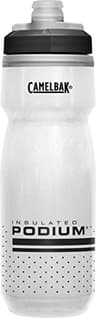
Buy the Elite Custom Race cage and the CamelBak Podium bottle. That is the standard answer, it costs about twenty-five dollars together, and the rubber insert in the Elite is the specific reason the bottle stays put when the road turns to gravel.
Buy the Planet Bike alloy cage instead if you have already snapped a plastic one. A bent aluminum rod deforms and can be bent back; plastic cracks at the bolt holes and that is the end of it.
Almost every drop-bar bike has two threaded holes on the down tube, and many have a second pair under the top tube. They are already there and they are free. Using them is faster to drink from, cooler on your back and cheaper than any hydration pack.
How this is funded: we earn a commission if you buy through our links, at no extra cost to you. It never changes which bike we recommend, and we will tell you plainly when we would skip one. Full disclosure.
Quick picks
Ranked on published specs, what the listing does and does not tell you, and who each one actually suits. Select a row to jump to the full write-up. We have not ridden these — here is exactly what we do instead.
#
Bike or gear
Best for
Price
1
Elite Custom Race Bottle Cage
The composite cage with a rubber insert that grips the bottle instead of relying on the plastic being exactly the right shape. That insert is the whole reason this cage does not spit bottles out on rough roads.
Cheap, light, and it bolts to the two threaded holes already in your frame. Almost every bike has the mounting points; a surprising number of new riders never use them.
A bent aluminum rod, which is exactly what you want if you have already snapped a plastic cage. It bends when you overload it and you bend it back; plastic does not offer that.
The bottle you can drink from one-handed at speed without taking your eyes off the road. The self-sealing valve is the reason this is the default bottle rather than any cheaper one.
The same self-sealing cap as the standard Podium with a double wall around it. On a hot ride the difference between cold water at mile 30 and warm water at mile 10 is the only thing that matters.
The composite cage with a rubber insert that grips the bottle instead of relying on the plastic being exactly the right shape. That insert is the whole reason this cage does not spit bottles out on rough roads.
Who it is for: One cage that holds any bottle you own, on any surface.
What is good
+Rubber insert self-adjusts to the bottle diameter, which is what stops the rattle-out on gravel
+Composite rather than bare plastic — it flexes back instead of cracking at the bolt holes
+Costs about the same as the cheapest plastic cages
+Published item weight of 0.09 lb (roughly 40 g)
What you give up
−The listing does not publish which bottle diameters the insert is rated for
−Painted finish scuffs where the bottle rubs, which is cosmetic but visible
−No mounting bolts mentioned in the listing — check what came with your frame
Skip this if. Skip this if your frame has only one set of bottle bosses and you already own a cage that holds your bottle without rattling. A second cage is only worth buying when you are actually running out of water.
Published specifications for the Elite Custom Race Bottle Cage
Material
Composite (FRP), painted finish
Bottle grip
Rubber insert that adapts to bottle diameter
Published weight
0.09 lb (about 40 g)
Mounting
Standard frame bottle bosses
Bolts included
Not published
Specifications read from the retailer listing on August 18, 2026. “Not published” means the listing does not state that figure — we do not estimate it.
#2Cheapest cage worth buying
Rockbros Ultra-Light Bottle Cage
Cheap, light, and it bolts to the two threaded holes already in your frame. Almost every bike has the mounting points; a surprising number of new riders never use them.
Who it is for: Carrying water without a backpack.
What is good
+Bolts to the mounting points already on virtually every drop-bar frame
+Screws included, so you are not hunting for bolts
+Costs less than a single bottle of water at a gas station
What you give up
−Not all cages hold all bottles securely — mismatches rattle out on rough ground
−No published weight or material
−Plastic cages lose their grip as they age
Skip this if. Skip this only if your frame has no bottle mounts, which is rare on drop-bar bikes. If yours does have them, there is no argument for carrying water on your back instead.
Published specifications for the Rockbros Ultra-Light Bottle Cage
Mounting
Standard frame bottle bosses
Screws included
Yes
Material
Not published
Weight
Not published
Specifications read from the retailer listing on July 23, 2026. “Not published” means the listing does not state that figure — we do not estimate it.
#3Best metal cage
Planet Bike Aluminum Water Bottle Cage
A bent aluminum rod, which is exactly what you want if you have already snapped a plastic cage. It bends when you overload it and you bend it back; plastic does not offer that.
Who it is for: Anyone who has already broken a plastic cage, or wants to bend the fit to suit the bottle.
What is good
+Published as 6063 aluminum in 6.2 mm rod — one of the few cages that publishes its material at all
+Published weight of 63 grams, from the listing rather than our estimate
+Squeeze it tighter or open it out with your hands to tune the grip on your bottle
+Nothing to crack: metal deforms rather than failing suddenly
What you give up
−Bare metal can mark a bottle, and it will mark a carbon frame if it is over-tightened
−Less grip than a rubber-insert cage until you bend it to your bottle
−Gloss paint chips at the contact points
Skip this if. Skip this if you run an insulated stainless bottle. Those are heavy enough that a rod cage flexes on rough ground — a composite cage with a rubber insert holds them better.
Published specifications for the Planet Bike Aluminum Water Bottle Cage
Material
6063 aluminum, 6.2 mm
Published weight
63 grams
Mounting
Bolt-on, standard frame bosses
Bottle grip
Rod tension — adjustable by hand
Specifications read from the retailer listing on August 18, 2026. “Not published” means the listing does not state that figure — we do not estimate it.
#4Best bottle
CamelBak Podium 24oz
The bottle you can drink from one-handed at speed without taking your eyes off the road. The self-sealing valve is the reason this is the default bottle rather than any cheaper one.
Who it is for: Drinking while riding, which is the entire point of a bike bottle.
What is good
+Self-sealing valve means it does not leak in a jersey pocket or a car
+High-flow design — you get a proper mouthful per squeeze, not a trickle
+24oz is the size that fits most frames and most rides
+Dishwasher-safe and easy to pull apart and clean
What you give up
−Several times the price of a generic bike bottle
−The valve needs occasional cleaning or it starts to taste
−Not insulated — this is the plain version, not the Chill
Skip this if. Skip this if you ride in real heat. Water in a non-insulated bottle is unpleasantly warm within an hour in summer sun, and the insulated Podium Chill exists for exactly that.
Published specifications for the CamelBak Podium 24oz
Capacity
24 oz
Valve
Self-sealing high-flow
Insulated
No
Weight
Not published
Specifications read from the retailer listing on July 23, 2026. “Not published” means the listing does not state that figure — we do not estimate it.
#5Best for hot weather
CamelBak Podium Chill 21oz
The same self-sealing cap as the standard Podium with a double wall around it. On a hot ride the difference between cold water at mile 30 and warm water at mile 10 is the only thing that matters.
Who it is for: Summer rides, where an uninsulated bottle is warm within the hour.
What is good
+Double-wall insulation — CamelBak publish it as keeping water cold twice as long
+High-flow self-sealing cap: you get a mouthful per squeeze and it does not drip in a pocket
+Squeezable body, unlike the stainless insulated bottles, so you can actually drink from it riding
+Published as 21 oz, which fits frames that a 24 oz bottle fouls
What you give up
−The insulation costs you volume — 21 oz in the space a 24 oz bottle would take
−Costs roughly three times a plain bottle
−Double-wall bottles are harder to dry out and will smell if you leave them wet
Skip this if. Skip this if you ride mostly in cool weather or under an hour. A plain bottle at a third of the price carries the same water; insulation is a hot-weather purchase, not a general upgrade.
Published specifications for the CamelBak Podium Chill 21oz
Capacity
21 oz
Insulation
Double wall
Cap
High-flow, self-sealing
Published item weight
0.22 lb (about 99 g), empty
Dishwasher safe
Not published
Specifications read from the retailer listing on August 18, 2026. “Not published” means the listing does not state that figure — we do not estimate it.
What actually makes a cage hold a bottle
A cage is a spring. It holds the bottle by squeezing it, and how well it does that on a rough road comes down to two things:
Whether it grips the bottle or the shape. Cheap plastic cages rely on the bottle being exactly the diameter they expect. A cage with a rubber insert — the Elite is the common example — grips by friction on the bottle wall instead, which is far less fussy about what bottle you own.
Whether it can be adjusted. An alloy rod cage can be squeezed tighter or opened out by hand. That is a real advantage when a bottle rattles, and it is impossible with a molded cage.
The failure you are trying to avoid is not dramatic. The bottle works its way up over a few miles of vibration and then leaves on a big hit, usually on gravel, usually a mile from anywhere.
How much water to carry
One large bottle covers most rides under about ninety minutes in mild weather. Two bottles, or one large plus one insulated, covers a long day or a hot one. Beyond that you are into refill planning rather than carrying capacity, and no amount of frame real estate solves it.
The trap on a small frame is clearance. A 24oz bottle in the down tube cage on a 49 or 50cm frame can foul the front wheel when you turn sharply, and the same bottle under the top tube can be impossible to remove because the frame triangle is too small. If your frame is small, measure before you buy:
Down tube. Measure from the bosses to the front tire with the wheel turned. You want the bottle to clear a full lock turn.
Seat tube. Measure the space between the bosses and the top tube. If it is under about 250mm you want the 21oz bottle rather than the 24oz.
This is the same measure-before-you-buy discipline that decides whether fenders or a frame bag will fit, and it is worth doing once with a tape measure and writing the numbers down.
Insulated, plain, or stainless
A plain bottle is the default and there is nothing wrong with it. An insulated bottle like the Podium Chill trades volume for temperature — 21oz in the space a 24oz bottle would take — and CamelBak publish it as keeping water cold twice as long. In July that is the difference between drinking and not drinking, which is most of why riding in heat starts with the bottles and the second cage rather than with anything you wear.
Stainless insulated bottles keep water cold longest and are the wrong tool here: they are heavy, they cannot be squeezed, and drinking from one at speed means unscrewing a lid with one hand. Buy those for the office, not the bike.
Two things nobody mentions
Bottles get disgusting. Sports bottles grow mold around the valve within weeks if you put anything but water in them and leave them wet. Pull the cap apart after any ride with an electrolyte drink in it, and store bottles with the lid off.
Cages need the right bolts. They are M5, and the length matters — too long and they bottom out inside the frame before they clamp the cage, which feels tight and is not. Most cages ship with bolts. If yours did not, the multitool in a basic tool kit has the 4mm hex you need and any bike shop will hand you two M5 bolts for pocket change.
We have not ridden these bikes. Every site in this category says it tested twenty of them. We have not tested any, and we say so. What we did instead: read the manufacturer listings and manuals, compiled the published specs, worked out the real out-the-door cost, and checked live availability and price. Here is exactly how that works.
Questions people actually ask
Do all bottle cages fit all bikes?+
Effectively yes on drop-bar bikes. Frame mounting points are a standard pair of threaded holes 64mm apart, so any cage bolts to any frame that has them. What varies is whether the bottle fits the cage - cages with a rubber insert grip a wider range of bottle diameters than molded plastic ones - and whether the bottle clears the frame on a small size.
How many water bottles should I carry?+
One large bottle covers most rides under about ninety minutes in mild weather. Two covers a long day or a hot one. Most drop-bar bikes have mounts for two: one on the down tube, one under the top tube. Beyond two bottles you are planning refills rather than carrying more, and a hydration pack only makes sense when there is genuinely nowhere to stop.
Why does my water bottle fall out on rough roads?+
Almost always because the cage grips by shape rather than friction. Cheap molded cages assume a specific bottle diameter, and any mismatch lets vibration walk the bottle up until a bump ejects it. Fixes, in order of cost: bend an alloy cage tighter by hand, switch to a cage with a rubber insert, or match the bottle brand to the cage brand.
Are insulated bike bottles worth it?+
In hot weather, yes. Double-wall insulation keeps water cold noticeably longer than a plain bottle, which is the difference between drinking regularly and rationing warm water. The costs are real: about a third less capacity in the same space, roughly three times the price, and they are harder to dry out so they will smell if you store them wet. In cool weather a plain bottle is the better buy.
Will a big bottle fit a small frame?+
Not always, and this catches people out. On frames around 49 to 52cm, a 24oz bottle in the down tube cage can foul the front wheel at full lock, and the seat tube cage can be too close to the top tube to remove the bottle at all. Measure before ordering: if the space between the bosses and the top tube is under about 250mm, buy the smaller bottle.
What size bolts do bike bottle cages use?+
M5, and most cages ship with them. Length matters more than people expect - a bolt that is too long bottoms out inside the frame before it clamps the cage, which feels tight but is not holding anything. If a cage arrives without bolts, any bike shop will supply two M5 bolts for pocket change, and you tighten them with a 4mm hex key.
Sources
Specifications come from the manufacturer or the retailer listing, dated. Where a figure is not published, we say so rather than estimating it.