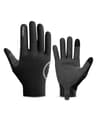
Three full-finger gloves for three different kinds of cold, the windproof membrane budget gloves quietly omit, and why none of them publishes a temperature rating.
Buy the GripGrab Ride Windproof. It is the only glove here that publishes a windproof membrane, and windproofing — not insulation thickness — is the specification that decides whether your hands work in winter. At 15 mph your own speed is the wind, and a thermal glove with no membrane loses that argument every time. It is the right glove for someone whose winter riding is decided by the temperature rather than by the calendar. The budget pick is the Hikenture Winter glove: the cheapest pick here by a wide margin, and the one that makes cold-weather riding an experiment rather than an investment.
If what you actually need is a glove for 50 to 60 degrees — a cool morning rather than a cold one — buy the INBIKE Full-Finger. It is full-finger without being a winter glove, and it publishes two things the others do not: a touchscreen fingertip, so you are not peeling a glove off at every junction, and reflective detailing, which matters in the season when you are riding in the dark at 5 p.m.
Two honest notes before the picks. Not one of these three publishes a temperature rating, and there is no industry standard that would make one comparable if they did — so this page sorts them by the kind of cold each listing describes rather than by a number nobody prints. And cold fingers on brake levers is a control problem rather than a comfort one, which is why we would buy a winter glove before being certain we needed it. Prices are live, as of November 22, 2026, with the date under every button.
How this is funded: we earn a commission if you buy through our links, at no extra cost to you. It never changes which bike we recommend, and we will tell you plainly when we would skip one. Full disclosure.
Quick picks
Ranked on published specs, what the listing does and does not tell you, and who each one actually suits. Select a row to jump to the full write-up. We have not ridden these — here is exactly what we do instead.
#
Bike or gear
Best for
Price
1
GripGrab Ride Windproof Winter Gloves
Windproof is the specification that matters in winter, and it is the one budget gloves quietly omit. At 15mph your own speed is the wind, and a thermal glove without a windproof membrane loses that argument every time.
Thermal winter gloves at a price that makes cold-weather riding an experiment rather than an investment. Cold fingers on brake levers is a control problem, not just a comfort one, which is why this is worth buying before you are sure you need it.
Full-finger without being a winter glove — the version you want for spring and autumn mornings, plus reflective detailing and a touchscreen fingertip so you are not taking them off at every junction.
Windproof is the specification that matters in winter, and it is the one budget gloves quietly omit. At 15mph your own speed is the wind, and a thermal glove without a windproof membrane loses that argument every time.
Who it is for: Actual winter riding, where the temperature is the reason you might not go.
What is good
+Windproof membrane, which is the difference between warm and merely thick
+Thermal insulation with padding retained, unlike many winter gloves
+GripGrab is a cycling-specific brand with published sizing
+Long cuff designed to seal under a jacket sleeve
What you give up
−Roughly twice the price of a generic thermal glove
−Windproof, not waterproof — sustained rain will get through
−Bulkier on the levers than a summer glove, which takes a ride to adjust to
Skip this if. Skip this if you would not ride below about 50F anyway. This is a purpose-built cold glove and paying for a windproof membrane you never meet cold enough to need is money that belongs elsewhere.
Published specifications for the GripGrab Ride Windproof Winter Gloves
Style
Full-finger, winter
Windproof
Yes
Waterproof
No
Padding
Yes
Temperature rating
Not published
Specifications read from the retailer listing on August 11, 2026. “Not published” means the listing does not state that figure — we do not estimate it.
#2Budget pick
Hikenture Winter Cycling Gloves
Thermal winter gloves at a price that makes cold-weather riding an experiment rather than an investment. Cold fingers on brake levers is a control problem, not just a comfort one, which is why this is worth buying before you are sure you need it.
Who it is for: First winter on the bike, in dry cold.
What is good
+Thermal lining at roughly a third the price of the specialist brands
+Full-finger with a wrist closure that keeps drafts out of the cuff
+Cheap enough to own alongside summer gloves rather than instead of them
+Available in a range of unisex sizes
What you give up
−Water resistance is not published — treat these as a dry-cold glove
−No published temperature rating, which is normal but unhelpful
−Thicker gloves reduce brake-lever feel, and budget ones more so
Skip this if. Skip this if you ride in the rain regularly. A thermal glove that soaks through is colder than a thin one, and you want a windproof or waterproof membrane for wet winter riding.
Published specifications for the Hikenture Winter Cycling Gloves
Style
Full-finger, thermal
Insulation
Thermal lining
Waterproof
Not published
Temperature rating
Not published
Touchscreen
Not published
Specifications read from the retailer listing on August 11, 2026. “Not published” means the listing does not state that figure — we do not estimate it.
#3Best for cool mornings
INBIKE Full-Finger Touchscreen Gloves
Full-finger without being a winter glove — the version you want for spring and autumn mornings, plus reflective detailing and a touchscreen fingertip so you are not taking them off at every junction.
Who it is for: Cool mornings, and anyone who navigates from their phone.
What is good
+Touchscreen-compatible fingertips, so the phone stays usable with gloves on
+Reflective detail, which is genuinely useful given hand signals move
+Full-finger coverage without winter-glove bulk on the bars
+Covers the temperature band where half-finger gloves stop working
What you give up
−Not insulated — these stop being enough somewhere around 45F
−Touchscreen panels on budget gloves degrade with washing
−The listing does not publish padding thickness or material
Skip this if. Skip this if you only ride in summer. Full-finger gloves in real heat make your hands sweat more than they help, and half-finger is the right answer for those months.
Published specifications for the INBIKE Full-Finger Touchscreen Gloves
Style
Full-finger
Touchscreen
Yes
Reflective detail
Yes
Insulation
Not published
Pad thickness
Not published
Specifications read from the retailer listing on August 11, 2026. “Not published” means the listing does not state that figure — we do not estimate it.
Three gloves, three different kinds of cold
“Winter glove” is not one product. A glove for 20 degrees and a glove for 55 degrees are different objects, and buying the wrong one is how people end up with sweaty hands in October and numb ones in January. The table below is the sorting rule.
Glove
The cold it is for
Published feature
Water
Where it is wrong
GripGrab Ride Windproof
Actual winter - the temperature is why you might not go
Windproof membrane (published), padded
Published as not waterproof
Overkill if you would not ride below about 50F anyway
Hikenture Winter
Dry cold, first winter on the bike
Thermal lining
Not published
A thermal glove that soaks through is colder than a thin one
INBIKE Full-Finger
Cool mornings, spring and autumn
Touchscreen fingertip, reflective detail
Not published
Not a winter glove - no insulation figure published at all
If you only buy one and your winters are genuinely cold, buy the windproof one. If you only buy one and your winters are mild, the INBIKE covers far more days of the year. If you buy two, those are the two, and the Hikenture is the cheap way to find out which end of that range you actually ride in.
Windproof beats thick, and it is not close
This is the single most useful thing on the page, so here it is in full. On a bike you generate your own wind. At 15 mph in still air the air moving across the back of your hand is doing 15 mph, and on a descent it is doing 30. That moving air strips heat out of an insulating layer continuously — the insulation is only as good as whatever stops the air getting into it.
A thick fleece glove with no membrane is warm standing still and cold at speed. A thinner glove with a windproof front is warm at speed and the one you will actually keep wearing. The GripGrab listing publishes a windproof membrane; the other two publish thermal lining and nothing about wind. That is the whole ranking.
It is also why the back of the hand and the front of the fingers are the parts that matter. Your palm is pressed against a bar covered in tape; it is the knuckles and fingertips facing into the airflow that go numb first. A glove that is windproof across the back and breathable across the palm is the correct construction, and it is what most dedicated winter cycling gloves do.
What none of these three publishes
Three absences, and each one is a finding rather than a gap in our research.
A temperature rating.None of the three. There is no standard that would make one comparable anyway — a rating would depend on your speed, your circulation, whether it is dry, and what you are wearing on your torso, which matters more than people expect. Sort by the kind of cold instead, which is what the table above does.
Insulation weight or material.The Hikenture publishes “thermal lining” and no fill weight; the INBIKE publishes nothing about insulation at all. Only the GripGrab publishes the feature that actually ranks them, which is the membrane.
Palm padding detail. The GripGrab publishes that it is padded; neither of the other two publishes a pad thickness. Padding matters less in winter than in summer, because a thicker glove is already cushioning the bar.
Where a listing is silent we say so rather than estimating, and on gloves the silence is near-total. That is the honest cost of the category.
The layering trick that works better than a thicker glove
Two things keep hands warm and neither is the glove.
First, keep your core warm. When your torso gets cold your body reduces blood flow to your extremities to protect it, and no glove can heat a hand that is not receiving warm blood. If your fingers are cold and your chest is cold, fix the chest. A windproof jacket or thermal top does more for your fingers than the next glove up.
Second, do not over-tighten anything. A glove crammed on over a liner, or a cuff pulled tight over a jacket sleeve, restricts circulation and makes the hand colder. Looser and layered beats tight and thick. If you want a second layer, a thin liner inside a size-up winter glove works; the same glove on its own fits better and is warmer than the liner combination crammed into the original size.
Third, and this is the cheap one: cover the gap. Bare wrist between glove cuff and sleeve is a direct heat leak, and the arm warmer page covers the same principle for the rest of your limbs. A thermal headband or helmet liner does the same job for the other classic leak.
Touchscreen fingertips are more useful than they sound
Only the INBIKE publishes a touchscreen fingertip, and it is worth a paragraph because the alternative is genuinely bad. In winter you stop, you need to check a route or a message, and the choice is: take a glove off with your teeth, hold it in your mouth, operate the phone with a cooling hand, then put a damp glove back on.
Doing that twice on a cold ride is how hands stop working. A conductive fingertip avoids it entirely. The other way round the same problem is not touching the phone at all — a bar-mounted computer with big buttons works in any glove, and a phone mount at least means you are glancing rather than digging in a pocket.
Reflectivity, because winter is the dark season
The INBIKE is also the only pick here that publishes reflective detailing, and the timing is the point: the months you need winter gloves are the months you are riding home in the dark. A reflective patch on a glove is in the one place on your body that moves in a human-recognisable way when you signal.
It is a bonus rather than a safety system. The actual answer to being seen is lights, and the federal reflector rule every new bicycle ships under covers passive reflectors rather than an active light, which is why a rear light is not optional in winter. Our road rules and hand signals guide covers the signalling side, where a glove you can actually move your fingers in turns out to matter.
What we would buy
The GripGrab Ride Windproof, for winters where cold is the reason you might skip a ride. The published membrane is the only specification on this page that addresses the real mechanism, and the padding is a bonus. Its honest costs are on its card: it is published as not waterproof, and it is money wasted if you would not ride below about 50F anyway.
For a first winter, the Hikentureat a fraction of the price is the right experiment — with the caveat its card names: a thermal glove that soaks through is colder than a thin one, so if you ride in rain regularly, skip it and buy the membrane. For the long shoulder seasons that make up most of the cold-weather calendar in much of the US, the INBIKE covers more riding days than either, and the touchscreen fingertip and reflective detail are the two features you will use most often.
For the rest of the kit, the cold-weather gear roundupputs gloves in order against shoe covers, a helmet liner, a thermal jacket and tights — and the honest sequence is core first, then extremities. The full glove roundup has the half-finger summer options this page excludes.
We have not ridden these bikes. Every site in this category says it tested twenty of them. We have not tested any, and we say so. What we did instead: read the manufacturer listings and manuals, compiled the published specs, worked out the real out-the-door cost, and checked live availability and price. Here is exactly how that works.
Questions people actually ask
What are the best winter cycling gloves?+
The GripGrab Ride Windproof, because it is the only glove here that publishes a windproof membrane - and windproofing rather than insulation thickness is what decides whether your hands work at 15 mph. For a first winter on a small budget the Hikenture thermal glove is a fraction of the price, and for 50 to 60 degree mornings the INBIKE full-finger covers far more riding days.
Is windproof or insulated more important in a cycling glove?+
Windproof, clearly. On a bike you generate your own wind - at 15 mph the air across the back of your hand is doing 15 mph, and on a descent 30 - and moving air strips heat out of insulation continuously. A thick fleece glove with no membrane is warm standing still and cold at speed; a thinner glove with a windproof front is the one you keep wearing.
Do winter cycling gloves have a temperature rating?+
Not one of these three publishes one, and there is no standard that would make a rating comparable if they did - it would depend on your speed, your circulation, whether it is dry, and how warm your torso is. That is why this page sorts gloves by the kind of cold each listing describes rather than by a number nobody prints.
Are winter cycling gloves waterproof?+
Usually not, and the honest ones say so. The GripGrab publishes windproof and explicitly not waterproof; the other two publish no water rating at all. Fully waterproof gloves do not breathe, so your hands get wet from the inside instead. For genuinely wet winter riding the answer is a dedicated wet-weather setup rather than a thicker glove.
Why are my hands still cold in winter cycling gloves?+
Most often because your core is cold. When your torso loses heat your body reduces blood flow to your extremities to protect it, and no glove can warm a hand that is not receiving warm blood - fix the chest first. The second cause is over-tightening: a glove crammed over a liner, or a cuff pulled tight over a sleeve, restricts circulation and makes the hand colder. Looser and layered beats tight and thick.
Should I buy one pair of winter gloves or two?+
Two, if you ride through the whole cold season, and they should be a windproof winter glove and a shoulder-season full-finger glove. A single glove sized for January is sweaty and useless in October, which is the most common reason people stop wearing the pair they bought. If it has to be one, pick the end of the range you actually ride in most.
Are touchscreen fingertips worth it on cycling gloves?+
More than they sound. The alternative in winter is removing a glove with your teeth, operating the phone with a cooling hand and putting a damp glove back on - and doing that twice on a cold ride is how hands stop working. Only the INBIKE here publishes a conductive fingertip. The other fix is not touching the phone at all: a bar-mounted computer with large buttons works in any glove.
Sources
Specifications come from the manufacturer or the retailer listing, dated. Where a figure is not published, we say so rather than estimating it.
IEC — Ingress Protection (IP) ratings — The IEC 60529 standard behind IPX6 and IPX7: the first digit rates solids, the second liquids, and IPX7 is defined as 30 minutes' immersion at up to 1 meter (accessed August 13, 2026)
Woolmark — Wool fiber properties — Published fiber data including moisture absorption up to roughly a third of its own weight (accessed August 11, 2026)
16 CFR § 1512.16 — Requirements for reflectors — The federal reflector requirement every new bicycle ships with, and what it does not cover (an active light) (accessed August 11, 2026)