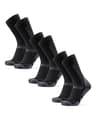
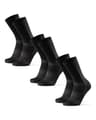
Buy the Swiftwick Pursuit Four. Merino wool in a four-inch crew, which is the combination that works in July and January both — and wool is the one material difference in this category that you can actually feel.
If that seems like a lot for socks, the honest alternative is at the bottom of this page: three synthetic pairs for the price of one merino one. Buy those first if you have never owned a cycling sock and have no idea whether you will care.
What follows is why the sock inside a cycling shoe is a different design problem from a running sock, and what changes when you get it right.
How this is funded: we earn a commission if you buy through our links, at no extra cost to you. It never changes which bike we recommend, and we will tell you plainly when we would skip one. Full disclosure.
Quick picks
Ranked on published specs, what the listing does and does not tell you, and who each one actually suits. Select a row to jump to the full write-up. We have not ridden these — here is exactly what we do instead.
#
Bike or gear
Best for
Price
1
Swiftwick Pursuit Four
Merino wool in a four-inch crew, made in the US, and the pair most likely to still be in your drawer in three years. Wool is the reason: it manages moisture and holds off odor in a way synthetics do not.
Merino, three pairs in the box, and by some way the cheapest wool per pair on this page. It is labeled as a hiking sock rather than a cycling one, and that is the trade you are making — the wool does the same job on a bike, the cushioning is more than a stiff cycling shoe wants.
The synthetic answer to the same question: fast-drying, cycling-cut, sold in threes and fives so you can actually get through a week without laundry becoming a scheduling problem.
Merino with no cushioning at all, which is deliberate: a cycling shoe is stiff and the sole is not doing any impact absorption, so padding under the foot just takes up room and holds sweat.
A tall compression sock at a normal price. The compression claim is the kind of thing that is hard to prove and easy to feel — what is not in doubt is that a sock that grips the calf does not slide down inside a shoe.
Three pairs for the price of one merino sock. They will not last as long and they will need washing more often, and for finding out whether you care about cycling socks at all that is completely beside the point.
Merino wool in a four-inch crew, made in the US, and the pair most likely to still be in your drawer in three years. Wool is the reason: it manages moisture and holds off odor in a way synthetics do not.
Who it is for: One pair that works in summer and winter both.
What is good
+Merino wool regulates temperature in both directions — cool in heat, warm in cold
+Wool holds odor far better than synthetic between washes
+Four-inch cuff is the height that reads as cycling without looking like a costume
+Compression fit through the arch, which stops the sock migrating inside a stiff shoe
What you give up
−Roughly four times the price of a synthetic multipack
−Merino needs more care in the wash and will felt in a hot machine
−One pair per pack, so a week of riding means buying several
Skip this if. Skip this if you are buying your first cycling socks and have no idea whether you will care. A $13 three-pack tells you whether sock height and fit matter to you, and if the answer is no you have saved most of the money.
Published specifications for the Swiftwick Pursuit Four
Material
Merino wool blend
Cuff height
Crew, 4 inch
Cushioning
Trail/running cushion
Pairs per pack
1
Published wool percentage
Not published
Specifications read from the retailer listing on August 11, 2026. “Not published” means the listing does not state that figure — we do not estimate it.
#2Best merino value
Danish Endurance Merino Wool Socks, 3-Pack
Merino, three pairs in the box, and by some way the cheapest wool per pair on this page. It is labeled as a hiking sock rather than a cycling one, and that is the trade you are making — the wool does the same job on a bike, the cushioning is more than a stiff cycling shoe wants.
Who it is for: Getting into merino without buying one pair at a time.
What is good
+Three pairs per pack, which is roughly a third of the usual per-pair price of merino
+Merino's moisture and odor behavior, which is the entire reason to buy wool
+A full riding week covered in one purchase, and wool prefers a rest day between wears
+Danish Endurance publishes size charts by shoe size, so ordering blind is less risky
What you give up
−Labeled and cut as a hiking sock, not a cycling sock — more cushioning than a stiff-soled cycling shoe has room for
−The listing does not publish the wool percentage, which varies a lot in blends
−Merino wears through at the heel faster than a reinforced synthetic
Skip this if. Skip this if your cycling shoes already fit snugly. A hiking sock's extra cushioning takes up room a stiff cycling shoe does not have, and a tight shoe is how feet go numb — buy a thinner cycling-specific pair instead.
Published specifications for the Danish Endurance Merino Wool Socks, 3-Pack
Material
Merino wool blend
Pairs per pack
3
Cut
Hiking crew, not cycling-specific
Published wool percentage
Not published
Cuff height
Not published
Specifications read from the retailer listing on September 29, 2026. “Not published” means the listing does not state that figure — we do not estimate it.
#3Best for hot weather
Danish Endurance Crew Cycling Socks
The synthetic answer to the same question: fast-drying, cycling-cut, sold in threes and fives so you can actually get through a week without laundry becoming a scheduling problem.
Who it is for: Hot weather, and anyone who rides more days than they do washing.
What is good
+Fast-dry synthetic, which genuinely matters if you ride consecutive days
+Multipack pricing brings the per-pair cost down to sensible
+Cycling-specific cut rather than a repackaged running sock
+Holds shape through repeated hot washes better than wool does
What you give up
−Synthetics hold odor — these will need washing every ride, wool will not
−No temperature regulation in cold weather; these are a summer sock
−The listing does not publish the fiber composition
Skip this if. Skip this if you ride through winter. Synthetic socks are cold when wet in a way merino is not, and cold feet end a ride faster than tired legs do.
Published specifications for the Danish Endurance Crew Cycling Socks
Material
Fast-dry synthetic
Pairs per pack
3 or 5, depending on option
Cuff height
Crew
Fiber composition
Not published
Specifications read from the retailer listing on August 11, 2026. “Not published” means the listing does not state that figure — we do not estimate it.
#4Best for stiff shoes
Smartwool Bike Zero Cushion Crew
Merino with no cushioning at all, which is deliberate: a cycling shoe is stiff and the sole is not doing any impact absorption, so padding under the foot just takes up room and holds sweat.
Who it is for: Stiff-soled cycling shoes where a thick sock makes the fit tight.
What is good
+Zero cushion is the correct choice inside a stiff cycling shoe, not a cost saving
+Merino, so it handles moisture and odor the way wool does
+Smartwool's sizing and durability record in this category is long
+Thin enough that it does not change how a shoe fits
What you give up
−No cushioning means you feel the footbed, which some riders dislike
−Single pair per box at a merino price
−Thin wool wears through faster than a cushioned equivalent
Skip this if. Skip this if you ride in trainers on flat pedals. Without a stiff sole under you, a bit of cushioning is genuinely welcome, and this sock deliberately has none.
Published specifications for the Smartwool Bike Zero Cushion Crew
Material
Merino wool blend
Cushioning
Zero
Cuff height
Crew
Pairs per pack
1
Published wool percentage
Not published
Specifications read from the retailer listing on August 11, 2026. “Not published” means the listing does not state that figure — we do not estimate it.
#5Best compression fit
Rockbros Compression Cycling Socks
A tall compression sock at a normal price. The compression claim is the kind of thing that is hard to prove and easy to feel — what is not in doubt is that a sock that grips the calf does not slide down inside a shoe.
Who it is for: Longer rides where socks working their way down becomes genuinely irritating.
What is good
+Tall crew height, which is what the sock actually needs to be to stay put
+Compression fit keeps the sock in position over several hours
+Unisex sizing across a broad range
+Cheap enough to buy two or three pairs at once
What you give up
−The listing does not publish a compression rating in mmHg, so the claim is unquantified
−Synthetic, so odor builds up faster than wool
−Tall socks are warm — these are the wrong sock in high summer
Skip this if. Skip this if you find tight socks uncomfortable. Compression is a preference, not an upgrade, and a plain sock that fits is better than a compression sock you keep peeling off.
Published specifications for the Rockbros Compression Cycling Socks
Material
Synthetic
Cuff height
Tall crew
Fit
Compression
Compression rating (mmHg)
Not published
Pairs per pack
Not published
Specifications read from the retailer listing on August 11, 2026. “Not published” means the listing does not state that figure — we do not estimate it.
#6Best on a tight budget
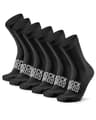
Jeasona Cycling Athletic Socks
Three pairs for the price of one merino sock. They will not last as long and they will need washing more often, and for finding out whether you care about cycling socks at all that is completely beside the point.
Who it is for: Finding out whether cycling socks matter to you before spending real money.
What is good
+Three pairs in the pack at the lowest price on this page
+Cycling-patterned rather than a generic gym sock
+Cheap enough to lose one without noticing
+Perfectly adequate for short rides and commuting
What you give up
−No published fiber composition
−Budget synthetics thin out at the heel and toe within a season of regular riding
−Sizing on multipacks from this end of the market is inconsistent
Skip this if. Skip this if you already know you ride four or more days a week. At that volume you will wear through these fast enough that the merino pairs work out cheaper per mile, which is not an argument that applies to anyone riding twice a month.
Published specifications for the Jeasona Cycling Athletic Socks
Material
Synthetic
Pairs per pack
3
Cuff height
Not published
Fiber composition
Not published
Specifications read from the retailer listing on August 11, 2026. “Not published” means the listing does not state that figure — we do not estimate it.
Why a cycling sock is not a running sock
A running shoe has a flexible sole and a cushioned midsole, and the sock inside it is part of the impact system. A cycling shoe has neither. It has a deliberately stiff sole so that the power you put into the pedal goes into the pedal instead of into flexing your shoe.
That changes what the sock is for:
Cushioning does nothing useful and takes up room. There is no impact to absorb. Thick padding just makes a snug shoe tight, and a tight cycling shoe is how feet go numb.
Moisture management does everything. Your foot is in a ventilated but enclosed shoe for hours with no impact drying it out.
The sock must not move. A sock that creeps down inside a stiff shoe bunches under the arch, and there is no getting it back without stopping and unbuckling.
That is why our top pick is a merino crew with compression through the arch and why the Smartwool pick below has zero cushioning on purpose. It is not a cost saving; it is the correct answer.
Merino or synthetic, honestly
Wool is a genuinely unusual fiber and the claims made for it are, for once, mostly supported by the people who research it. Woolmark’s published fiber data describes wool absorbing a large share of its own weight in moisture vapor without feeling wet, and their research summary on odor explains why wool garments hold noticeably less smell than cotton or synthetics between washes.
Translated into riding:
Merino is warm when damp. This is the whole winter argument. A wet synthetic sock is cold; a wet wool one mostly is not.
Merino does not stink after one ride. Useful on a multi-day trip, or if laundry happens weekly.
Synthetic dries faster. If you ride consecutive days in heat and wash socks in a sink, this is the more practical fiber.
Synthetic is cheaper and tougher. Merino wears through at the heel sooner and needs a cooler wash.
Our position: merino for anyone who rides year-round, synthetic multipacks for summer-only riding and for finding out whether you care.
Sock height, which is a real decision and not just style
There is a genuine functional element buried under the fashion here.
No-show / ankle. The cuff sits below the shoe collar and rubs exactly there. Avoid for cycling.
Crew, roughly 4 inches. Clears the shoe collar, stays put, covers the ankle bone. This is the height to buy.
Tall, 6 to 8 inches. More coverage against sun and grit, and warmer — which is either the point or the problem depending on the month.
The one hard rule from cycling culture, offered without judgment: socks go over the tights, not under, and they are not meant to be white gym socks. Nobody will say anything. Some people will notice.
What about compression?
Compression socks are widely sold on a recovery and performance claim. We are not going to make that claim: the research on athletic compression is mixed and the listings here do not publish a compression rating in mmHg, so there is no number to evaluate.
What is not in doubt is the mechanical bit — a sock that grips your calf does not slide down inside a shoe over three hours. That alone is a reasonable reason to buy the Rockbros pair, and it is the only reason we would give you.
Sizing, and the trap
Cycling socks are sized by shoe size, not S/M/L, and they run small like the rest of cycling clothing. A sock that is slightly too small stretches thin over the arch and loses its shape in a month. Read the chart against your actual shoe size every time, and when you are between two sizes go up.
What we would spend
About $20 on one pair of the Swiftwick, then a second pair when you know it works for you. Two good pairs beats five bad ones, and merino needs a rest day between wears anyway.
If the budget is genuinely tight, spend $13 on the three-pack at the bottom and put the difference into padded shorts, which change comfort about ten times as much as socks do.
We have not ridden these bikes. Every site in this category says it tested twenty of them. We have not tested any, and we say so. What we did instead: read the manufacturer listings and manuals, compiled the published specs, worked out the real out-the-door cost, and checked live availability and price. Here is exactly how that works.
Questions people actually ask
Are cycling socks actually different from normal socks?+
Yes, in two ways that matter. They have no cushioning, because a cycling shoe has a deliberately stiff sole and there is no impact to absorb — padding just makes a snug shoe tight. And they are cut to stay put inside that stiff shoe, usually with compression through the arch, because a sock that creeps down cannot be fixed without stopping and unbuckling.
Is merino wool worth it for cycling socks?+
For year-round riding, yes. Wool absorbs a large share of its own weight in moisture without feeling wet, stays warm when damp, and holds far less odor than synthetics between washes. For summer-only riding where you wash socks every day anyway, a fast-drying synthetic is cheaper, tougher and dries quicker.
How tall should cycling socks be?+
About four inches — a crew height. That clears the collar of the shoe so it does not rub, covers the ankle bone, and is tall enough to stay put. Ankle and no-show socks sit exactly where the shoe collar is and rub there. Taller socks give more sun and grit coverage but are warmer than you want in summer.
Should cycling socks be tight?+
Snug through the arch, not tight around the calf. Arch compression is what stops the sock migrating inside a stiff shoe over a long ride. Calf compression is a preference — the recovery claims are not well established, and the listings here do not publish a compression rating you could evaluate.
How many pairs of cycling socks do I need?+
Two good pairs is enough to start. Merino in particular benefits from a rest day between wears, and two pairs covers a normal riding week. Buy one pair first, ride in it, and buy the second when you know the fit and height suit you rather than committing to five identical pairs blind.
Can I just wear running socks for cycling?+
Yes, and plenty of people do for a whole first season. The cushioning is unnecessary and can make a snug cycling shoe tight, and a no-show running sock will rub at the shoe collar — so if you are using what you own, pick the thinnest crew-height pair in the drawer.
Sources
Specifications come from the manufacturer or the retailer listing, dated. Where a figure is not published, we say so rather than estimating it.
Woolmark — Wool fiber properties — Published fiber data including moisture absorption up to roughly a third of its own weight (accessed August 11, 2026)